

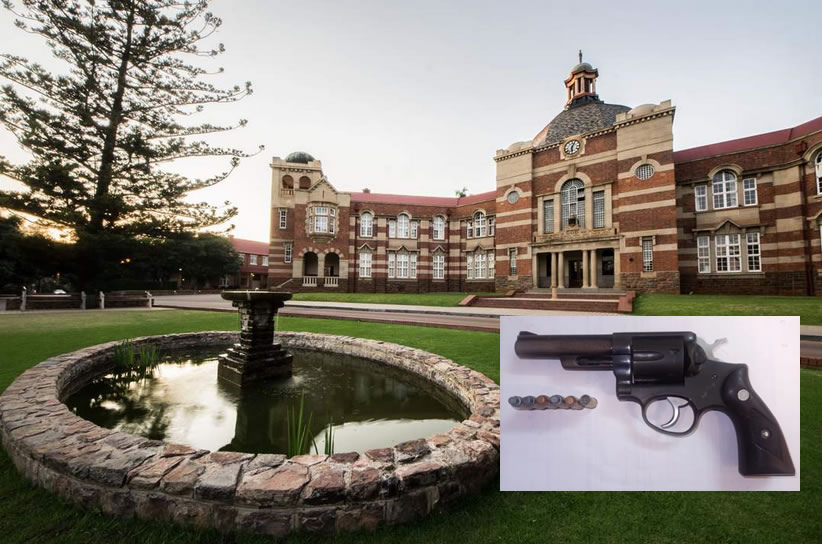
A Chilling Voice Note And A Teacher In The Crosshairs
The elite halls of Pretoria Boys High School, a bastion of tradition and discipline, have been rocked by a terrifying security crisis that has pitted the school’s governing body (SGB) against the provincial government. At the heart of the controversy is a 16-year-old pupil who didn't just break the rules—he allegedly planned a massacre. In a chilling WhatsApp voice note sent to his classmates, the teen left absolutely nothing to the imagination. "If you see a school shooting, just know it was me, because I’m gonna blow this school up," he declared, specifically naming one of his teachers as his first intended victim. The threat, which surfaced in February 2026, has sent a wave of fear through the school community and sparked a high-stakes legal battle that has reached the High Court in Pretoria.
What makes the situation even more alarming is that the voice note was not an isolated incident of "troubled" behaviour. Investigations into the pupil’s digital footprint revealed a dark and dangerous obsession with firearms. Instagram videos showed the teen and his brothers handling and showing off real guns while smoking marijuana. Even more damning were WhatsApp messages where the pupil discussed purchasing a Glock pistol, arranging a handover at a petrol station for cash. "Don’t forget the Glock. Bring it then imma give you your cash," one message read. Despite his mother’s claims that the weapons were merely toys, peers provided evidence of the pupil firing live rounds into a tree—a clear sign that the threat of a school shooting was backed by access to lethal firepower.
The Disciplinary Committee’s Warning: "We Will Not Wait For Blood"
When the evidence was presented to the school’s disciplinary committee, the response was immediate and uncompromising. The pupil pleaded guilty to making the shooting threat and to testing positive for marijuana—his second drug offense in less than six months. The committee’s final report was a haunting indictment of the danger the teen posed to his fellow students and staff. "It is difficult to think of circumstances that would demand more strongly that a learner be expelled," the committee wrote, "except, perhaps, if a learner had already stabbed or shot another learner or a teacher. This committee cannot and will not wait for that to happen before it acts."
The committee’s urgency was fueled by the grim reality of school violence in South Africa. At the very time the hearings were taking place, two other pupils in Gauteng had died in separate, unrelated stabbing incidents. The school’s SGB argued that violence is almost always preceded by warning signs that are tragically ignored, and they were determined not to let Pretoria Boys High become the next headline. On 27 March 2026, they recommended immediate expulsion, finding that the pupil posed a "material and ongoing risk" that the school simply could not be expected to manage. However, what followed was a bureaucratic nightmare that has left the school community feeling betrayed by the very department meant to protect them.
The Department’s Shocking Overrule: A Suspended Sentence For A Shooting Threat
In a move that has been described as "indefensible" by education experts, the Gauteng Department of Education (GDE) ignored the school’s recommendation for expulsion. Despite a statutory 14-day deadline to make a decision, the department’s head of department (HOD) remained silent for weeks, missing the deadline without explanation. When the department finally responded, it didn't just reject the expulsion—it ordered the school to take the pupil back. Instead of being removed from the environment he threatened to destroy, the teen was given a 12-month suspended sanction and a series of "intervention programmes."
The GDE’s decision has effectively forced a self-confessed potential school shooter back into the classroom. The SGB, left with no other choice, has had to implement extreme security measures just to manage the risk. The pupil is now required to report directly to a designated office upon arrival and must remain there during breaks and assemblies, essentially being treated as a prisoner within the school walls. The department’s spokesperson, Onwabile Lubhelwana, defended the move, stating that a presiding officer had recommended the suspended sanction. But for the staff and parents of Pretoria Boys High, the message is clear: the department is prioritizing the rights of a dangerous individual over the safety of hundreds of innocent children.
A High Court Battle: The School Fights Back
Refusing to accept a decision they believe is "irresponsible" and "measured," the Pretoria Boys High SGB dragged the Gauteng Department of Education to the High Court. Their urgent application sought to compel the HOD to act and uphold the expulsion, arguing that the department is failing in its constitutional duty to provide a safe working and learning environment. Jaco Deacon, chief executive of the Federation of Governing Bodies of South African Schools (FEDSAS), has come out in strong support of the school, stating that the department is "placing both staff and children at risk."
Deacon pointed to landmark court rulings that suggest the constitutional right to education is not absolute and can be limited when a pupil’s misconduct poses a real danger to others. "One would rather have expected the department to go out of its way to support the school," Deacon remarked. The legal battle is far from over, as the SGB considers taking the department’s response on a full review. For now, the "troubled teen" remains on campus, a ticking time bomb that the school is being forced to manage with one hand tied behind its back. The case has become a lightning rod for the debate over school safety in South Africa, raising the terrifying question: what will it take for the department to take a shooting threat seriously?
The National Crisis Of School Safety
The Pretoria Boys High saga is a microcosm of a much larger crisis facing South African schools. From stabbings to gang violence and now the threat of American-style school shootings, the classroom is increasingly becoming a frontline. The GDE’s refusal to support an expulsion in such an extreme case sets a dangerous precedent, suggesting that even a guilty plea for a shooting threat isn't enough to warrant removal from a school. As the SGB continues its fight in the High Court, the eyes of parents across the country are on Pretoria, wondering if their children’s schools have the power to protect them from the "Glocks in the classroom."
The school’s firm stance—"We cannot be found to have acted irresponsibly in the light of these serious threats"—is a call to action for all educational institutions. It highlights the need for a system that supports schools in making tough decisions for the greater good. Until the Gauteng Department of Education realizes that a "suspended sanction" is no protection against a bullet, the staff and learners of Pretoria Boys High will continue to live in the shadow of a threat that should have been removed months ago. The fight for justice, and for safety, continues in the halls of the High Court, where the future of school discipline in South Africa may well be decided.