

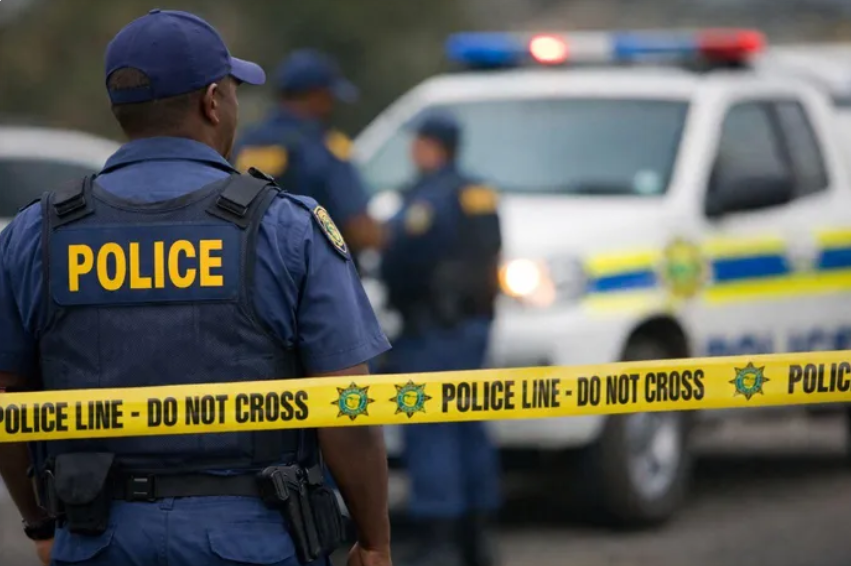
Cape Town, South Africa – The Cape Flats has once again been plunged into a vortex of despair and fear, as a night of unimaginable horror saw seven individuals brutally murdered and five others gravely injured in two separate, yet chillingly close, mass shootings. Occurring within a mere 20-minute window on Wednesday night, these acts of savage violence have sent a stark, terrifying message across communities already reeling from persistent gang warfare and a pervasive sense of insecurity. Police deployments have been significantly increased in the affected suburbs, but residents are left questioning the efficacy of such measures against an enemy that operates with ruthless impunity. This latest bloodbath serves as a grim reminder of the escalating crisis gripping the Western Cape, demanding urgent and decisive action beyond mere rhetoric.
The first scene of carnage unfolded at approximately 8:10 PM on the corner of Laura Street and 8th Avenue in Lost City, Tafelsig, a community within Mitchells Plain. Five men were reportedly standing outside a tuck shop, engaged in what should have been a routine evening, when their lives were irrevocably shattered. Unidentified gunmen descended upon them, unleashing a hail of bullets that left three individuals – aged 18, 19, and 51 – dead at the scene. The two other victims, aged 17 and 22, sustained severe injuries and were rushed to hospital, their futures now hanging precariously in the balance. Police spokesperson Colonel Andrè Traut confirmed the horrific incident, stating that the Mitchells Plain police station has registered three counts of murder and two of attempted murder, with investigations now in full swing. The motive behind this brazen attack remains shrouded in mystery, forming a critical part of the ongoing police inquiry.
Before the echoes of the first volley of gunfire could fully fade, another tragedy struck with terrifying speed. Just 20 minutes later, at around 8:30 PM, police units were dispatched to a home in Marcus Garvey, Philippi East, where another scene of unspeakable violence awaited them. Here, seven people were caught in a deadly crossfire. Four of them, tragically aged between 17 and 20, succumbed to their injuries and were pronounced dead at the scene. The remaining three victims were immediately admitted to hospital, fighting for their lives against the brutal wounds inflicted upon them. The Provincial Serious Violent Crime Unit has now taken charge of this triple murder investigation, working tirelessly to piece together the events that led to this senseless loss of life. Colonel Traut reiterated the police’s commitment, stating, “The circumstances surrounding both incidents are the subject of ongoing investigations. Detectives are pursuing all available leads to identify and apprehend those responsible.”
The sheer audacity and proximity of these attacks highlight a deeply entrenched problem of organised crime and gang activity that continues to plague the Cape Flats. These are not isolated acts of violence but rather symptoms of a systemic breakdown in law and order, where human life appears to hold little value. The communities of Mitchells Plain and Philippi East, like many others on the Cape Flats, have long been battlegrounds for rival gangs, with innocent residents often caught in the crossfire. The constant threat of violence has created an atmosphere of fear, stifling economic development, eroding social cohesion, and leaving generations scarred by trauma.
Police officials have been quick to announce heightened deployments to the affected areas, a standard response to such outbreaks of violence. Constable Gwala, another police spokesperson, affirmed this, stating, “Maintaining stability is our priority, and we are taking this incident very seriously.” While increased police visibility may offer a temporary sense of security, many residents and community leaders argue that these measures are often reactive rather than proactive, failing to address the root causes of the violence. The cycle of retaliation and revenge often continues unabated, leaving communities in a perpetual state of siege. The call for sustainable, long-term solutions that go beyond mere policing – addressing socio-economic disparities, providing educational opportunities, and fostering community-led peace initiatives – grows louder with each life lost.
The emotional toll on the families of the victims is immeasurable. Parents are left to bury their children, dreams are shattered, and communities are left to pick up the pieces of lives irrevocably altered. The youth, particularly vulnerable in these environments, are either drawn into the gang lifestyle or live in constant fear of becoming its next casualty. The lack of clear motives in many of these shootings only adds to the terror, creating a pervasive sense that anyone, anywhere, can become a target. This arbitrary nature of violence breeds a deep-seated distrust and hopelessness, making it incredibly difficult for law enforcement to gather crucial information.
Indeed, the police’s appeal for public assistance, urging anyone with information to contact Crime Stop on 08600 10111 or submit tips anonymously via the MySAPS mobile app, underscores the critical role community cooperation plays in solving these crimes. However, in environments where fear of reprisal is rampant, coming forward with information can be a life-threatening decision. This creates a vicious cycle where criminals operate with relative impunity, knowing that witnesses are often too terrified to speak out. Breaking this cycle requires not only robust police protection for witnesses but also a fundamental rebuilding of trust between law enforcement and the communities they serve.
As the Western Cape grapples with this latest wave of bloodshed, the pressure mounts on authorities to deliver tangible results. The lives of seven individuals have been extinguished, and five others are fighting for survival, all within a terrifyingly short span of time. These incidents are not just statistics; they are a stark reflection of a society in crisis, where the promise of safety and security remains a distant dream for far too many. The time for platitudes and temporary fixes is over. What is urgently needed is a comprehensive, multi-pronged strategy that addresses the immediate threat of gun violence while simultaneously tackling the underlying socio-economic conditions that fuel this relentless cycle of death and destruction. Only then can the Cape Flats hope to emerge from the shadow of the gun and reclaim its communities from the grip of fear.