

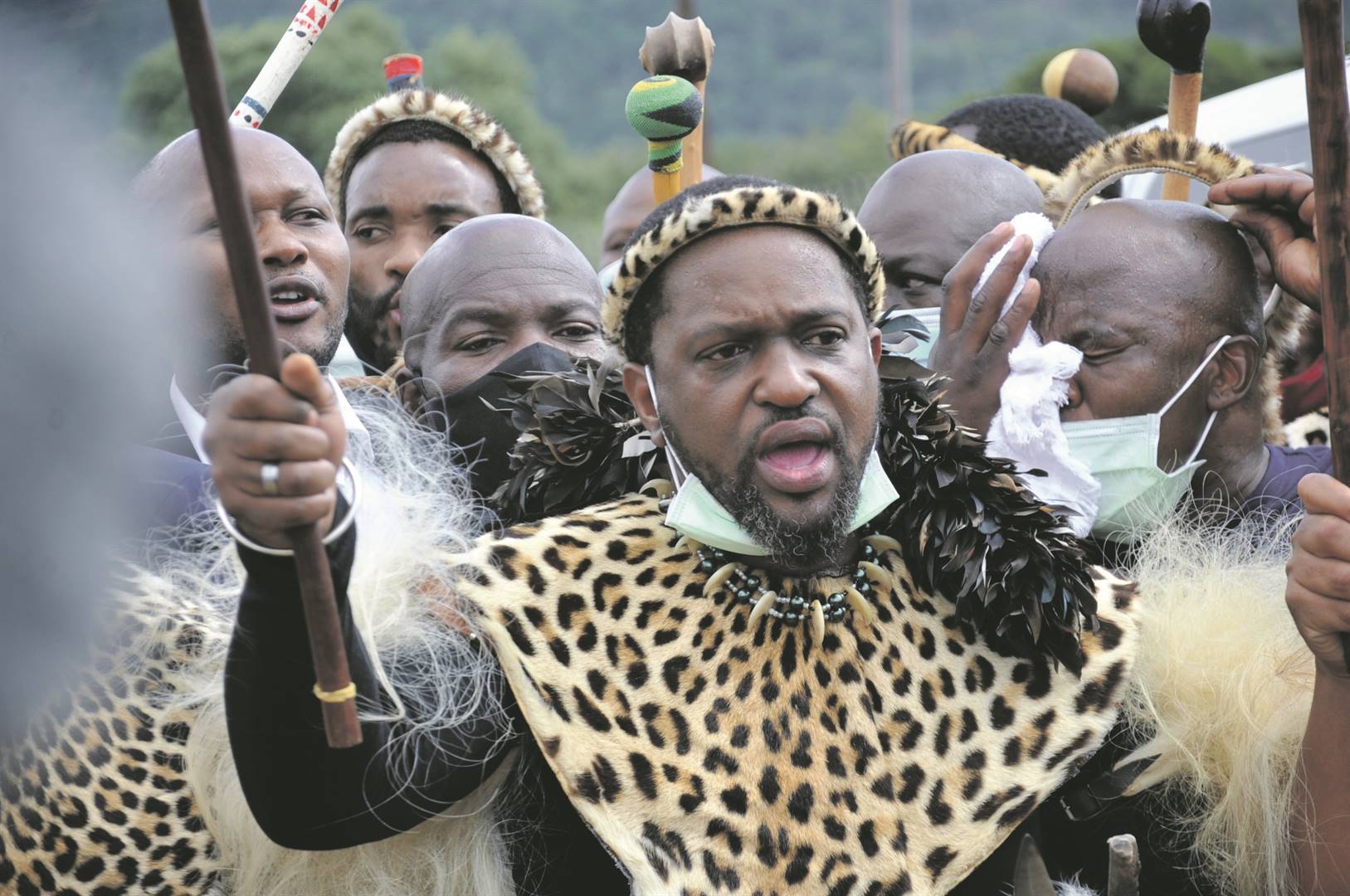
The Zulu royal house, a bastion of tradition and a symbol of African pride, is once again a theatre of high-stakes political drama. In a move that has left the kingdom reeling, King Misuzulu kaZwelithini has summarily dismissed his long-serving royal spokesman, Prince Thulani Zulu. The dismissal, which came with a blunt ban from all royal palaces, was not the result of a slow-burning dispute but a sudden, explosive fallout triggered by a leaked voice note.
The recording, filled with frustration and expletives, has pulled back the curtain on a deepening rift within the King's inner circle. It reveals a monarch who is increasingly willing to axe those he deems disloyal, and a royal court where the lines of authority are becoming dangerously blurred. As the dust settles, a new figure has stepped into the fray: Mpiyakhe Buthelezi, a man with deep ties to the late Prince Mangosuthu Buthelezi. But in a kingdom where spokesmen have become as disposable as yesterday's news, the question on everyone's lips is whether this new appointment can survive the simmering tensions of the Pongola palaces.
The Recording That Broke the Prince
The catalyst for this latest royal purge was a WhatsApp voice note that was never meant for the public ear. In the recording, Prince Thulani Zulu, a man who served the late King Goodwill Zwelithini with distinction before continuing his service under the current monarch, did not hold back. He directed his fury at Nododile Ndamase, the King's powerful right-hand man and the head of the private office.
Prince Thulani accused Ndamase of a cardinal sin in the Zulu kingdom: a breach of sacred royal protocol. The Prince was livid that a high-level meeting between King Misuzulu and President Cyril Ramaphosa had been arranged in Tshwane without the knowledge of the royal family, the traditional minister, or the official spokesman.
"After careful consideration and extensive consultation, I have come to the conclusion that it is in the best interest of the Zulu Royal House and the Kingdom of KwaZulu to relieve you of all your official duties with immediate effect," the King's subsequent letter to his staff might have echoed in spirit, but the reality was far more visceral.
The voice note, described by those who have heard it as "expletive-filled," did more than just criticise the meeting. It attacked Ndamase's influence, suggesting he was leading the King astray. Sources familiar with the matter say the recording was forwarded directly to the King by Ndamase himself. The King's reaction was swift and uncompromising. He summoned the Prince, played the recording, and dismissed him on the spot.
A Pattern of Discarded Voices
To understand the weight of Prince Thulani's exit, one must look at the trail of former spokesmen who have occupied the same seat since King Misuzulu ascended the throne in 2021. The role of royal spokesman has become a revolving door, a position of prestige that carries a high risk of sudden unemployment.
Before Prince Thulani's latest stint, the King had already fired Prince Africa Zulu of the oNkweni Royal House and Prince Simphiwe Zulu. Each departure was marked by its own brand of palace intrigue. Prince Simphiwe's dismissal in January 2025 was particularly harsh. In a letter that was leaked to the press, the King accused the Prince of KwaMinyamanzi of neglecting his duties and being "inaccessible" to the media.
The King stated at the time: "These issues have escalated unnecessarily, even reaching the parliamentary portfolio committee, creating challenges that could have been avoided with proper communication and action. Your actions and omissions have undermined the effective administration of my office and strained critical relationships."
The dismissal of Prince Simphiwe was not just about missed phone calls. It coincided with the dramatic cancellation of the King's traditional wedding to Nomzamo Myeni. The King had paid lobola for Myeni in May 2024, but just days before the ceremony was set to take place in January 2025, he called it off. He even went as far as to withdraw her security detail and allowances, instructing that her privileges be ceased by 11:00 am on a Sunday morning.
"He told his lawyers and her that there won't be any wedding. The wedding is definitely not going to happen, because since he came out of seclusion, there are things he is not supposed to do," a source revealed at the time. This unpredictability has become a hallmark of the current reign, leaving even the most senior royals unsure of their standing.
The Shadow of the Inner Circle
At the heart of the current storm is the figure of Nododile Ndamase. As the King's right-hand man, Ndamase has become a lightning rod for criticism within the royal family. Many traditionalists view him as an outsider who is bypassing the established structures of the Zulu nation.
Prince Thulani's voice note was a direct challenge to Ndamase's authority. By accusing him of "dragging the King" to secretive meetings with the President, the Prince was voicing a concern shared by many in the eZibindini Royal House. They believe the King is being isolated from his traditional advisors and the broader royal family.
The tension is not just about who gets to talk to the President. It is about the soul of the monarchy. The Zulu King is more than a figurehead; he is the custodian of a nation's heritage. When protocol is bypassed, it is seen as an insult to the ancestors and the living members of the royal bloodline.
However, the King's supporters argue that he is simply modernising the office and surrounding himself with people who can navigate the complexities of 21st-century South African politics. They point to the fact that Prince Thulani himself had previously left the role in 2022, only to return in 2025. His history with the royal house is long and complex, but in the end, even his years of service could not protect him from the King's wrath.
Enter the Buthelezi Factor
On Tuesday, 7 July, the King made his next move. In the formal setting of the Emashobeni Royal Palace in Pongola, he introduced Mpiyakhe Buthelezi as the new voice of the Zulu nation. The choice is a calculated one, designed to bring a sense of stability and traditional weight to the role.
Mpiyakhe Buthelezi is no stranger to the corridors of power. He rose to prominence as the acting inkosi of the Buthelezi clan in Mahlabathini, standing in for the late Prince Mangosuthu Buthelezi while the elder statesman was occupied with national politics. For years, Mpiyakhe held the clan's throne with distinction, earning a reputation for being a steady hand and a respected leader.
The symbolic weight of his appointment was underscored by the presence of Inkosi Zuzifa Buthelezi, the son of the late Prince Mangosuthu. By aligning himself with the Buthelezi clan, the King is perhaps seeking to shore up his support among the traditionalists who were so loyal to the late Prime Minister.
The official statement confirming the appointment was signed by Nododile Ndamase, a clear sign that despite the internal protests, Ndamase remains firmly in control of the King's administrative affairs.
A Kingdom at a Crossroads
The Zulu nation is currently navigating a period of profound transition. While the Constitutional Court recently confirmed King Misuzulu as the rightful heir, ending a bitter succession battle that had lasted years, the internal peace of the royal house remains elusive.
The dismissal of Prince Thulani Zulu is more than just a personnel change; it is a symptom of a deeper malaise. When the King's own uncle and long-serving spokesman is banned from the palaces, it suggests a level of internal fracture that cannot be easily mended.
The King has been vocal about his desire for unity. In March 2026, during the opening of the KwaZulu-Natal House of Traditional Leaders, he warned that permanent divisions would haunt the family if the legal battles continued. "We don't want a bloodbath," he had said in earlier addresses, referring to the tensions that have historically plagued royal successions.
Yet, the "palace shake-up" that we are witnessing today seems to be creating new divisions even as the old ones are supposedly being healed. The King's decision to cycle through four spokesmen in as many years suggests a lack of continuity that is beginning to take its toll on the monarchy's public image.
The Uncertain Future of Mpiyakhe Buthelezi
As Mpiyakhe Buthelezi takes up his new duties, he inherits a role that is fraught with danger. He must balance the demands of a modern media landscape with the rigid requirements of royal protocol. He must serve a King who has shown he will not hesitate to fire his closest aides, and he must work alongside an inner circle that is viewed with suspicion by many in the royal family.
Prince Thulani Zulu, despite his dismissal, remains a respected figure among many Zulu traditionalists. His removal from the royal correspondents' WhatsApp group and his ban from the palaces may have silenced his official voice, but it has not silenced the questions he raised.
The Zulu people are watching closely. They have seen the rise and fall of many "spin doctors" in the Pongola palaces. They have seen weddings cancelled and alliances broken. For many, the hope is that Mpiyakhe Buthelezi can provide the stability that has been so sorely lacking.
But in the volatile world of the Zulu royal house, where a single voice note can end a career, nothing is certain. The story of the Zulu monarchy is still being written, and this latest chapter is a stark reminder that in the presence of the King, no one—not even a Prince—is indispensable.
The King has made his move. The new spokesman has been installed. But the echoes of that leaked voice note still linger in the air, a reminder of the tensions that continue to simmer beneath the surface of the Zulu kingdom. Only time will tell if this latest shake-up will bring the peace the King so often speaks of, or if it is merely the prelude to the next royal storm.