

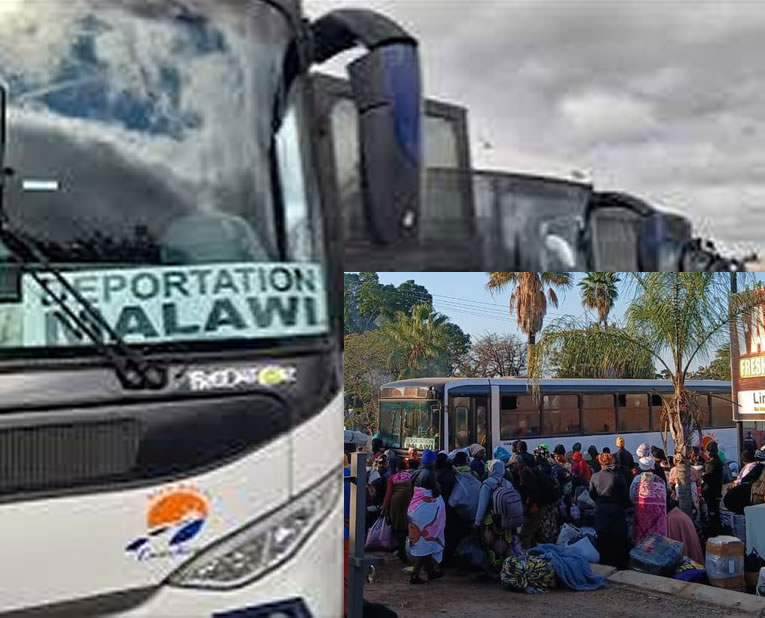
Musina, Limpopo – A somber cloud hangs over South Africa’s ongoing efforts to repatriate undocumented foreign nationals after a Malawian citizen tragically died on a bus bound for the Beitbridge Border Post. The incident, which occurred on Sunday night, July 5, 2026, has sparked a forensic investigation by the South African Police Service (SAPS) and ignited fresh concerns about the safety and conditions faced by individuals during these mass repatriation operations.
The deceased, whose identity has not yet been officially released, fell ill while being transported from the Musina Temporary Repatriation Centre. While details surrounding the exact cause of death remain scarce, the fatality marks a grim milestone, reportedly being the third death recorded during the current repatriation exercise involving Malawian nationals. This succession of tragedies casts a long shadow over the process, prompting calls for greater transparency and accountability.
The South African government has extended its condolences to the family of the deceased, acknowledging the profound loss. However, this official sympathy is juxtaposed against a backdrop of increasing scrutiny from human rights organisations and the public. Questions are now being raised about the medical screening procedures before boarding, the availability of emergency medical care during transit, and the overall humanitarian standards maintained on these long journeys.
Repatriation operations have been a key component of South Africa’s nationwide immigration crackdown. Thousands of undocumented Malawian nationals have been processed and transported, often under difficult circumstances. The route from Musina, a critical transit point, to the Beitbridge Border Post, which connects South Africa with Zimbabwe, is long and arduous. For individuals already in vulnerable health, such a journey can pose significant risks.
Sources close to the operation indicate that the individual’s health deteriorated rapidly on the bus. While the SAPS forensic investigation is underway to determine the precise cause of death, the incident has reignited a broader debate about the human cost of strict immigration policies. Critics argue that while countries have a right to manage their borders, the process must always uphold the dignity and fundamental human rights of those being repatriated.
This latest fatality adds to a growing list of concerns that have plagued similar operations in the past. Previous reports have highlighted issues ranging from overcrowding on buses to inadequate provisions for food, water, and sanitation. Each death, however, serves as a stark reminder that these are not just statistics, but individual lives with families and communities who are left to mourn.
The Malawian government has yet to issue a formal statement regarding this specific incident, but it is expected that they will be closely monitoring the SAPS investigation. The diplomatic implications of such events are significant, often straining relations between South Africa and its neighbouring countries. Ensuring that investigations are thorough, transparent, and lead to actionable changes is crucial for maintaining regional stability and trust.
For the families of those being repatriated, the journey is often fraught with anxiety. They hope for a safe return, but incidents like this underscore the dangers involved. The lack of detailed information surrounding the death of this Malawian national only amplifies the fears of others undergoing similar processes. It calls for a more compassionate and humane approach to managing complex migration challenges.
As the SAPS continues its forensic work, the public will be watching for answers. Was the individual medically fit to travel? Were there medical personnel on board? What measures are in place to prevent such tragedies from happening again? These are critical questions that demand clear and unequivocal responses from the authorities.
This incident is a powerful and painful illustration of the human element at the heart of immigration debates. Beyond the policies and the statistics, there are real people facing immense challenges. The death of the Malawian national on the repatriation bus is a tragic reminder that in the pursuit of enforcing immigration laws, the well-being and dignity of every individual must remain paramount. The hope is that this tragedy will serve as a catalyst for reviewing and improving the conditions and procedures of all future repatriation operations, ensuring that no more lives are lost in such heartbreaking circumstances. The road to justice and reform, however, remains long and uncertain.