

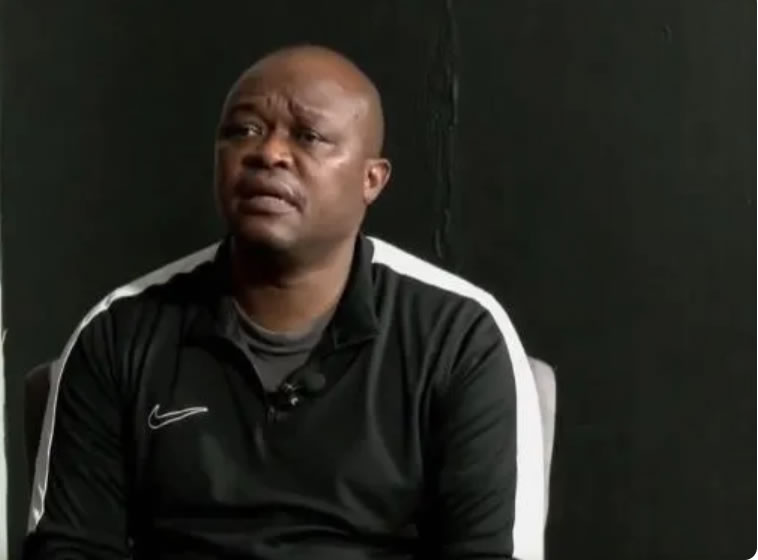
Brown Mogotsi's House of Cards: Political Fixer Accused of Bribery as 'Staged Assassination' Case Crumbles.
Self-styled political fixer Brown Mogotsi's legal troubles deepened dramatically this week when prosecutors revealed he allegedly attempted to bribe the investigating officer handling his case – adding yet another explosive layer to an already sensational trial that has gripped South Africa's attention.
The Johannesburg Magistrate's Court heard shocking testimony on Monday that painted a picture of a man allegedly willing to do whatever it takes to avoid the consequences of what the State claims was an elaborately staged assassination attempt designed to deceive both law enforcement and the public.
According to an affidavit presented by investigating officer Alfred Odendaal, Mogotsi approached him shortly after his arrest whilst leaving the cells, making what Odendaal interpreted as a clear attempt at bribery.
"Is there something I can do for you not to oppose my bail?" Mogotsi allegedly asked the officer, in what prosecutors characterise as a brazen attempt to influence the criminal proceedings against him.
Odendaal's response was immediate and unequivocal. "I told him immediately he must not even think of going that route with me," the investigating officer's affidavit stated.
But according to Odendaal's account, Mogotsi didn't stop there. After allegedly backtracking and claiming his words were misunderstood, the information peddler tried a different approach – offering "information" to the officer.
Odendaal said the comment made no sense and that he firmly told Mogotsi there was no information he needed from him relating to any other matter. The exchange, brief as it was, now forms part of a growing body of evidence suggesting Mogotsi may be willing to bend the rules to escape justice.
Mogotsi, however, has categorically denied the bribery allegation, setting the stage for a credibility battle between the accused and law enforcement that will likely feature prominently as the case proceeds.
Appearing in court on Monday dressed smartly in a crisp white shirt and blue suit, Mogotsi faces five serious charges stemming from what prosecutors allege was an entirely fabricated assassination attempt in Vosloorus. The incident, which initially appeared to be a genuine attempt on his life, has since unraveled into what the State characterizes as an elaborate hoax orchestrated by Mogotsi himself.
The alleged incident saw Mogotsi claim that unknown suspects in a white bakkie had attempted to shoot him in a drive-by shooting, forcing him to flee from his vehicle in fear for his life. It was a dramatic story that initially garnered sympathy and concern – but one that prosecutors now say was nothing more than fiction from beginning to end.
Mogotsi styles himself as a political fixer and businessman, and has become a central figure before the Madlanga Commission, which is currently probing corruption and political interference in South Africa's criminal justice system. His prominence in these high-stakes political proceedings makes the current criminal charges against him all the more significant.
The State's case against Mogotsi rests on multiple pillars of evidence that prosecutors believe comprehensively demolish his version of events.
According to the prosecution, Mogotsi had employed private security services that operated under strict protocols requiring him to inform his security detail of his planned movements so they could arrange appropriate protection. On the day of the alleged assassination attempt, however, Mogotsi abandoned these security measures entirely – a decision the State suggests was deliberate and calculated.
Even more damning is witness testimony that directly contradicts Mogotsi's account. The State claims a witness observed Mogotsi exit his vehicle and shoot at it himself using an unlicensed firearm. That weapon, police allege, has since been forensically linked to a murder in Eldorado Park and an attempted murder in Roodepoort – raising serious questions about Mogotsi's possible involvement in other violent crimes.
Ballistics evidence presented by the State paints an equally devastating picture for Mogotsi's defense. Forensic analysis allegedly established several critical facts: the vehicle was stationary when shot, all the rounds originated from the same place and direction – specifically the front left of the vehicle – and most tellingly, there was no person inside the vehicle at the time it was shot at.
These findings fly in the face of Mogotsi's claimed narrative of a drive-by shooting by unknown assailants. Combined with CCTV footage that prosecutors say supports the ballistics conclusions, the State believes it has comprehensively proven that Mogotsi's version is "a work of fiction."
But the allegations against Mogotsi don't end with the staged shooting. Investigating officer Odendaal has further accused the information peddler of systematically lying about his residential address – a pattern of deception that prosecutors argue demonstrates both consciousness of guilt and likelihood of flight.
Mogotsi, who has previous convictions dating back to 2012, had a Mahikeng address listed on his criminal record. When Odendaal visited that address to verify it, a resident informed him that Mogotsi did not live there, explaining that she herself had lived at the property for the past 20 years.
A second address was then provided in an affidavit signed by Mogotsi's wife and confirmed by the area's traditional council. This address, listed as being in Mmabatho, North West, also proved problematic. When Odendaal attempted to verify it, he could not find the street number and was told by locals that Mogotsi did not reside there.
The investigating officer's frustration with what he perceives as deliberate obstruction was evident in his affidavit. "In my view, [his wife] is in cahoots with him not to furnish the correct residential address," Odendaal stated bluntly.
Adding weight to concerns about Mogotsi potentially fleeing, Odendaal revealed that the accused had previously been circulated as a wanted person – what the officer described as "a clear indication of the likelihood that Mogotsi would evade trial."
It was on the strength of all these factors – the alleged bribery attempt, the evidence contradicting his assassination story, the unlicensed firearm linked to other serious crimes, and the pattern of providing false addresses – that Odendaal argued Mogotsi should not be granted bail.
Mogotsi has pushed back against at least some of these allegations through a supplementary affidavit. Regarding the address confusion, he claimed this frequently occurred, which is why he had provided a WhatsApp location pin to enable investigators to find his actual residence.
The matter was postponed to Thursday to allow the State another opportunity to verify the provided address using the digital location pin – a small detail that nonetheless carries enormous weight for Mogotsi's bail prospects.
The case has become a sensation precisely because it involves a man who has positioned himself at the intersection of politics, information, and power in South Africa – now potentially exposed as someone willing to fabricate dramatic events for reasons that remain unclear.
As the case continues to unfold, several critical questions hang in the air. If prosecutors are correct that Mogotsi staged his own assassination attempt, what motivated such a drastic and risky scheme? Was it designed to gain sympathy, deflect attention from other matters, or serve some other strategic purpose in the murky world of political fixing he inhabits?
The alleged possession of an unlicensed firearm linked to a murder and attempted murder raises equally troubling possibilities about Mogotsi's involvement in South Africa's criminal underworld. These connections could potentially expose networks of violence and criminality that extend far beyond a single staged shooting.
The timing of these charges is also significant given Mogotsi's role before the Madlanga Commission. As someone who has presented himself as an insider with knowledge of corruption and political interference in the justice system, his own alleged attempts to manipulate that very system through bribery and deception create a deeply ironic situation. It raises questions about his credibility as a witness in corruption proceedings when he himself now faces serious criminal allegations.
Legal experts following the case suggest that if convicted on all five charges, Mogotsi could face substantial prison time. The charges reportedly include illegal possession of a firearm, illegal possession of ammunition, defeating the ends of justice, and related offenses stemming from the staged shooting allegation.
The bribery allegation, while not yet a formal charge, could potentially lead to additional criminal proceedings if prosecutors decide there is sufficient evidence to pursue it. Such a charge would carry serious consequences, as attempting to bribe a law enforcement officer strikes at the heart of the justice system's integrity.
For now, Mogotsi's immediate concern is the bail hearing, which will resume on Thursday. His ability to secure release pending trial depends heavily on convincing the court that he will not flee and that he poses no danger to the community or the administration of justice.
The address verification issue has become a proxy battle for the larger question of Mogotsi's trustworthiness. If prosecutors can demonstrate that he has systematically lied about something as basic as where he lives, it strengthens their argument that he cannot be trusted to comply with bail conditions or to appear for trial.
Conversely, if Mogotsi can satisfactorily explain the address confusion and provide verifiable proof of his actual residence through the WhatsApp location pin, it may remove one obstacle to his potential release – though significant hurdles would remain given the seriousness of the charges and the strength of the evidence prosecutors claim to possess.
The case also highlights broader issues within South Africa's political and criminal justice landscape. Mogotsi's career as an "information peddler" and "political fixer" points to the existence of shadow networks where information, influence, and power are traded outside formal institutional channels. His alleged willingness to stage a shooting and attempt bribery suggests these networks may operate according to rules that have little to do with law or ethics.
The Madlanga Commission itself was established to investigate precisely these kinds of problems – corruption and political interference that undermine public confidence in the justice system. That one of its key witnesses now stands accused of attempting to corrupt that same system is a bitter irony that has not been lost on observers.
As the legal proceedings continue, both prosecution and defense teams are preparing for what promises to be a hard-fought battle. The State appears confident in its forensic evidence, witness testimony, and CCTV footage. Mogotsi's defense will need to find ways to challenge this evidence or provide alternative explanations that account for the ballistics findings, witness accounts, and video records.
The court will reconvene on Thursday, when prosecutors will present their findings from the address verification using the WhatsApp location pin provided by Mogotsi. That proceeding will likely determine whether he walks free on bail or remains in custody as the case progresses toward trial.
For a man who built his reputation on possessing and trading information, Brown Mogotsi now finds himself in a position where the information being presented about him – ballistics reports, witness statements, forensic evidence, and investigative findings – may determine his freedom and future.
The story serves as a cautionary tale about the dangers of operating in the shadows, where the line between fixer and fraud can blur, and where elaborate schemes can unravel when subjected to the hard light of forensic scrutiny and criminal investigation.
What happens next remains to be seen, but one thing is certain: Thursday's hearing will be closely watched by all those interested in justice, politics, and the intersections between them in contemporary South Africa.