Khayelitsha Man Dies in Tragic Electrocution While Attempting Illegal Power Connection
CAPE TOWN, Western Cape – A 39-year-old man from Khayelitsha tragically lost his life on Wednesday night after being electrocuted and falling from an electrical pole in what authorities describe as an attempt to connect illegal cables during a widespread power outage in the Harare area. The incident, which occurred just before 9pm on 27 May 2026, has cast a harsh light on the perilous realities faced by communities grappling with persistent electricity supply issues.
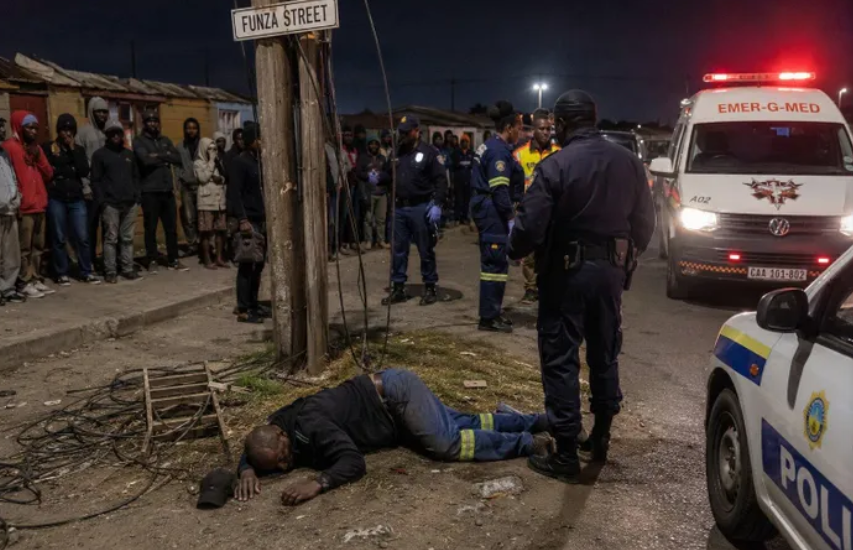
Police and emergency medical services were swiftly dispatched to Funza Street, where the deceased was found. He was declared dead at the scene, having sustained a fatal head injury following the electrocution. The incident has sent a sombre ripple through the community, highlighting the desperate measures some residents resort to in the face of prolonged darkness.
According to police reports, the man had allegedly climbed an electrical pole in Funza Street and was tampering with the electrical infrastructure to illegally connect power when the fatal shock occurred. The South African Police Service (SAPS) has confirmed the details surrounding the tragic event.
Police spokesperson Thembakazi Mpendukana provided an official statement on the matter, confirming the opening of an inquest docket. “Harare SAPS has opened an inquest docket following an incident that occurred at Funza Street, Harare on Wednesday, 27 May 2026, at around 8.58pm,” Mpendukana explained. “According to reports, the 39-year-old male was connecting illegal cables on an electric pole, resulting in him being electrocuted. He fell on his head and was declared deceased on the crime scene by medical personnel. Investigation continues.”
The practice of "jepping power" – a colloquial term for making illegal electricity connections – is a dangerous and widespread phenomenon in many South African townships, often driven by frustration over unreliable or non-existent formal electricity supply. These connections pose significant risks, not only to those attempting them but also to the broader community, leading to power surges, fires, and further strain on an already fragile grid. The tragic death in Harare serves as a stark reminder of these inherent dangers.
Adding another layer of complexity to the incident is the ongoing power crisis plaguing the Harare area. Ward councillor Anele Gabuza, while condemning the actions that led to the man's death, articulated the profound frustration felt by residents. Gabuza revealed that she was unaware of the specific incident at Funza Street but acknowledged the widespread nature of the power cuts.
“I did not get the information about this incident. I am not aware,” Gabuza stated, underscoring the challenge of staying abreast of every individual hardship during such widespread service delivery failures. However, she was quick to address the broader context: “The power has been off in the entire Harare for quite some time. I am still contacting Eskom to come and fix the problem.”
Councillor Gabuza painted a grim picture of daily life for many in her ward, where electricity outages are not merely an inconvenience but a debilitating constant. “Many residents are waiting on Eskom to come and switch the power on because some people’s electricity has been off for three weeks, some have been off for one month, and the problem is not being fixed,” she lamented. The prolonged periods without power significantly impact household safety, food preservation, children's ability to study, and small businesses, pushing communities to the brink.
The councillor expressed her own bewilderment regarding the delays in restoring power. “I am not sure what is going on and causing the delay, or when the electricity will be restored,” Gabuza admitted, reflecting the lack of clear communication and accountability that often characterises such service delivery breakdowns. This uncertainty only exacerbates community frustration and can, in some instances, drive individuals to desperate and dangerous measures, such as attempting illegal connections.
The Daily Voice attempted to contact Eskom for comment on the mentioned power outage and the broader issues affecting Harare. However, no response was received before the time of publishing. This silence from the national power utility further compounds the sense of helplessness felt by residents and local leaders alike, who are left to navigate the consequences of an unreliable electricity supply without clear guidance or timelines for resolution.
As the police continue their investigation into the inquest docket, the incident in Khayelitsha serves as a poignant and tragic illustration of the complex interplay between poverty, inadequate service delivery, and the desperate risks individuals are willing to take in the pursuit of basic necessities. It highlights the urgent need for sustainable solutions to South Africa's energy crisis, not only to power homes but to prevent further loss of life in communities already struggling with immense challenges. The death of the 39-year-old man is a stark reminder that behind every power outage and every illegal connection lies a human story, often one of hardship and despair.