

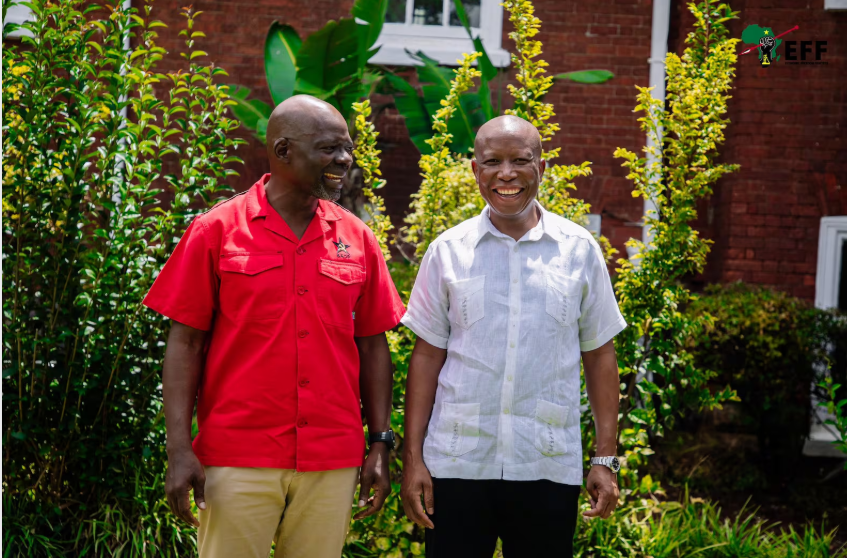
In a move that has sent ripples through the South African political landscape, the South African Communist Party (SACP) and the Economic Freedom Fighters (EFF) have held a high-stakes bilateral meeting that could signal a major shift in the country’s power dynamics. The meeting, led by SACP General Secretary Solly Mapaila and EFF President Julius Malema, took place on March 2, 2026, and has already sparked intense speculation about the future of the long-standing Tripartite Alliance.
The two parties, which have often been at odds in the past, have agreed to form a joint task team to prepare for a "Conference of the Left." This conference, set to take place ahead of the 2026 local government elections, aims to unite "progressive forces" in South Africa. While the SACP has invited the African National Congress (ANC) to join the conference, the move is seen by many as a direct challenge to the ANC’s dominance and a sign of the SACP’s growing frustration with its long-time partner.
Solly Mapaila, who has been a vocal critic of the ANC’s recent policy directions, was blunt in his assessment of the situation. "The ANC’s arrogance and its refusal to take the alliance seriously have left us with no choice but to seek new ways of working with other progressive forces," Mapaila said. "We are not seeking new allies to replace the ANC, but we are committed to building a broader front that can truly represent the interests of the working class and the poor."
The EFF, for its part, has welcomed the opportunity to work with the SACP. Julius Malema, who was once a rising star in the ANC before being expelled, has long called for a united front of left-wing parties. "The time has come for the left to unite and provide a real alternative to the neoliberal policies of the ANC," Malema stated. "We are ready to work with the SACP and any other party that shares our vision of a more equitable and just South Africa."
The potential for a SACP-EFF alliance is a significant development for several reasons. First, it represents a major break in the Tripartite Alliance, which has governed South Africa since the end of apartheid in 1994. The SACP has been a loyal partner to the ANC for decades, providing it with intellectual and grassroots support. If the SACP were to contest the 2026 local elections independently, as it has hinted it might, it could drain significant support from the ANC, particularly in its traditional strongholds.
Second, the alliance between the SACP and the EFF could create a powerful new political force. The EFF has already established itself as the third-largest party in South Africa, with a strong following among young people and the urban poor. Combined with the SACP’s organizational strength and its ties to the trade union movement, a united left-wing front could pose a serious threat to the ANC’s majority.
The ANC has responded to the news with a mixture of caution and concern. In a statement, the party said it remained committed to the Tripartite Alliance and would continue to work with its partners to address the challenges facing the country. However, behind the scenes, there is a growing sense of unease. The ANC is already facing a decline in support, and the prospect of a split in the alliance is the last thing it needs as it prepares for the 2026 elections.
The economic impact of such a political shift could also be significant. Investors and business leaders are likely to be wary of a government that includes the EFF, which has called for the nationalization of mines and banks. The SACP’s own socialist agenda is also a cause for concern for some. However, supporters of the alliance argue that a more left-wing government is exactly what South Africa needs to address its high levels of inequality and poverty.
As the joint task team begins its work, the eyes of the nation will be on the "Conference of the Left." The outcome of this conference could determine the future of South African politics for years to come. Will the SACP and the EFF be able to overcome their differences and build a lasting alliance? And how will the ANC respond to this challenge to its authority?
For many South Africans, the prospect of a new political alternative is a welcome development. The country is facing a range of challenges, from high unemployment and a struggling economy to widespread corruption and a lack of basic services. Many feel that the ANC has lost its way and that a new approach is needed. Whether the SACP and the EFF can provide that alternative remains to be seen, but for now, the "Red Alert" has been sounded, and the political landscape is shifting.
The "Conference of the Left" is not just about political maneuvering; it is about the future of the country. It is a call to action for all those who believe that a better South Africa is possible. As Solly Mapaila put it, "We are at a crossroads, and the choices we make now will determine the fate of our nation. We must unite and fight for a future that belongs to all of us, not just a privileged few."
The coming months will be a testing time for all the parties involved. The SACP will need to navigate the delicate balance between its loyalty to the ANC and its desire for a more radical agenda. The EFF will need to show that it can be a reliable partner and that its policies are more than just rhetoric. And the ANC will need to find a way to reconnect with its base and address the concerns of its partners.
In the end, the real winners or losers will be the people of South Africa. They are the ones who will live with the consequences of these political shifts. As the "Red Alert" continues to sound, the hope is that it will lead to a more vibrant and inclusive democracy, where the voices of the poor and the working class are finally heard.