THE ENEMY WITHIN: HOW THE POLICE HUNTED THEIR OWN DECORATED DETECTIVE
The quiet afternoon of 18 September 2020 in Bishop Lavis, Cape Town, was shattered by the staccato of gunfire that would change the landscape of South African policing forever. Lieutenant-Colonel Charl Kinnear, a man whose name was synonymous with the relentless pursuit of gang leaders and underworld figures, was gunned down outside his own home. He was sitting in his white Toyota Corolla, a familiar sight in the neighbourhood, when the assassin struck. But as the years have peeled back the layers of this high-profile assassination, a more sinister narrative has emerged from the hallowed halls of the Western Cape High Court. It is a story not just of a gangland hit, but of a calculated betrayal by the very institution Kinnear served with such distinction.
In a series of explosive testimonies delivered in April 2026, the court heard that Kinnear was being tracked not only by the underworld but by members of the South African Police Service (SAPS) themselves. Mario September, the Deputy Provincial Head of the Independent Police Investigative Directorate (IPID), revealed that high-ranking officers are currently under the microscope for their alleged involvement in the circumstances surrounding the murder. The investigation, which has been broadened following significant concerns raised by former National Police Commissioner Khehla Sitole and former Minister of Police Bheki Cele, has cast a long, dark shadow over the integrity of the force.
|
Key Figure
|
Rank/Role
|
Status/Involvement
|
|
Charl Kinnear
|
Lieutenant-Colonel (Anti-Gang Unit)
|
Deceased (Victim)
|
|
Mario September
|
Deputy Provincial Head (IPID)
|
Lead Investigator/Witness
|
|
Nafiz Modack
|
Alleged Underworld Figure
|
Primary Accused
|
|
Zane Kilian
|
Former Debt Collector
|
Accused (Pinging specialist)
|
|
Andre Lincoln
|
Major-General (Former AGU Head)
|
Deceased (Under investigation)
|
|
Peter Jacobs
|
Lieutenant-General
|
Under investigation
|
|
Mzwandile Tiyo
|
Major-General
|
Under investigation
|
The revelation that police officers "pinged" Kinnear's mobile phone in the lead-up to his death has fundamentally reshaped the public's understanding of the case. When Judge Robert Henney questioned whether there was concrete evidence of a conspiracy to murder within the police ranks, September was cautious but firm. He confirmed that a task team member had provided a statement indicating that SAPS members were actively tracking Kinnear's location prior to the hit. "These members would have then become suspects," September stated, marking a chilling admission that the hunter had become the hunted within his own department.
The scale of the surveillance against Kinnear was staggering. At the heart of this digital dragnet was Zane Kilian, a former debt collector now facing 122 charges alongside alleged underworld boss Nafiz Modack. Evidence presented in court showed that Kinnear's phone was pinged a total of 2,408 times. On the very day he was murdered, his location was traced 38 times, with the first ping occurring at 02:32 am. This was not mere curiosity; it was a tactical operation designed to pinpoint the exact moment Kinnear would be most vulnerable.
Bradley Goldblatt, the co-owner of the pinging company 1 Track Solutions, provided a haunting account of the weeks preceding the assassination. Goldblatt, who sold "ping bundles" to Kilian, testified that he became increasingly alarmed by the frequency and nature of the tracking. He noticed that Kilian was repeatedly pinging Kinnear, Sergeant Tisha van der Horst, and the prominent lawyer William Booth—who himself had survived an assassination attempt just months earlier.
"I panicked," Goldblatt told the court. He reached out to a contact in the State Security Agency, who directed him to the Hawks' Crimes Against the State unit. Despite his desperate warnings that a shooting was imminent, the machinery of the law failed to move. Kinnear was left exposed, his movements monitored in real-time by those who sought his end, while the authorities who should have protected him remained inexplicably idle.
The failure to protect Kinnear was not merely a lapse in judgement; it was a systemic collapse. For months leading up to his death, Kinnear had been the subject of intense threats. Protection had been arranged, yet it was mysteriously withdrawn just months before the hit. Major-General Andre Lincoln, Kinnear's former boss and the head of the Anti-Gang Unit at the time, found himself at the centre of this controversy. Before his death in May 2025, Lincoln testified that he had requested investigations into the threats and the provision of security. However, he claimed his hands were tied, stating he was "waiting for feedback" from the provincial commissioner and believed it was not his primary responsibility to drive the investigation once it had been reported to crime intelligence.
This bureaucratic finger-pointing has been a recurring theme in the IPID investigation. September noted that the original probes conducted by SAPS and the Hawks were found to be "inadequate" and "narrow in scope." The IPID's broader investigation has delved into the existence of a so-called "rogue unit" within the Western Cape police, with allegations that its members were co-operating directly with gang leaders. There is a profound suspicion within the Crime Intelligence (CI) division, with members allegedly working against one another, some reportedly in the pockets of the very criminals they were tasked to dismantle.
To further complicate the narrative, a smear campaign was launched against Kinnear even as he was being tracked for execution. Allegations were circulated that he was corrupt, with claims that he had received money from gang leaders to settle the bond on his house. These accusations were designed to delegitimise his work and perhaps justify the withdrawal of his protection. However, Judge Henney has been dismissive of these claims, noting that there was "not a shred of evidence" to support the idea that Kinnear was anything other than a dedicated officer. The judge remarked that the defence was trying to infer corruption without any factual basis, a common tactic used to muddy the waters in underworld trials.
The trial of Nafiz Modack and his 14 co-accused has become a marathon of justice, exposing the intricate web of Cape Town's criminal underworld and its alleged ties to the police. Modack, a man often seen as a shadow figure in the city's security and nightclub industries, faces a mountain of evidence. The prosecution alleges that he used Kilian as his digital bloodhound, paying him nearly R100,000 to track his enemies and those who stood in his way. The charges against the group are a grim catalogue of modern crime: murder, attempted murder, corruption, extortion, and the illegal interception of communications.
Among the co-accused is former Anti-Gang Unit Sergeant Ashley Tabisher, whose presence in the dock underscores the rot within the unit Kinnear helped build. The state alleges that Tabisher was being groomed by Modack's associates, offered money and a mobile phone in exchange for information about when the unit would be conducting raids on Modack's properties. While Tabisher has denied the charges, his involvement highlights the constant pressure and temptation faced by officers operating on the front lines of the gang war.
|
Accused
|
Primary Allegations
|
|
Nafiz Modack
|
Masterminding the murder of Kinnear and the attempted murder of William Booth.
|
|
Zane Kilian
|
Illegal tracking (pinging) of Kinnear and others; conspiracy to murder.
|
|
Ashley Tabisher
|
Corruption; allegedly providing inside information to Modack’s syndicate.
|
|
Amaal Jantjies
|
Conspiracy to murder; linked to hand grenade attacks on Kinnear’s home.
|
|
Jacques Cronje
|
Extortion and kidnapping; linked to Modack’s security operations.
|
The case has also shed light on earlier attempts on Kinnear's life that should have served as a final warning to the police command. In November 2019, a hand grenade was found outside Kinnear's home. Amaal Jantjies and Janick Adonis were later linked to this plot, with recordings emerging of Jantjies discussing the hit. Despite these clear and present dangers, the institutional response remained lethargic. The withdrawal of Kinnear's static security detail in December 2019, followed by the complete removal of his protection in early 2020, remains one of the most contentious points of the trial.
Major-General Andre Lincoln's role in this decision has been a point of intense scrutiny. Lincoln, who passed away in 2025, was interviewed twice by IPID. He maintained that he had done his part by reporting the threats to his superiors. Yet, the IPID report suggests a "serious dereliction of duty" by several commanders. The report indicates that the inaction of leadership within the Western Cape SAPS and Crime Intelligence created a "perfect storm" that allowed the assassins to operate with impunity. The court heard that there was a deep-seated culture of mistrust, where officers were more concerned with internal politics and protecting their own interests than the safety of a colleague whose life was clearly on the line.
The "pinging" industry itself has come under fire during the trial. Bradley Goldblatt's testimony revealed a grey market where sensitive location data could be bought for a few thousand rands. Using the LAD system—developed by a company in the United States—Kilian was able to bypass the legal requirements of the RICA Act, which is supposed to govern the interception of communications in South Africa. Goldblatt admitted he had no formal authorisation to conduct such operations, yet his business flourished by catering to debt collectors, security firms, and, evidently, those with more murderous intentions.
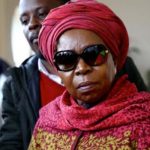
The tragedy of Charl Kinnear is not just the loss of a father, a husband, and a decorated officer. It is the story of a man who was left to stand alone against a tide of corruption. His wife, Nicolette Kinnear, has been a constant presence in the courtroom, a silent witness to the slow uncovering of the truth. She has been vocal about the betrayal her husband suffered, often pointing out that the police failed to protect one of their own despite knowing exactly how much danger he was in.
As the trial continues, the focus remains on the "deeper issues" identified by Mario September: the role of rogue units, the collusion between police and gangs, and the failure of the oversight mechanisms intended to prevent such a tragedy. The IPID investigation is still ongoing, with the possibility of more arrests and departmental charges against high-ranking officers. The court's eventual verdict will be a landmark, but for many, the damage to the reputation of the South African Police Service is already done.
The legacy of Charl Kinnear serves as a grim reminder of the cost of integrity in a system riddled with compromise. He was a man who knew the risks, who had looked into the abyss of the Cape Flats gang wars and refused to blink. In the end, it wasn't just the underworld that caught up with him; it was the silence and the active participation of those he called colleagues. The hunt for justice for Kinnear is more than a criminal trial; it is a battle for the soul of South African policing.
The story of the "pinged" cop will resonate for years to come, a cautionary tale of how technology, corruption, and bureaucratic apathy can combine to extinguish a life dedicated to the law. As the Western Cape High Court moves towards its conclusion, the country watches to see if the "enemy within" will finally be held to account, or if the shadows that claimed Kinnear will continue to loom over the streets he once tried to protect. Justice for Kinnear would mean more than just a prison sentence for his killers; it would require a complete purging of the rot that allowed his assassination to happen in the first place. Until then, the memory of the detective in the white Toyota Corolla remains a haunting symbol of a betrayal that the community will never forget.