

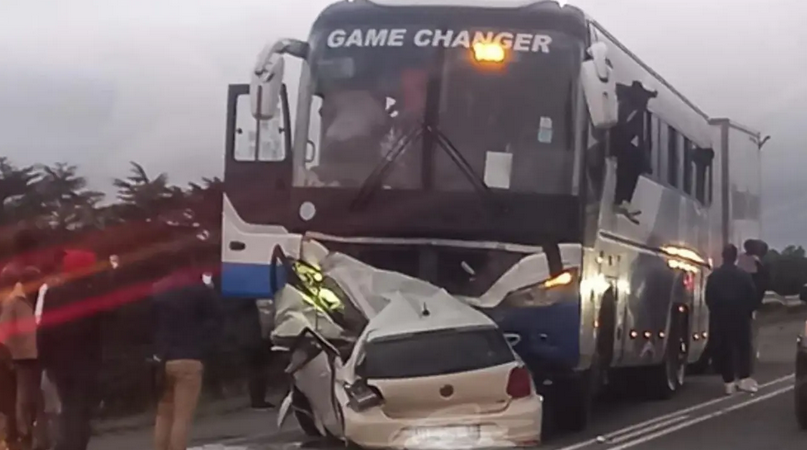
The N6 highway between East London and Stutterheim is often a scenic and peaceful route through the heart of the Eastern Cape, but in the early hours of this morning, it became a scene of unimaginable carnage and despair. A head-on collision between a VW Polo and a massive bus carrying 60 Zimbabwean passengers has left five people dead and over 60 injured, sparking a frantic and chaotic rescue operation that has gripped the nation. The image of the mangled Polo, literally "trapped under the bus," has become a haunting symbol of the tragedy that has shattered families across two borders and left a community in shock.
Witnesses at the scene describe a landscape from a nightmare, where the silence of the night was replaced by the screams of the dying and the frantic shouts of the survivors. "The sound was like a bomb going off, it shook the ground beneath my feet," says one survivor, who was seated at the back of the bus and managed to crawl through a broken window. "People were screaming for their children, the smell of diesel and burning rubber was everywhere. We couldn't get out because the doors were jammed by the force of the impact. It was a metal tomb." Emergency services arrived to find the VW Polo crushed beyond recognition, its five occupants having died instantly on impact. The bus, which was en route to Zimbabwe, was filled with families, many of whom were returning home after months of hard work in South Africa, carrying their life's savings in their luggage.
The human drama is overwhelming and deeply personal. Among the injured are children as young as three and the elderly, some of whom have lost everything they owned in the crash. "My brother was in that car, he was coming to see us for the weekend," says a distraught relative at the scene, her voice breaking as she stares at the wreckage through a line of police tape. "He was just going to work, he had so many plans. Now he is gone, and I don't know how to tell our mother." The economic impact of such a disaster is also significant, as the N6 is a vital artery for trade and travel between South Africa and its neighbours. The road remained closed for over twelve hours as forensic teams worked to identify the victims and clear the debris that was scattered for hundreds of metres.
The political tension surrounding road safety in South Africa has been reignited by this latest horror, with many questioning why our highways remain some of the deadliest in the world. Transport Minister Sindisiwe Chikunga has expressed her "deepest condolences" to the families of the victims but is facing growing and angry pressure to explain the lack of progress in reducing road carnage. "How many more families must be destroyed, how many more children must be orphaned before we see real action on driver fatigue, vehicle roadworthiness, and the lawlessness of our roads?" asks a spokesperson for the Road Freight Association. There are calls for stricter regulations on long-distance buses and a more visible police presence on known "killer routes" like the N6.
The police have opened a case of culpable homicide, but the "cause of the collision" is still under intense investigation. Early reports from the scene suggest that one of the vehicles may have been trying to overtake in a dangerous and poorly lit section of the road, leading to the fatal meeting. For the 60 Zimbabwean passengers, the journey that was supposed to end in a joyful reunion with their loved ones has ended in a cold hospital ward in East London, with many now facing an uncertain future as they recover from their injuries and the trauma of the night.
As the sun sets over the Eastern Cape today, the "N6 Massacre" serves as a sobering and painful reminder of the fragility of life on our roads. There will be five empty chairs at dinner tables tonight, and a hundred lives have been changed forever by a single moment of impact. The "VW Polo trapped under the bus" is an image that will haunt the South African psyche for a long time to come, a testament to the high price we pay for our mobility. We mourn with the families, we pray for the injured, but we also demand answers from those in power. When will our roads finally be safe for everyone?