The glittering façade of South Africa's entertainment industry often obscures the complex, and sometimes exploitative, realities that keep it running. Recently, acclaimed actress and producer Sonia Mbele found herself at the epicentre of a fierce social media storm after publicly crediting her Zimbabwean house manager for raising her children. What began as a seemingly innocent post of gratitude quickly morphed into a vicious debate about celebrity parenting, xenophobia, and the exploitation of migrant workers. Controversial music executive Nota Baloyi immediately raised a red flag, sparking a transnational conversation that has captivated tabloid lovers across the region.
The drama unfolded when the former Generations and Blood and Water star sat down for a candid interview on "The Ollah 7" podcast. While reflecting on her demanding career, Mbele gave a heartfelt shout-out to the woman who managed her household during her gruelling 12-hour shifts on set. "My first house manager Jennifer, is/was from Zimbabwe. She was with me for years. Jennifer raised my children," Mbele explained. "Literally, Aunty Jennifer raised my children, and because you've been with somebody for that long, they raise your children. I even took her to a cooking school, Jennifer was a chef, she did a course for house management."
While many listeners perceived Mbele's comments as the honest reflections of a hardworking mother balancing a high-profile career, Nhlamulo "Nota" Baloyi saw an opportunity to strike. The outspoken music executive, known for his provocative online persona and recent legal battles—including an Equality Court case involving the South African Human Rights Commission for alleged hate speech — took to X (formerly Twitter) to deliver a scathing critique. "Raise your children because you're an irresponsible mother … I would never say my maid raised me, she did her job and took instructions from the woman raising me!" he posted.
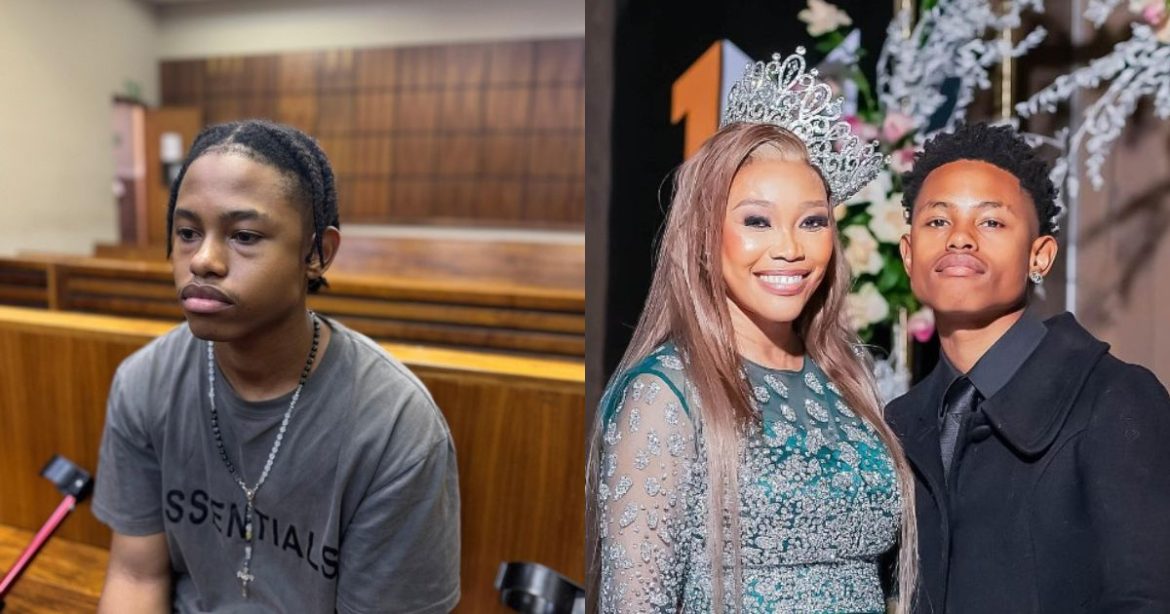
Baloyi's harsh words ignited a firestorm of public backlash, forcing South Africans to confront uncomfortable truths about the power dynamics within celebrity households. The comments section quickly turned into a digital battlefield, with users scrutinising Mbele's parenting choices. The situation was further complicated by the recent legal troubles of Mbele's 23-year-old son, Donell Mbele, who appeared in the Randburg Magistrate's Court in January 2025 on two counts of rape and was released on R1,000 bail.
One user, @FollowMakhi, added fuel to the fire by connecting the two issues: "A South African could have done the same thing, that why her son is facing charges of rape. She was busy with foreigners instead of raising her son well." Another user, @DenisTlhabi, echoed this sentiment, stating, "Now it makes (sense) why her boy is the way he is, he had absent parents."
However, others defended Mbele, pointing out that Baloyi was simply being his usual controversial self. User @KganyaIsago commented, "Lol, wena, you're always complicating simple things lol," while @CSShabz pointedly asked Baloyi, "Are you a mother?"
This gossip-meets-social-commentary piece must dissect the cultural and psychological layers of the scandal. We must explore the reality of wealthy celebrities outsourcing their parental duties to Zimbabwean domestic workers, who often leave their own families behind to seek greener pastures. The South African entertainment industry frequently relies on this migrant labour while simultaneously turning a blind eye to rising anti-immigrant sentiments.
The vulnerability of Zimbabwean migrant women in South Africa is a pressing issue that extends far beyond the confines of celebrity mansions. These women are exposed to a higher risk of gender-based violence due to the intersecting dynamics of xenophobia, patriarchal gender power relations, and economic marginalisation.
According to recent data from the South African Police Service, there has been an 18% increase in reported cases of gender-based violence against foreign national women, among whom Zimbabwean migrants are overrepresented. Furthermore, these women face significant barriers in accessing support services due to their insecure immigration status and language constraints.
The Mbele scandal also highlights the hypocrisy of an industry that benefits from migrant labour while the country grapples with severe xenophobic violence. In late April 2026, anti-immigration marches in Pretoria and Johannesburg prompted urgent safety advisories from the Zimbabwean Embassy and the Nigerian Union of South Africa.
Demonstrators, chanting "We are xenophobic," demanded that all foreigners leave the country, which currently hosts approximately 2.4 million migrants.
While President Cyril Ramaphosa and Acting Police Minister Firoz Cachalia condemned the attacks as unlawful and contrary to constitutional values, the reality for many migrant workers remains perilous.
The culture of outsourcing childcare is not unique to Sonia Mbele. Many wealthy South African celebrities employ domestic workers and nannies to manage their homes and children. While some, like radio personality Anele Mdoda, have been praised for treating their domestic staff well—famously taking her helper "Flo" on a family holiday—disputes still arise. In August 2025, Mdoda reportedly settled a dispute with Florence at the Commission for Conciliation, Mediation and Arbitration (CCMA) for R90,000 following claims of unfair dismissal.
These incidents underscore the immense power celebrities hold over their domestic workers' employment and well-being, particularly when those workers are vulnerable migrants.
The economic dependence of informal domestic workers creates profound power imbalances in employer-employee relationships. When a celebrity like Mbele credits her house manager for raising her children, it reveals a stark reality: the very people who nurture the next generation of South Africa's elite are often denied basic job security and legal protections themselves. As the nation navigates its complex relationship with migrant labour and xenophobia, the Mbele scandal serves as a potent reminder that the glittering world of celebrity is deeply intertwined with the struggles of the diaspora.
By analysing the public backlash and the statements made by key figures, we are provided a nuanced look at the power dynamics within celebrity households. It is a compelling, emotionally charged story that perfectly blends celebrity gossip with the harsh realities faced by the Zimbabwean diaspora. As South Africa continues to grapple with its high unemployment rate of 33% and the rise of anti-migrant groups, the conversation surrounding celebrity parenting and migrant worker exploitation is far from over.
The intricate web of celebrity, childcare, and migrant labour in South Africa is a reflection of broader societal inequalities. For many Zimbabwean women, working as a domestic helper or nanny in South Africa is a desperate bid for survival, a chance to send remittances back to a country plagued by economic instability. Yet, this pursuit of greener pastures often comes at a steep personal cost. They are forced to leave their own children behind, relying on extended family members to raise them, while they pour their love and energy into the offspring of their wealthy employers. This heartbreaking paradox is rarely acknowledged in the glossy pages of celebrity magazines or the curated feeds of social media.
When Mbele spoke so fondly of "Aunty Jennifer," she likely intended to honour the woman who made her career possible. However, her words inadvertently exposed the invisible labour that props up the lifestyles of the rich and famous. The backlash she received, particularly the vitriol from figures like Nota Baloyi, highlights a deeply ingrained societal discomfort with the realities of modern motherhood and the outsourcing of care. Working mothers, especially those in demanding industries like entertainment, are often subjected to impossible standards. They are expected to excel in their careers while simultaneously performing the duties of a full-time, stay-at-home parent. When they inevitably fall short of this unrealistic ideal and seek help, they are branded as "irresponsible."
This double standard is further compounded by the xenophobic rhetoric that pervades South African discourse. The anger directed at Mbele was not solely about her parenting choices; it was heavily laced with resentment over her decision to employ a foreign national. The comments linking her son's alleged criminal behaviour to his upbringing by a Zimbabwean woman are a stark example of how quickly societal anxieties about crime and moral decay can be weaponised against migrants. It is a convenient scapegoating tactic that ignores the complex, multifaceted root causes of gender-based violence and criminality in South Africa.
The juxtaposition of the Mbele scandal against the backdrop of the April 2026 xenophobic protests is chilling. While demonstrators marched through the streets of Pretoria demanding the expulsion of foreign nationals, celebrities continued to rely on the quiet, indispensable labour of migrant workers behind the high walls of their secure estates. This disconnect between public sentiment and private practice is a hallmark of the South African experience. The very same individuals who may express anti-immigrant views often entrust their most precious assets—their children and their homes—to the care of migrants.
This hypocrisy is not lost on the migrant workers themselves. They navigate a treacherous landscape, constantly aware of their vulnerability. The fear of deportation, the threat of violence, and the lack of legal recourse create a coercive environment where exploitation can thrive. While Mbele may have treated Jennifer with respect and even invested in her professional development by sending her to cooking school, this is not the reality for the majority of domestic workers. Many face long hours, low pay, and physical or emotional abuse, with little hope of intervention from the authorities.
The Anele Mdoda CCMA case serves as a crucial counterpoint to the narrative of the benevolent celebrity employer. Even in situations where the relationship appears positive—such as Mdoda taking her helper on holiday—the underlying power dynamic remains skewed.
When disputes arise, the domestic worker is at a distinct disadvantage, lacking the financial resources and social capital of their celebrity employer. The fact that Mdoda's case required formal mediation highlights the necessity of robust legal frameworks to protect the rights of domestic workers, regardless of who their employer might be.
Ultimately, the Sonia Mbele scandal is more than just a fleeting moment of social media outrage. It is a microcosm of the profound contradictions that define contemporary South Africa. It forces us to confront the uncomfortable reality that the success of the few is often built on the invisible, undervalued labour of the many. It challenges us to examine our own prejudices and the ways in which we participate in systems of exploitation.
As we dissect the cultural and psychological layers of this controversy, we must move beyond the superficial realm of celebrity gossip. We must centre the voices and experiences of the migrant workers who are so often relegated to the margins of these narratives. Their stories of resilience, sacrifice, and survival are the true heart of this issue. Only by acknowledging their humanity and advocating for their rights can we hope to build a more just and equitable society.
The dark side of celebrity parenting has been exposed, not just in the choices made by individuals like Sonia Mbele, but in the societal structures that make those choices necessary and, in some cases, exploitative. It is a compelling, emotionally charged story that perfectly blends celebrity gossip with the harsh realities faced by the Zimbabwean diaspora. The conversation has been sparked, the red flags have been raised, and it is now up to all of us to ensure that the ensuing debate leads to meaningful change rather than just another cycle of outrage and amnesia.