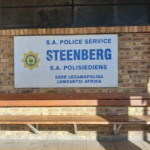
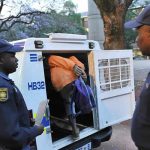
Pretoria, Gauteng – The South African Police Ministry has issued a sharp warning to civic organisations and community groups, stating that law enforcement will act "decisively and without hesitation" against anyone targeting foreign nationals. The move comes as a wave of anti-migrant sentiment sweeps across the country, with several self-styled "patriotic" groups accused of taking the law into their own hands.
The warning, delivered by Police Ministry spokesperson Kamogelo Mogotsi, follows a series of tense standoffs in Johannesburg and Pretoria. These incidents have seen community groups conducting "inspections" of spaza shops and demanding identity documents from individuals they perceive to be undocumented.
'Unlawful and Dangerous': The Ministry's Stance
Speaking to reporters in Pretoria, Mogotsi made it clear that while the government understands the public's concerns regarding illegal migration, vigilantism will not be tolerated.
"The Ministry of Police has on numerous occasions condemned acts of violence and intimidation directed at foreign nationals within the Republic of South Africa," Mogotsi said. "These actions are unlawful and are in direct opposition to the values of dignity, equality, and human rights upon which our democracy is founded."
The Ministry’s intervention marks a significant shift in tone, as authorities attempt to prevent a repeat of the deadly xenophobic riots that have scarred the nation in the past. Mogotsi emphasized that the South African Police Service (SAPS) has been instructed to show "no mercy" to those who use intimidation as a political tool.
"The Ministry has advised that the South African Police Service will act decisively and without thinking twice in addressing incidents of violence against foreign nationals," she added.
The Rise of the 'Citizen Inspectors'
The current tension is fueled by a growing number of civic organisations that claim to be "filling the gap" left by perceived government failures in border control. Groups like Operation Dudula and various neighbourhood watches have increasingly moved from political advocacy to direct action.
In the past week alone, hundreds of marchers took to the streets of Johannesburg, forcing shops to close due to fears of looting. In Pretoria, African migrants were urged by community leaders to exercise "heightened vigilance" as anti-immigration groups gathered to demand the mass deportation of undocumented residents.
These groups argue that illegal migration is the primary cause of South Africa’s high unemployment rate and the strain on public services like hospitals and schools. However, human rights organisations warn that these claims often lack factual basis and serve only to incite violence against vulnerable people.
"We are seeing a dangerous trend where ordinary citizens think they have the power to stop people in the street and ask for papers," says a representative from a Johannesburg-based human rights group. "This is the job of the police and home affairs, not a mob with sticks and sjamboks."
A History of Bloodshed
The Police Ministry’s stern warning is rooted in a dark history. South Africa has been plagued by periodic outbursts of xenophobic violence since 1994, with the most severe incidents occurring in 2008, 2015, and 2019. During these periods, dozens of people were killed, and thousands were displaced as their homes and businesses were burnt to the ground.
The United Nations has recently placed pressure on the South African government to address the rising tensions. A statement from the African Commission on Human and Peoples' Rights expressed "grave concern" over the conduct of vigilante groups, noting that the latest incidents could easily spiral out of control.
"Xenophobia has long been an issue in South Africa," the Commission noted. "If the state does not act now to protect foreign nationals, we risk another humanitarian crisis that will damage the country’s international reputation and its social fabric."
The Call for Dialogue
Despite the tough talk, the Police Ministry acknowledged that law enforcement alone cannot solve the problem. Mogotsi called for a collaborative approach involving all sectors of society.
"The Ministry of Police has called on all community leaders, civil society organisations, and all stakeholders to work together with law enforcement agencies to prevent further violence and to promote dialogue and understanding," she said.
The government is also facing pressure from within its own ranks. Some political factions have called for tighter immigration laws to appease the growing anti-migrant voter base, while others warn that such moves only validate the rhetoric of vigilante groups.
As the country remains on edge, the message from Pretoria is clear: the state will not allow its authority to be usurped by those who claim to be acting in the name of the people. For the migrants living in the shadows of the CBD and the townships, the hope is that these words will be followed by actual protection on the ground.