

The Highway of Horrors: How Criminals are Using Cruelty to Trap Motorists on Cape Town's R300
CAPE TOWN — For the thousands of commuters who traverse the R300 expressway daily, the stretch of tarmac connecting Mitchells Plain to the northern suburbs has long been a gauntlet of anxiety. But even for a city hardened by the relentless surge of highway crime, the latest tactic emerging from the shadows of the Cape Flats has reached a sickening new nadir.
Criminal syndicates operating near the Samora Machel and Philippi settlements are now allegedly using helpless animals as "empathic bait," hanging dogs from roadside structures to force compassionate motorists to pull over. It is a calculated exploitation of human kindness, turning an act of mercy into a potentially fatal trap.
The Bait and the Trap
The Animal Welfare Society of South Africa (AWS SA) issued an urgent alert this week following a series of grisly discoveries along the concrete palisade walls that line the R300. The warning followed a harrowing report from a motorist on Sunday, 26 April 2026, who witnessed the unthinkable while driving past the Samora Machel area.
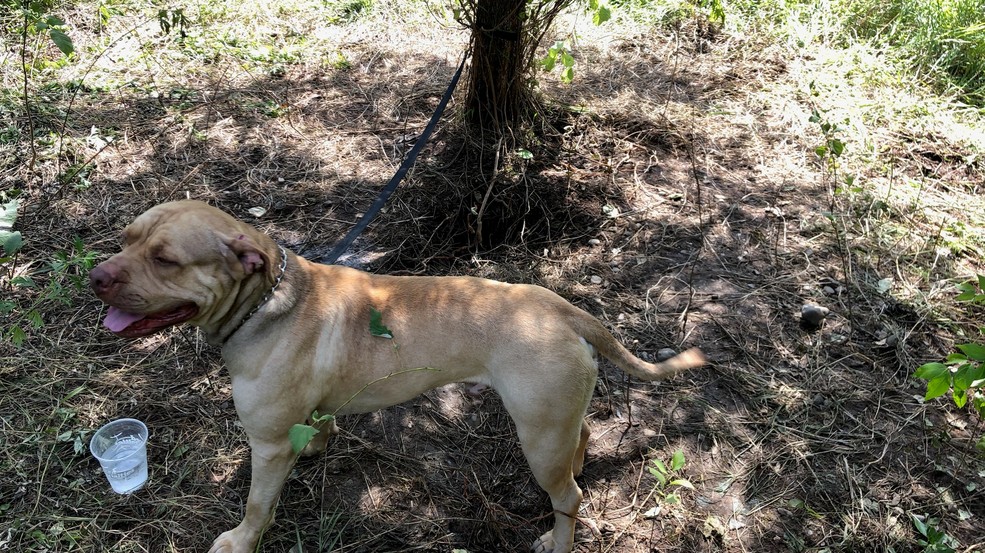
The driver, whose identity is being protected for safety reasons, spotted a dog suspended by a wire around its neck from a concrete wall. Another animal was seen wedged, struggling, between heavy concrete structures nearby. Recognising the isolation of the spot and the potential for an ambush, the motorist made the split-second decision not to stop, instead alerting the authorities once they reached a safe distance.
Senior Inspector Sivuyile Kilwa and senior nurse Michelle Henning from the AWS SA rushed to the coordinates provided. Their arrival, however, was too late. Both dogs had already succumbed to their injuries and the slow agony of suffocation.
"SKELMS [criminals] have sunk to shocking new lows using helpless animals as bait in an alleged hijacking ploy along the R300," the organisation stated in a grim assessment of the scene. The term "skelms," a local colloquialism for criminals, underscores the predatory nature of those who would use a dying animal to lure a victim.
A Pattern of Predatory Innovation
This "empathic hijacking" is not an isolated phenomenon but rather the latest evolution in a series of increasingly violent tactics used to disable vehicles on the Western Cape's major arterial routes. Investigative research into the R300—a 35-kilometre corridor often dubbed the "Hell Way" by locals—reveals a theatre of war where motorists are the primary targets.
For years, the standard operating procedure for highway gangs involved "spiking"—placing rows of sharpened metal or rocks across the roadway to puncture tyres. When the driver inevitably pulls over to inspect the damage, armed men emerge from the dense brush or informal housing that borders the road.
According to data from the Cape Town Metro Police, between November 2024 and November 2025, law enforcement responded to a staggering 2,215 crime-related incidents along the N2 and R300 corridors. While the majority of these—approximately 85 per cent—involved mechanical breakdowns or vehicles running out of fuel, these very vulnerabilities are what criminals exploit. A flat tyre on the R300 is not just an inconvenience; it is a life-threatening emergency.
The "Hell Run" Statistics
The sheer volume of attacks has turned the R300 and its sister highway, the N2, into what some officials describe as a "war zone." In the airport precinct alone, 42 incidents of bricks being thrown at vehicles were recorded between April 2024 and March 2025.
The violence is frequently lethal. On 28 July 2025, a motorist was shot dead on the R300 after being forced to stop by stone-throwers. Just days later, on 1 August, a female passenger sustained permanent injuries when a concrete block was hurled through a moving vehicle's windscreen.
Emre Uygun of the Freedom Front Plus has been vocal about the deteriorating situation. "Drastic measures must urgently be implemented to prevent further injuries or deaths on the notorious ‘Hell Run,'" Uygun stated. "Every broken fence and unguarded bridge serves as an invitation for another attack. Prevention is not an option; it is absolutely crucial."
The Samora Machel precinct, which borders the R300, remains one of the most dangerous in the province. Recent South African Police Service (SAPS) statistics for the 2025-2026 period indicate that while some crime categories have seen marginal decreases, the intensity of violence remains high, with the area frequently appearing in the "top 30" national hotspots for murder and attempted murder.
The Psychology of the Hunt
What makes the use of hanged dogs particularly insidious is the psychological manipulation involved. Unlike a rock through a windscreen, which immediately signals a threat, the sight of a suffering animal triggers a protective instinct.
"We are sharing a country with barbaric savages," wrote one resident on social media in response to the AWS SA warning. "They don't deserve to breathe the same air as these beautiful creatures they are murdering."
Another commenter, reflecting the growing vigilantism born of desperation, warned: "I'm definitely stopping. Boy oh boy do I've got 45 surprises waiting for you. Bring it."
The AWS SA, however, is urging motorists to suppress the urge to play the hero. Their advice is clear: do not stop under any circumstances. "Motorists are being urged not to stop if they encounter similar situations, but rather to report it immediately to the Animal Welfare Society's emergency hotline," the organisation pleaded.
A Cat-and-Mouse Game
The authorities' response has been a mixture of increased surveillance and frustrated pragmatism. The City of Cape Town has deployed 24/7 patrols and upgraded CCTV networks to monitor known hotspots. Yet, the criminals remain agile.
Bonteheuwel ward councillor Angus McKenzie described the struggle as a "cat-and-mouse game." He noted that "Hotspots change all the time. Unfortunately, you cannot have permanent visibility at one given spot. If you do have that, they shift the spot somewhere else."
McKenzie also highlighted a significant hurdle in the justice system: the reluctance of victims to report crimes. "Victims are very reluctant to report, and there's no inclination to sit in court for a year or two to get a prosecution for that crime," he said. He further stressed that "social media is not an official reporting mechanism. Not a single call was logged at the Emergency Call Centre after the latest incidents."
The Toll on the Community
Beyond the statistics and the political rhetoric lies a community under siege. The R300 is a vital artery for the economic life of Cape Town, yet it has become a place where parents fear to drive with their children after sunset.
In November 2025, a family from Johannesburg, including an infant, was targeted when a stone struck their vehicle near the Borcherds Quarry off-ramp. Two days later, a Somerset West doctor was hospitalised with chest injuries after a similar attack. Even high-profile figures are not immune; in August 2025, several Members of Parliament were caught in a smash-and-grab while travelling through Philippi.
The introduction of animal cruelty into this criminal landscape adds a layer of depravity that has left even seasoned investigators shaken. It suggests a criminal element that is not only desperate but increasingly detached from any semblance of moral restraint.
Safety Recommendations for Motorists
As the sun sets over the Cape Flats, the R300 transforms. For those who must use the route, safety experts and law enforcement offer the following grim but necessary advice:
- Never Stop: If your vehicle is struck by an object, or if you see an animal or person in apparent distress in an isolated area, do not pull over. Drive to the nearest police station or well-lit petrol station.
- Report Correctly: Use the City's Public Emergency Communication Centre on 021 480 7700. Posting on Facebook or WhatsApp groups does not alert the police.
- Conceal Valuables: Ensure that bags, mobile phones, and laptops are not visible from the outside. "People smash and grab to steal what they can see," says McKenzie.
- Maintenance: Ensure your vehicle is in good working order and has sufficient fuel before entering high-risk corridors to minimise the chance of a forced stop.
The R300 remains a symbol of the complex challenges facing South African law enforcement. It is a place where the infrastructure of a modern city meets the brutal ingenuity of a criminal underworld. Until the underlying issues of poverty, unemployment, and gang culture in the surrounding settlements are addressed, the "Hell Way" will likely continue to claim victims—both human and animal alike.
For now, the message to the public is one of vigilance and a heartbreaking necessity to turn a blind eye to suffering in order to survive the journey home. The dogs of the R300, hung by wire and left to die in the wind, serve as a silent, tragic testament to the lengths some will go to in the pursuit of a crime.