

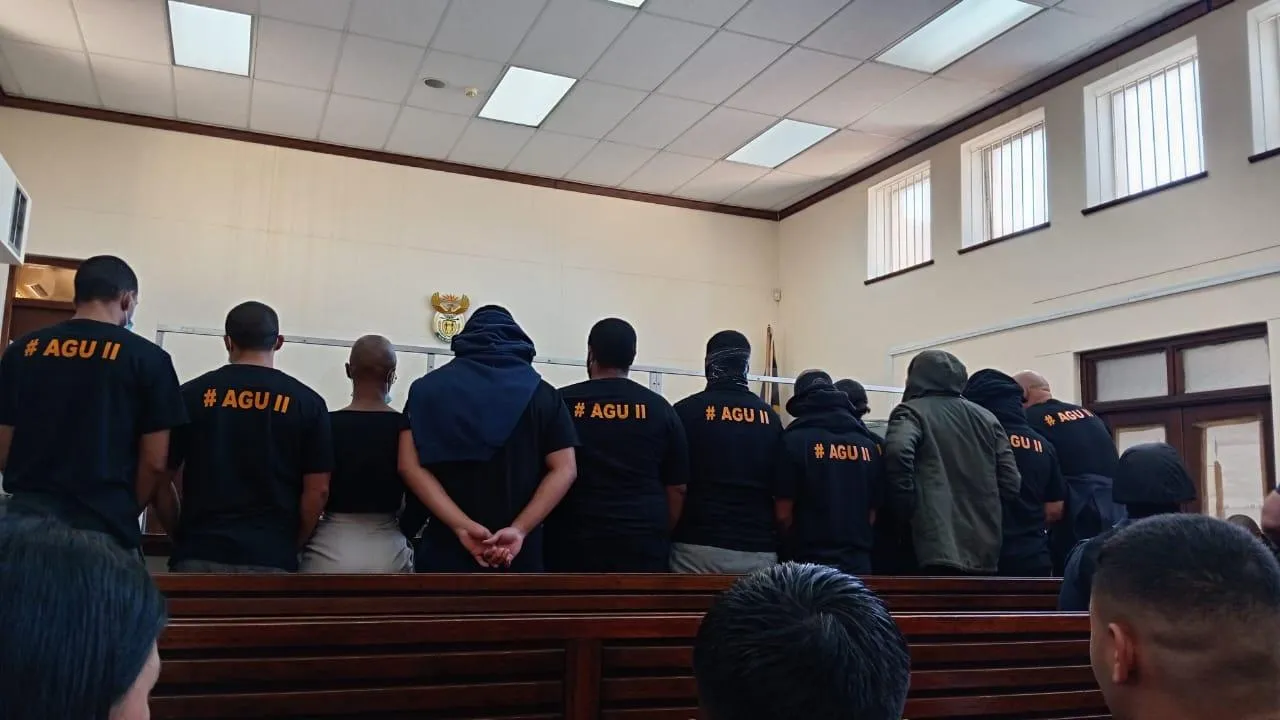
Cape Town – In a move that has sparked both relief and outrage, eleven members of the Western Cape’s Anti-Gang Unit (AGU), who stand accused of the murder of an alleged gang member, have been permitted to return to their duties. The Western Cape High Court’s decision to relax their bail conditions allows the officers to once again patrol the streets of Manenberg, a community plagued by gang violence, albeit under strict professional limitations.
The officers are facing a litany of serious charges, including the murder of Wade Price, an alleged member of the Clever Kidz gang. The charges also include kidnapping, torture, assault with intent to cause grievous bodily harm, and attempting to defeat the administration of justice. Price’s death on 4 December 2025, following an interrogation concerning a shooting incident outside the Athlone Magistrate’s Court the previous day, has brought the AGU’s methods under intense scrutiny.
The court’s ruling on 5 February followed compelling arguments from high-ranking police officials. Western Cape Deputy Provincial Commissioner, Major-General Bongani Maqashalala, and the AGU’s commander, Brigadier Karl Wienand, contended that the initial bail condition, which barred the officers from entering Manenberg, was unduly restrictive and hampered the unit's operational effectiveness. Wienand explained to the court that the AGU’s deployments are dictated by the ebb and flow of gang-related threats and the emergence of violence hotspots. “If normal policing cannot contain gang violence, a request is made for the AGU to intervene,” he stated, highlighting the unit’s crucial role in maintaining a semblance of order in the province’s most troubled communities.
While Wienand assured the court that the officers would not be specifically deployed to Manenberg, he stressed that their presence might be required in unforeseen circumstances. Judge Mas-udah Pangarker questioned the necessity of this, suggesting that other AGU members could be deployed to the areas in question. However, Wienand countered that the majority of gang violence occurs in these very areas, and the accused officers might be needed to support other policing agencies if they come under attack. Maqashalala further emphasised the practical difficulties the restriction posed, noting that even transit through Manenberg was prohibited, which could lead to significant delays in response times, a critical factor given the AGU’s limited personnel.
The court ultimately sided with the police officials, relaxing the bail condition to allow the officers to enter Manenberg solely in their professional capacity. This decision has been met with a mixture of reactions. On one hand, it is seen as a necessary step to bolster the under-resourced AGU. On the other, it has raised serious concerns about the potential for witness intimidation and the message it sends about accountability for alleged police brutality.
The case has also cast a spotlight on the immense pressure under which the AGU operates. Nicholas Gotsell, a Democratic Alliance Member of Parliament serving on the Select Committee on Security and Justice, has been a vocal critic of the South African Police Service’s (SAPS) management of the unit. “Parliament has repeatedly raised concerns about the severe under-resourcing of the Western Cape Anti-Gang Unit, and SAPS’ own replies confirm that the problem lies with management rather than the unit itself,” Gotsell remarked. He pointed out that despite being considered for additional funding, key investigative and support components of the AGU were operating at a fraction of their approved strength, with some at as little as 31 percent.
This lack of resources, Gotsell argues, places an immense strain on the AGU members. “AGU members are operating under intense pressure with minimal support, and the bail conditions imposed on the accused officers are highly technical, which has led to confusion on the ground,” he added. The defence attorney for the accused officers, Bruce Hendricks, has confirmed that his clients have been consulted and will adhere to the court’s revised conditions.
The court proceedings have been emotionally charged, with the widows of Wade Price and the slain AGU commander, Charl Kinnear, coming face-to-face in the courtroom. Kinnear, who was assassinated in 2020, was a celebrated and decorated officer, and his wife, Nicolette Kinnear, has been a vocal supporter of the accused officers. She joined a protest outside the court, expressing her dismay at the initial decision to deny ten of the officers bail. “This court has granted murderers, gangsters found in possession with ammunition and given them bail,” she lamented, highlighting what she perceives as a gross injustice.
In stark contrast, Sandra Price, Wade Price’s widow, expressed her hope that the officers would remain behind bars. “They have to suffer there inside. They must think about what they’ve done. The wives or the husbands or the children, they must feel it,” she stated, her words a poignant reminder of the human cost of the ongoing gang violence and the alleged actions of those tasked with combating it.
The case has been postponed to 5 March for further investigation, and the bail appeal for the accused is set to proceed. The return of the eleven officers to the beat, however, raises profound questions about the balance between fighting crime and upholding the rule of law. As the legal process unfolds, the community of Manenberg, and indeed the entire Western Cape, will be watching closely, hoping for a resolution that brings both justice and peace to their embattled streets.