

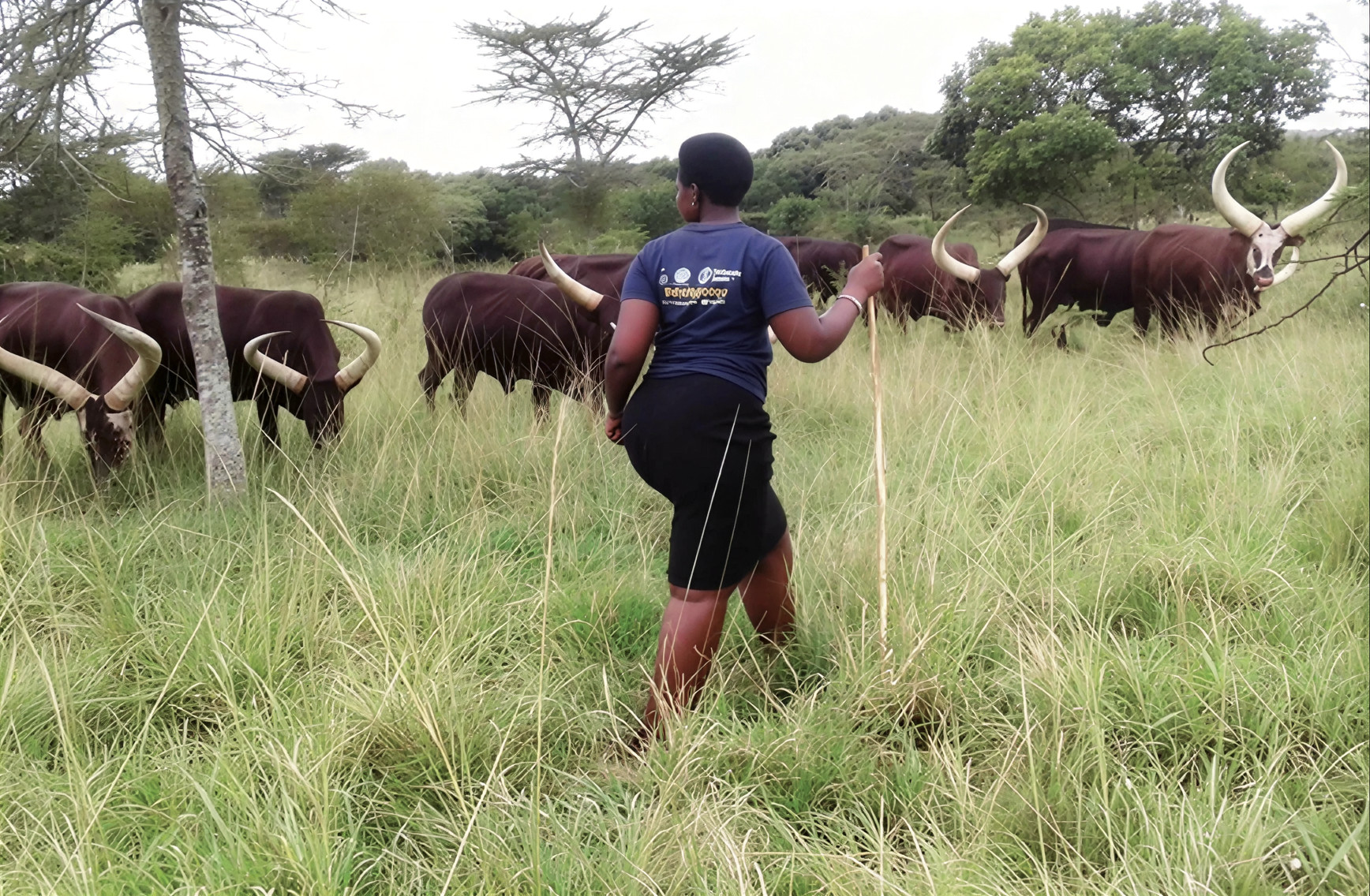
For decades, the rolling green hills of KwaZulu-Natal have been the lifeblood of South Africa’s dairy and beef industry. Today, those same pastures have become a graveyard for the dreams of thousands of farmers. Over 17,000 farms across the province are currently facing total ruin as foot-and-mouth disease (FMD) rips through herds with a ferocity not seen in generations. While the official government narrative chalks this up to "unfortunate luck" or "porous borders," a deeper investigation reveals a far more sinister reality. This is not just a natural disaster; it is a man-made catastrophe fueled by two decades of administrative negligence, alleged corruption, and a mysterious silence surrounding vaccine production that has left our borders defenceless.
The scale of the devastation is difficult to comprehend. KwaZulu-Natal has officially become the epicentre of the outbreak, with confirmed cases in every single district. Out of the 207 outbreaks recorded to date, 187 remain unresolved. The province is home to approximately 2.4 million head of cattle, including communal herds, commercial beef farms, and massive dairy operations. Premier Thamsanqa Ntuli recently delivered a stark warning that stripped away any remaining optimism. During a media briefing in Durban, he stated, “We are already in a state of disaster as a province. The economic consequences have changed. The financial consequences have been severe, including trade restrictions, export limitations, and sustained pressure on both emerging and commercial farmers.”
The dairy industry, which provides 21% of the country’s daily milk, has been hit the hardest. Unlike beef cattle, which might survive the virus with some weight loss, dairy cows often succumb to secondary infections or permanent loss of milk production. In some parts of KZN, farmers have reported a staggering 45% reduction in milk supply. The entire dairy chain in the province is valued at R7 billion and employs more than 3,120 workers who support over 639,000 dependants. When a dairy farm collapses, it isn't just a business that dies; it is an entire community's survival that is extinguished. One dairy farmer, speaking shortly before a provincial briefing, described the situation as “very bad” for his family, a sentiment echoed by thousands of others who are watching their livelihoods evaporate in real-time.
But why was South Africa so unprepared? To understand the current crisis, we have to go back 21 years. For over two decades, South Africa—once a global leader in veterinary science—has failed to produce a single local dose of the foot-and-mouth vaccine. The state-owned Onderstepoort Biological Products (OBP) facility, which should have been our primary shield, has become a monument to dysfunction. Investigative reports suggest a trail of mismanagement and alleged corruption within the vaccine procurement chain that effectively dismantled our national security against animal diseases. While the OBP fell into disrepair, the government turned to international suppliers, creating a lucrative market for imports while local capacity rotted.
The consequences of this "vaccine silence" became clear in 2019 when South Africa lost its FMD-free status. The current wave of infections started between 2021 and 2022, when infected animals moved from Phalaborwa in Limpopo into KwaZulu-Natal. Critics argue that the government failed to secure the vital buffer zones around the Kruger National Park, allowing the virus to jump from wild buffalo to domestic cattle. Once the virus hit the communal grazing lands of KZN, where fences are rare and cattle move freely, the spread became unstoppable.
Farmers are no longer waiting for the government to save them; some have been forced to take drastic and heartbreaking measures. JJ de Villiers, a director at the Red Meat Action Group (RAG), described the desperation in the province, noting that farmers in KZN slaughtered up to 400 pregnant heifers just to stop the spread of the disease. Others have abandoned livestock altogether, choosing to plant soybeans and maize instead. In the Free State, RAG members even took the law into their own hands, erecting roadblocks to stop the transport of potentially infected cattle when they felt local authorities were failing to act.
The frustration among the farming community is palpable. Karen Melouney, a director at AAM Livestock Agents & Auctioneers, did not mince her words when describing the state’s response. “That’s fine if your government is on top of things, but ours has been caught with its pants properly down and the impact is devastating,” she said. Her firm has seen R381 million in lost auction revenue over the last 11 months alone. About 35% of that loss belongs to emerging and small-scale farmers who rely on weekly markets to survive. For these farmers, who often don't have the resources to quarantine their herds, FMD is a death sentence.
There is also a growing suspicion that the delay in vaccine stock might not be purely accidental. Is there a "Vaccine Mafia" similar to the "Water Tankers Mafia" that plagues our cities? In many South African metros, private contractors reportedly profit every time a municipal pipe fails. In the agricultural sector, the sudden need for massive, expensive international imports of vaccines creates a similar opportunity for profit. The Botswana Vaccine Institute has been the primary source for recent doses, but their water-based vaccine has been criticised by local vets. Because it is water-based, it requires repeated shots to be effective, which is nearly impossible to manage in large, communal herds.
Sylvie Armitage, a small-scale cattle farmer, summed up the grim reality facing the sector: “It is no longer a question of if we get FMD, it is when.” Since early 2025, all auctions within a 150km radius of her farm have been closed. This has cut off the main income for both commercial and communal farmers. Bertus Burgers, who employs 50 people on his farm, recently had to cancel auctions worth nearly R20 million. “It is my main income,” he said. “We live in constant fear of when we are going to see FMD, and we as farmers can’t do anything.”
This feeling of powerlessness stems from the Animal Diseases Act of 1984, which classifies FMD as a state-controlled disease. This means farmers are legally prohibited from taking independent action to secure vaccines or manage the outbreak without government oversight. Burgers and many others are now demanding that the keys be handed over to the private sector. “Give the commercial farmers, the private sector, the keys. Give us the go-ahead. We’ll stop the disease. There is nothing a South African farmer cannot do,” he insisted.
There has been a glimmer of hope recently with the appointment of John Steenhuisen as the Minister of Agriculture. Under his leadership, the Agricultural Research Council (ARC) has finally resumed local production of the FMD vaccine for the first time in 21 years. The goal is to produce 20,000 doses per week starting in March 2026, eventually scaling up to 200,000 doses per week by 2027. While this breakthrough is being celebrated, many argue it is too little, too late for the thousands of farmers whose herds have already been decimated.
The provincial government is now pushing for a formal disaster classification to unlock national funding and speed up the vaccination drive. Provincial Chief State Veterinarian Dr Themba Sikhakhane has tried to reassure the public, saying, “I can assure you that we have the capability to assist farmers, and we are going to make sure that we use the vaccine within the time allocated.” However, with 2.4 million cattle to vaccinate and a history of broken promises, the farmers of KZN remain sceptical.
As we peel back the layers of this crisis, the "unspoken truth" becomes clear. The foot-and-mouth disaster in KwaZulu-Natal is the result of a system that prioritised political control and procurement profits over the safety of our food supply. While the government and industry experts debate the finer points of vaccine science and disaster management, the farmers on the ground are left to watch their livelihoods die. The sky-rocketing meat and milk prices that every South African will soon face are not just the result of a virus; they are the cost of 21 years of silence. The question remains: who truly stood to gain from leaving our pastures poisoned and our farmers defenceless?
|
Metric
|
Impact in KwaZulu-Natal
|
|
Farms Affected
|
Over 17,000
|
|
Unresolved Outbreaks
|
187 out of 207
|
|
Total Cattle at Risk
|
2.4 Million
|
|
Milk Supply Reduction
|
Up to 45% in certain areas
|
|
Dairy Industry Value
|
R7 Billion
|
|
Export Losses (Annual)
|
R5.6 Billion
|
|
Local Vaccine Production Gap
|
21 Years
|
The road to recovery will be long and expensive. Even if the new vaccination drive succeeds, the structural damage to the agricultural sector will take years to repair. For the families of the 639,000 dependants who rely on the dairy industry, the wait for a solution has already been far too long. As this investigative report shows, the real tragedy isn't just that the disease arrived, but that the doors were left wide open for it to enter.