

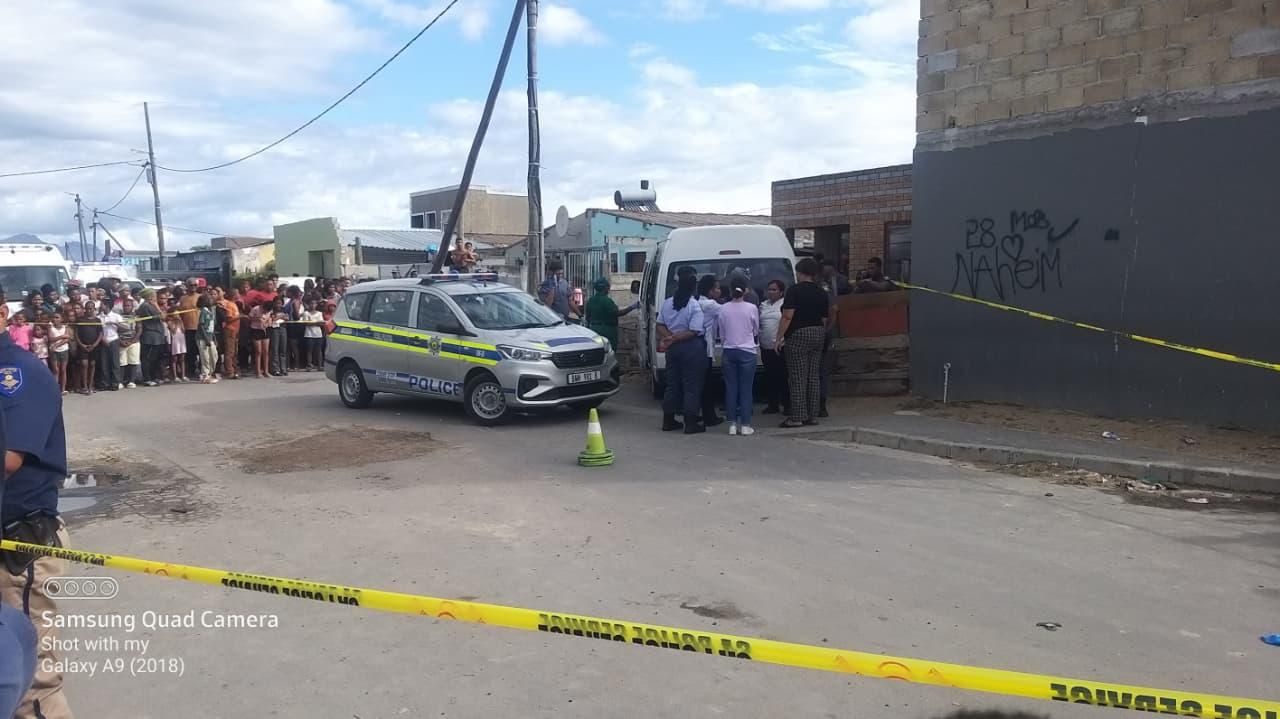
The late afternoon sun was still high over the Helderberg region on Monday, 9 February 2026, when the routine commute from Bellville to Macassar was shattered by the rhythmic thud of gunfire. For the passengers of a minibus taxi travelling along Magdaline Gilla Road, what should have been a standard journey home from work became a desperate struggle for survival. By the time the dust settled at approximately 4:20 pm, a 36-year-old taxi driver lay dead behind the wheel, and three of his passengers were left bleeding from gunshot wounds.
This latest ambush, occurring near the local landmark known as 'The Bruggie', has once again thrust the precarious nature of the Western Cape’s taxi industry into the spotlight. It marks the first fatal shooting of a taxi operator in the province for the year 2026, sparking fears that the fragile peace brokered late last year may be unraveling. As investigators from the Serious and Violent Crime detectives unit comb through the evidence, the community is left to grapple with the reality that, for some, a person’s life is worth less than the price of a seat in a minibus.
The Anatomy of an Ambush
The attack was not a random act of violence but a calculated execution. According to witnesses and survivor accounts, a bakkie had been trailing the taxi for some distance as it made its way through Macassar. The perpetrators waited for the moment of maximum vulnerability: when the taxi stopped to allow a passenger to disembark. As the vehicle came to a halt on Magdaline Gilla Road, the bakkie pulled alongside, and the occupants opened fire.
Approximately 15 shots were fired into the taxi in rapid succession. The driver, a member of the Cape Amalgamated Taxi Association (CATA), was the primary target, struck multiple times at close range. He was declared deceased at the scene by emergency medical personnel. However, the gunmen showed no regard for the innocent commuters caught in the crossfire. An adult female and two adult males were wounded in the hail of bullets; reports indicate that one passenger was shot in the head, while another sustained a wound to the buttock.
Sergeant Wesley Twigg, a spokesperson for the South African Police Service (SAPS), provided the official account of the tragedy:
“The circumstances surrounding a shooting incident on Monday afternoon, February 9, 2026, at about 16:20, in Magdaline Gilla Road, Macassar, where a 36-year-old male was shot and fatally wounded, and an adult female and two adult males wounded are under investigation. Macassar police responded to a complaint of a shooting and upon arrival on the scene, they found the victims with gunshot wounds to their bodies. The 36-year-old victim was declared deceased on the scene by medical personnel, while the other victims were transported to a medical facility for treatment. The motive for the attack forms part of the police investigation. According to reports, unknown suspects opened fire on the minibus taxi before fleeing the scene. Serious Violent Crime detectives are investigating murder and attempted murder cases.”
A Survivor’s Testimony
For those inside the taxi, the experience was one of pure, unadulterated terror. One man, who was sitting at the back of the vehicle, narrowly escaped the bullets that claimed the driver’s life and injured his fellow commuters. His son later shared a harrowing account of the ordeal in a letter to the Cape Argus, describing his father’s brush with death as nothing short of a miracle.
“Last night my father told me how close he was to death,” the son wrote. “He was in a taxi on his way to Macassar from Bellville. While the taxi driver was dropping off a passenger, a bakkie that had been trailing them for some time suddenly stopped. The men in the bakkie then started shooting at the taxi. There were about 15 shots. The taxi driver was shot multiple times and died at the scene. One passenger was shot in the head and another in the buttock. My father was fortunately in the back of the taxi.”
The survivor’s son highlighted the callousness of the attackers, noting that the perpetrators seemed to view human life as a disposable commodity. He attributed his father’s survival to divine intervention, citing Psalm 91:11: “For he will give his angels charge over you, to keep you in all your ways.” He continued:
“When the shots rang out, everyone had to cower and fall down. By God’s grace, my father was not hit. To criminals, a person’s life means very little. They consider your life as nothing. That is why it is so important to pray in the morning before you leave your house. My prayer every morning is: ‘Lord, please be with my family. Protect them from evil. Cover them with Your grace and mercy.’”
The Industry in Turmoil
The murder has sent a chill through the taxi industry, particularly within the ranks of CATA. Nkululeko Sityebi, the spokesperson for CATA in the Western Cape, confirmed that the deceased driver was a member of their association. The timing of the attack is particularly concerning for the group, as it represents the first killing of one of their members since the start of the new year.
The year 2025 was defined by a brutal and protracted conflict between CATA and the Cape Organisation for the Democratic Taxi Association (CODETA). The dispute centred on lucrative routes between Khayelitsha, Mfuleni, Lwandle, and Somerset West. The violence reached such a peak in August and September 2025 that the Western Cape Government was forced to take the extraordinary step of closing several key routes for 30 days to prevent further loss of life.
The closure, which began on 17 September 2025, affected routes such as the M18 (Mfuleni to Somerset West) and the R96 (Khayelitsha to Somerset West). At least six fatalities had been linked to the dispute in the weeks leading up to the government’s intervention. Even after the routes were reopened in October, the peace remained fragile. Just 72 hours after the restrictions were lifted, a high-ranking CATA executive, Mzukisi Zwakala, was gunned down, signalling that the underlying tensions had not been resolved.
Reflecting on the latest incident in Macassar, Sityebi expressed his fear that the industry might be sliding back into a cycle of revenge and territorial warfare. He stated:
“I can confirm that it is one of our taxi drivers who was killed while transporting passengers in Macassar. We don’t know what is the root cause of the killing so early in the year. We trust that police and Law Enforcement will deal with the perpetrator and we trust that those responsible will be brought to book so that they can be prosecuted in the court of law. This is the first time this year one of our members has been shot and killed. It leaves us in an uncertain position. We don’t know if we are starting this year the same way we closed last year. We are hoping that this is an isolated incident or a false identity or something like that and pray this is the end of these shootings. It must not continue.”
A Pattern of Violence
To understand the significance of the Macassar shooting, one must look at the broader context of taxi-related crime in the Western Cape. The industry has long been plagued by "taxi wars"—violent conflicts over route permits and "poaching" of passengers. These disputes are often settled through the use of professional hitmen, who operate with a level of impunity that frustrates both law enforcement and the public.
In late 2025, the province saw a sharp spike in violence. In December alone, five taxi-related killings were recorded in a single week. The Western Cape High Court had previously granted an urgent interdict to the Mobility Department in August 2025, allowing authorities to seize vehicles and suspend licences of those involved in intimidation or illegal operations. While these measures provided temporary relief, the incident on Magdaline Gilla Road suggests that the roots of the violence run deeper than administrative disputes.
The following table outlines the key incidents and government responses that shaped the taxi landscape in the months leading up to the Macassar ambush:
|
Date
|
Event
|
Outcome
|
|
August 2025
|
High Court Interdict
|
Authorities granted powers to suspend licences of violent operators.
|
|
September 2025
|
30-Day Route Closure
|
Routes M18, R96, and R97 closed to stop CATA/CODETA conflict.
|
|
October 2025
|
Routes Reopened
|
Transport services resumed, but tensions remained high.
|
|
October 2025
|
Murder of Mzukisi Zwakala
|
CATA executive killed shortly after route restrictions were lifted.
|
|
December 2025
|
Five Killings in One Week
|
A surge in violence prompted urgent calls for police intervention.
|
|
February 2026
|
Macassar Ambush
|
First CATA member killed in 2026; three passengers wounded.
|
The Human Cost
Beyond the statistics and the political manoeuvring of taxi associations, there is a profound human cost to this ongoing instability. Macassar is a community where many residents rely on minibus taxis as their primary, and often only, means of transport. Every time a taxi is targeted, it is not just the driver whose life is at risk; it is the domestic worker heading to Somerset West, the student commuting to Bellville, and the parent returning home to their family.
The brazen nature of the Monday afternoon shooting, carried out in broad daylight on a busy road, indicates a complete lack of fear on the part of the attackers. It also highlights the vulnerability of the public. When 15 shots are fired into a crowded minibus, the distinction between a "targeted hit" and "indiscriminate slaughter" becomes meaningless to those inside.
As the Serious Violent Crime detectives continue their investigation, they have appealed to the public for any information that might lead to the arrest of the suspects in the bakkie. SAPS has urged anyone with knowledge of the incident to contact Crime Stop on 08600 10111 or to use the MySAPS mobile application to provide anonymous tips.
For now, the people of Macassar and the wider Western Cape can only wait and hope that this latest tragedy does not herald a return to the dark days of 2025. The words of Nkululeko Sityebi resonate with a weary community: "We are hoping that this is an isolated incident… and pray this is the end of these shootings. It must not continue." Yet, as the investigation into the death of the 36-year-old driver begins, the question remains: how many more lives will be lost before the wheels of the taxi industry can turn without the threat of a bullet?