TEHRAN, Iran – Iran’s Supreme Leader, Ayatollah Ali Khamenei, has been killed in a massive joint military operation carried out by the United States and Israel on Saturday, 28 February 2026. The death of the 86-year-old cleric, who ruled Iran with an iron fist for 35 years, marks a pivotal moment in the Middle East, potentially heralding the collapse of the Islamic Republic and ushering in a new era of uncertainty for the region.
Israeli officials have confirmed Khamenei's death, with the country's ambassador to the United States, Yechiel Leiter, informing American officials of the development. According to Israeli intelligence sources, Khamenei's body was recovered from his destroyed compound in Tehran. Israeli Prime Minister Benjamin Netanyahu announced that there were “growing signs” that the long-serving authoritarian leader was “gone.” Multiple Israeli news outlets, including News 12 and the Times of Israel, have also reported the Supreme Leader's death, citing official sources.
The strikes, which began in the early hours of Saturday morning, targeted hundreds of locations across Iran, including Revolutionary Guard command facilities, air defence systems, and missile and drone launch sites. The operation, which US and Israeli officials have stated is aimed at regime change, has resulted in the deaths of more than 200 people across Iran, according to the Iranian Red Crescent.
In a video address, US President Donald Trump announced the “major combat operations” and urged the Iranian people to “seize control of your destiny” and “take over your government.” He added, “This will be probably your only chance for generations.” Trump also issued a stark warning, stating his intention to “annihilate” the Iranian navy and calling on the powerful Islamic Revolutionary Guard Corps (IRGC) to lay down their arms, offering immunity in exchange for surrender and threatening “certain death” for those who refuse.
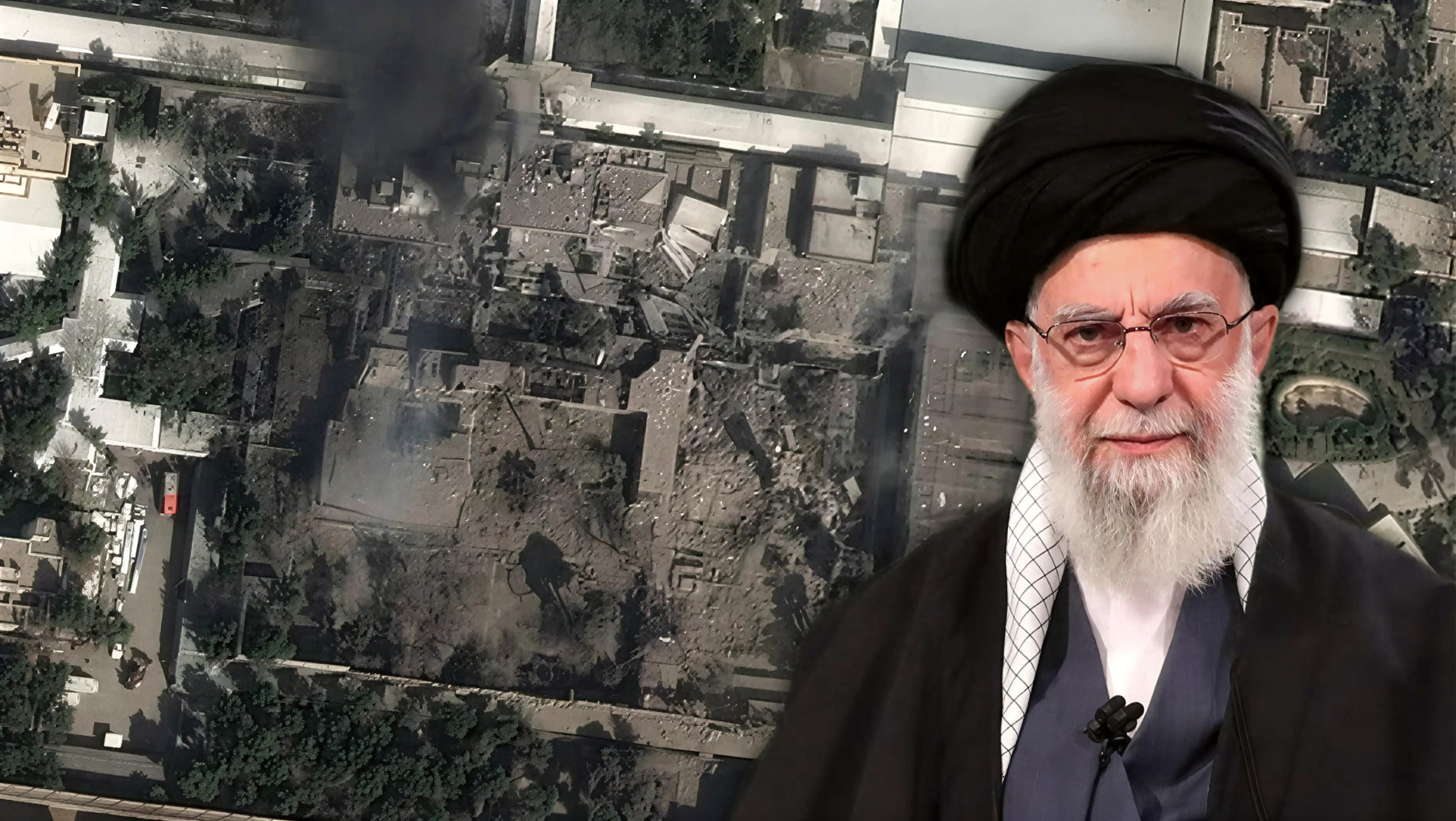
Satellite imagery has revealed significant damage to Leadership House, Khamenei’s office and residence in Tehran, which was a primary target of the strikes. Smoke was seen billowing from the capital as the attacks unfolded. The operation, which was planned for months by the US and Israel, is the second time in eight months that the Trump administration has used military force against Iran. The timing of the attack, during the holy month of Ramadan, and its trigger—the failure of nuclear talks just a day prior—has sent a clear message of intent from Washington and Jerusalem.
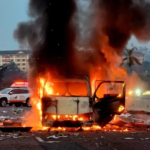
Iran has responded with a barrage of retaliatory strikes, launching missiles and drones at Israel and US military bases across the region. Attacks have been reported in Dubai, Doha, Bahrain, and Kuwait, disrupting flights and oil shipments and raising fears of a wider conflict that could cripple the global economy. A third of the world's seaborne oil exports pass through the Strait of Hormuz, a narrow waterway that Iran could threaten to close. One person was killed in the UAE by shrapnel from an Iranian missile, and 89 people were lightly injured in Israel. The US has reported no combat-related casualties.
Initially, Iranian officials attempted to downplay the situation. Foreign Minister Abbas Araghchi claimed that Khamenei was “alive as far as I know,” while the head of public relations at the Supreme Leader’s office accused Iran’s enemies of engaging in “mental warfare.” However, as the day progressed, the reality of the situation became undeniable. Ali Larijani, the secretary of Iran’s Supreme National Security Council, issued a defiant threat, warning that “the brave soldiers and the great nation of Iran will give an unforgettable lesson to the international oppressive hellish ones.”
The death of Khamenei, who had no designated successor, has created a power vacuum in Iran. US intelligence has assessed that the IRGC would likely fill the leadership void in the short term, but there is no definitive consensus on who will ultimately take control. US Secretary of State Marco Rubio admitted that “no one knows” who would take over if the regime falls. The US has lacked clear insight into the IRGC’s hierarchy since the assassination of its powerful commander, Qasem Soleimani, during Trump’s first term.
Iran’s network of proxy groups across the Middle East, including Hezbollah in Lebanon, the Houthis in Yemen, and Hamas in Gaza, have condemned the US-Israeli strikes. Hezbollah, which has been weakened by recent Israeli attacks, called for opposition to the aggression. Houthi leader Abdulmalik al-Houthi declared that his forces are in a “state of high readiness,” while Hamas issued a statement calling for action. However, none of these groups have yet committed to joining the retaliatory strikes.
There are conflicting reports regarding the intelligence that led to the US-Israeli operation. A senior administration official claimed that Iran was preparing to launch preemptive missile strikes, a factor that influenced President Trump’s decision to act. However, a source familiar with the intelligence contradicted this, stating that there were no indications that Iran planned to strike first unless attacked. US intelligence also does not support Trump’s claim that Iran is close to fielding missiles capable of striking the United States.
The strikes have drawn a mixed reaction from the international community. The United Arab Emirates called the conflict a “historic moment” in the Middle East, while Oman’s Foreign Minister, Badr al-Busaidi, a key mediator in the nuclear talks, lamented that “active and serious negotiations have yet again been undermined.” In the United Kingdom, Prime Minister Keir Starmer confirmed that British planes “are in the sky today” as part of “co-ordinated regional defensive operations.” The United Nations Security Council has called for an emergency meeting to address the crisis.
Within the US, Democrats have decried Trump’s decision to take military action without congressional authorization. The White House has stated that it briefed several Republican and Democratic leaders in Congress in advance of the operation.
The situation in Iran remains volatile. The country is in a near-total internet blackout, according to the advocacy group NetBlocks, making it difficult to obtain accurate information from within its borders. Explosions have been reported near the Intelligence Ministry building in northern Tehran, and it is unclear how the Iranian people will react to the death of their long-time leader and the call from the US President to rise up against the regime.
Khamenei’s death marks the end of an era for Iran. He succeeded Ayatollah Ruhollah Khomeini, the founder of the Islamic Republic, in 1989 and held the ultimate authority on all major policies. He led the country’s powerful clerical establishment and personally commanded the Revolutionary Guard, the two main pillars of power in Iran’s theocracy. His demise, coupled with the ongoing military strikes, has plunged Iran and the entire Middle East into a period of profound uncertainty, with the future of the Islamic Republic hanging in the balance.