Two Mozambican nationals have been arrested in connection with the murder of a Western Cape couple whose Kruger National Park holiday ended in tragedy, following a coordinated cross‑border investigation that recovered the victims’ stolen vehicle and traced suspects across Mozambique.
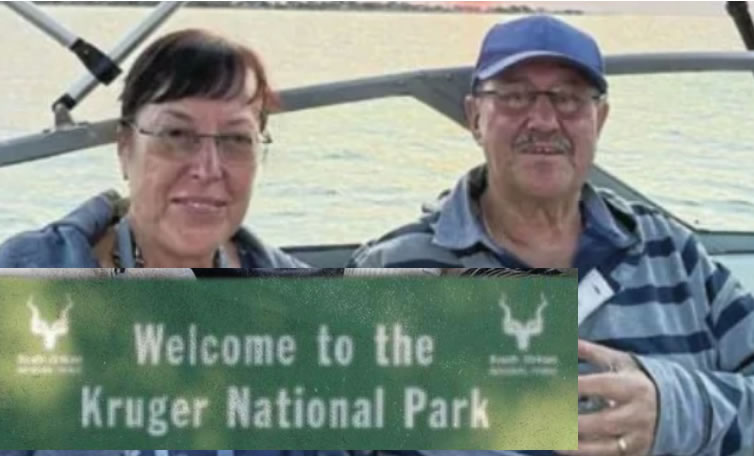
The victims, identified as Dina Marais, 73, and her husband, Ernst Marais, 71, were from Mossel Bay. According to police, the couple entered the Kruger National Park on 17 May 2026 to celebrate Dina’s birthday. They were reported missing on Wednesday morning at the Pafuri picnic site, a remote rest area in the far north of the park near the Limpopo River border zone.
Search efforts intensified across the Pafuri sector, a wilderness region defined by the confluence of major rivers and dense riparian bush. Sadly, their bodies were discovered floating at Cross Corner on the banks of the Levubu River, near the Limpopo River intersection, on Friday, 22 May. Their vehicle, a double‑cab green Ford Ranger, was missing.
With a suspected cross‑border element from the outset, South African and Mozambican authorities moved quickly to align investigative efforts. Limpopo police spokesperson, Brigadier Hlulani Mashaba, said a coordinated operation between the South African Police Service (SAPS), Mozambican law enforcement authorities, SANParks, and other role players led to the breakthrough arrests. The suspects, aged 32 and 33, have been identified as Mozambican nationals.
Mashaba sais: “The victims’ stolen vehicle, a Ford Ranger double cab, was recovered on 26 May 2026 in Chókwè, Mozambique.
“The recovery of the vehicle led to the arrest of the first suspect in Chókwè on Monday, 1 June 2026. The second suspect was subsequently arrested in Xai-Xai city, Gaza province, on Tuesday, 2 June 2026.”
Police confirmed the men have been “positively linked to the crime”. They face two counts of murder and hijacking, with investigators indicating that additional charges may be added as the case develops. The suspects will appear in court in Maputo, Mozambique.
The cross‑border dimension placed the investigation within a complex law‑enforcement theatre spanning protected conservation areas and busy transnational routes. Pafuri anchors the northernmost reaches of Kruger, bordering Mozambique and Zimbabwe. Rivers in spate, deep gorges and thick riverine vegetation can complicate searches, while the proximity to international borders adds investigative challenges that often require swift information‑sharing and joint operational planning.
Within days of the couple being reported missing, authorities had extended the search footprint beyond South Africa’s boundaries. The recovery of the Ford Ranger in Chókwè on 26 May 2026 proved pivotal. Vehicle identifications in cross‑border cases often become the thread that unravels a broader picture, linking scenes across jurisdictions and establishing travel paths in the crucial hours and days following a serious crime.
Once the vehicle surfaced in Mozambique, momentum built. According to Brigadier Mashaba, the first suspect was arrested in Chókwè on Monday, 1 June 2026. A second arrest followed on Tuesday, 2 June 2026, in Xai‑Xai city, Gaza province. The swift turnaround from vehicle recovery to arrests underscores the level of coordination between SAPS, Mozambican police, SANParks rangers and associated agencies that operate in and around the transfrontier landscape.
Formal processes now shift to the Mozambican courts, with the suspects due to appear in Maputo. While investigators have not disclosed further procedural details, it is standard in cases of this nature for law‑enforcement bodies to continue sharing evidence and aligning dockets as charges are prepared. Mashaba confirmed that the suspects have been “positively linked to the crime”, and noted that additional counts could follow as forensic and investigative work continues.
For the Mossel Bay couple, what began as a birthday celebration in South Africa’s flagship reserve became a devastating sequence that gripped both their home community and regular visitors to Kruger. The timeline — park entry on 17 May 2026, missing persons report filed at Pafuri, discovery of their bodies at Cross Corner on 22 May, vehicle found in Chókwè four days later on 26 May, and back‑to‑back arrests on 1 and 2 June — outlines an intensive, multi‑agency hunt to find answers.
SANParks, which manages Kruger National Park, worked alongside SAPS as the northern sector was scoured. The discovery site at Cross Corner — on the banks of the Levubu River near its intersection with the Limpopo — lies in terrain that is difficult to patrol and search, particularly when river levels are variable. The area’s remoteness can hinder quick responses, making early coordination with external agencies crucial when crimes appear to span borders.
Authorities have not released further details about the circumstances leading to the couple’s deaths, nor the precise sequence of events between their last known movements at Pafuri and the recovery of their bodies along the Levubu. The identification of the suspects and the retrieval of the Ford Ranger provide key investigative anchors, but detectives are expected to continue building a fuller picture through witness statements, forensic examinations and cross‑border intelligence.
In South Africa, the case falls under the SAPS Limpopo umbrella due to jurisdictional boundaries north of Kruger, with Brigadier Mashaba serving as the primary public point of contact. In Mozambique, the arrests in Chókwè and Xai‑Xai indicate that Gaza province police units are now central to the prosecution phase, with an initial court appearance scheduled in Maputo.
The killings have resonated far beyond the park’s boundaries, not only because the victims were senior citizens on a celebratory visit, but also because the case illustrates the realities of policing in a vast conservation area abutting international borders. For many South Africans, Kruger remains a bucket‑list destination and a place of family milestones — a context that makes the couple’s fate particularly stark.
For now, investigators are urging patience as the matter proceeds through Mozambican courts. The confirmed arrests, the recovery of the stolen vehicle, and the formal linkage of the suspects to the murders mark significant strides. With two counts of murder and hijacking already on the charge sheet — and the possibility of more to come as evidence is assessed — both countries’ authorities have signalled a shared determination to pursue accountability in a case that began on one side of the border and quickly crossed to the other.