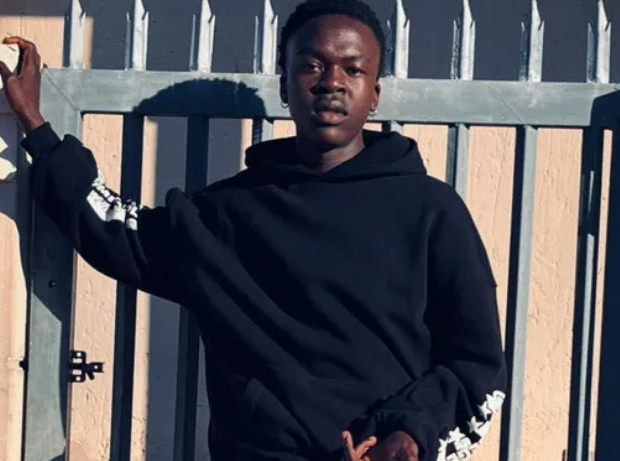
Mossel Bay, Western Cape – The tragic stabbing death of 19-year-old Nhlamulo Sambo in Mossel Bay has escalated into a heated public exchange between Economic Freedom Fighters (EFF) Member of Parliament (MP) Naledi Chirwa and March and March leader Jacinta Ngobese-Zuma. This bitter spat has intensified the already volatile debate surrounding immigration, tribalism, and the inflammatory nature of political rhetoric in South Africa, exposing deep societal fissures.
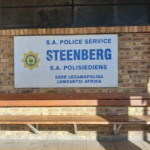
In a significant twist, Western Cape police yesterday moved to dismiss claims that Sambo was targeted during anti-immigration protests, stating that their preliminary investigations point to a different, more criminal motive. Western Cape Police Commissioner Thembisile Patekile revealed that Sambo was confronted while allegedly attempting to steal items from a shack. Police spokesperson Warrant Officer Christopher Spies further confirmed that officers found the teenager with a stab wound to the chest after responding to a complaint. “He was declared dead by paramedics on scene. The suspect has yet to be arrested,” said Spies, indicating an ongoing investigation into the precise circumstances of the death.
Earlier, Sambo’s family had firmly believed he was a victim of the unrest linked to anti-foreigner protests, tragically mistaken for a foreign national because he spoke Xitsonga. His mother, Nkateko Sambo, expressed her profound grief and conviction in a widely shared online video: “They killed my son like a dog, saying that he was a foreigner, whereas my child is a Tsonga, a South African citizen from Limpopo in Giyani.” This heart-wrenching testimony underscored the family’s belief that tribal identity played a direct role in his murder. His sister, Nonhlanhla Sambo, further alleged on Facebook that her “19-year-old little brother was stabbed to death on the 31st of May during the xenophobic riots/protests in Western Cape Mossel Bay. His fault was being Tsonga in a Xhosa community.” These powerful statements from the family painted a picture of a targeted, ethnically motivated killing.
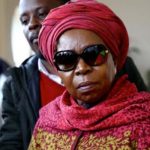
However, by the time police clarified the circumstances behind Sambo’s killing, the war of words among rival political factions was already escalating, fueled by the initial narrative of xenophobic violence. The incident prompted EFF MP Naledi Chirwa to launch a scathing attack on anti-immigration activists, accusing them of fuelling violence through inflammatory rhetoric. “We warned countless times. Xenophobia/afrophobia only has one conclusion, bloodshed!” she wrote, directly linking the activist’s campaigns to the tragic outcome.
Chirwa further argued that government failures were being unfairly blamed on vulnerable groups, questioning the divisive impact of slogans such as “Fusek Shangane.” She contended that such rhetoric actively contributes to division and hostility within communities. Moreover, Chirwa vehemently rejected the notion that migrants are solely responsible for South Africa’s persistent economic challenges. In a pointed critique, she wrote: “Migration did not create poverty in South Africa. Migration did not create unemployment. Migration did not create inequality. Capitalism did. Imperialism did.” Drawing on historical patterns of xenophobic violence, Chirwa asserted that attacks on migrants have never, in the past, provided solutions to the country’s endemic problems of unemployment, poverty, or inequality. “The greatest deception sold to poor people is that another poor person is their enemy,” she concluded, framing the issue as a misdirection of anger and frustration.
The EFF MP later directly linked Sambo’s death to what she described as tribal and anti-African rhetoric, holding activists accountable for the tragic loss. “A child died! An innocent child was purged due to the fire you caused,” she wrote, her words dripping with accusation. She continued, “A Tsonga child of this soil lost his life because you so sorely believed that ‘foreigners leaving’ will come with economic freedom.” This direct accusation placed the blame squarely on the shoulders of anti-immigration campaigners, suggesting their narratives had fatal consequences.
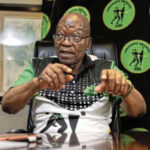
Jacinta Ngobese-Zuma, leader of the March and March movement, strongly rejected Chirwa’s accusations, accusing the EFF MP of opportunistically using the tragedy for political gain before all the facts surrounding the case had been established. “You are using this incident for your own political gain without waiting,” Ngobese-Zuma retorted, highlighting the perceived rush to judgment. The March and March leader argued that Chirwa was unfairly targeting activists while simultaneously failing to hold the government accountable through parliamentary processes. “You sit there in Parliament and do not hold him accountable,” she said, pointedly referring to Home Affairs Minister Leon Schreiber, implying a selective application of political pressure.
Ngobese-Zuma also rejected claims that opposition to illegal immigration should automatically be viewed as xenophobia or afrophobia. According to her, undocumented migration is intrinsically linked to labour exploitation and the use of cheap labour by businesses, a systemic issue that requires addressing. “If you were genuine about your cause, you wouldn’t be advocating for cheap labour and romanticising it,” she wrote, turning the accusation of opportunism back on Chirwa. She further argued for the strict enforcement of immigration laws, citing Section 42 of the Immigration Act, which specifically deals with aiding and abetting illegal immigrants. Ngobese-Zuma concluded her argument with a call for legal consistency: “What we can agree on is any person that commits a crime must be dealt with.”
The public exchange between the two prominent women eventually descended into personal attacks, with both questioning each other’s leadership credentials and political motives. This unfortunate turn in the debate overshadowed the tragic death of Nhlamulo Sambo, transforming a deeply personal tragedy into a political battleground. The incident underscores the deeply polarised nature of the immigration debate in South Africa, where genuine concerns, political agendas, and tragic events often intertwine, making it difficult to find common ground or constructive solutions.