

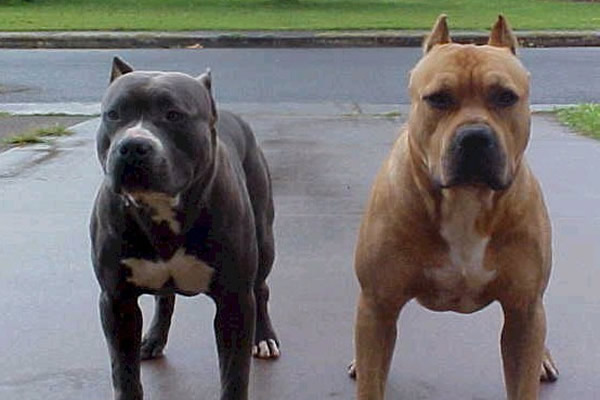
A 28-year-old woman has been mauled to death by three pit bulls in Durban, prompting an inquest investigation by police and a renewed warning from the Durban and Coast SPCA about the danger posed when powerful dogs are not properly confined.
The attack happened on Friday in the Montclair policing precinct. Police spokesperson Colonel Robert Netshiunda said the woman was discovered lying dead at the side of the road at the corner of Atherstone and Norwich Crescent.
Netshiunda said the victim had been attacked by dogs and later succumbed to her injuries. Montclair police have opened an inquest docket to investigate the circumstances of the death, including the sequence of events leading up to the attack and whether any criminal negligence played a role.
According to the SPCA, three pit bulls were involved. Caroline Smith, general manager of the Durban and Coast SPCA, said the dogs were initially loose in the street and not confined to their property — a detail that has intensified anger and calls for accountability, as residents again confront questions about pet ownership, enforcement and public safety.
Smith said SPCA staff responded to the scene after the report of the attack, but by the time they arrived, the woman had already died.
Smith said: “Upon arrival, the woman was already deceased, and one pit bull had been shot by a security guard. The shot was not fatal, and the dog was transported back to our SPCA for humane euthanasia.
“The second dog was found roughly a block away and brought back to our SPCA.”
According to Smith, the third dog ran away from the scene and, at the time of the SPCA’s incident report, was still at large. That unresolved element — a dog involved in a fatal attack still not found — has raised obvious concern in the surrounding area, where residents may fear further incidents until the animal is located and secured.
Smith’s account also sets out what happened after the SPCA took custody of the dogs that could be found. She said the owners of the pit bulls came to the SPCA’s offices in connection with the dog that had been shot and removed from the scene.
Smith added: “The owners of the three pit bulls were at our offices regarding the one pit bull in our custody. The owner signed the dog over for humane euthanasia. This is the correct course of action, as the dog is dangerous.”
While the SPCA’s intervention moved quickly towards containment and euthanasia, the broader investigation remains with police. An inquest docket, as opened by Montclair police, is used to establish the cause and circumstances of an unnatural death and to determine whether any further criminal process may be warranted. Police have not yet released the identity of the woman, and it is not yet clear whether she lived in the area, whether she knew the dogs, or how the attack began.
The incident has also triggered political reaction. Tony Govender, eThekwini Ward 70 councillor, called for consequences for owners who fail to control animals capable of inflicting severe harm.
Tony Govender, eThekwini Ward 70 councillor, said: “A clear message should be sent to such irresponsible pet owners.”
The fatal mauling has again put pit bulls and owner responsibility at the centre of a difficult public debate. While many owners argue that any breed can be dangerous if abused or poorly trained, animal welfare organisations and trauma responders have repeatedly warned that strong, muscular dogs can become lethal when allowed to roam freely or when kept without adequate containment, socialisation and supervision.
In this case, the SPCA’s statement that the dogs were “at large or loose on the street and not confined to their property” is likely to form a key part of any inquiry into whether the owners complied with local bylaws or basic safety expectations. It may also raise questions about fencing, gates, and whether the dogs had previously escaped or shown aggressive behaviour.
Smith’s confirmation that one of the pit bulls had to be shot by a security guard also underlines the immediacy of the threat at the scene. Although the shot was not fatal, the dog was removed and taken to the SPCA for “humane euthanasia”, an outcome that the SPCA says is appropriate where a dog is assessed as dangerous.
The recovery of the second dog a block away suggests the animals scattered after the attack, which can complicate response efforts and increase risk for bystanders. The third dog’s escape adds further urgency, as animal control and the SPCA will need to locate and secure it to prevent another attack and to complete the handling of the incident.
For the victim’s family, the trauma is likely compounded by the nature of the death — sudden, violent and public — as well as the uncertainty that can follow in the immediate aftermath of such incidents. Police will need to complete formal identification and notify next of kin, while the inquest proceeds.
For the community, the death will intensify calls for enforcement of dog ownership laws and may add to pressure on the municipality to tighten bylaw implementation and response capacity. For the SPCA, it is another reminder of the organisation’s role not only in animal welfare, but in public safety situations where animals become a threat because of human decisions.
What remains clear is that a young woman has died in horrific circumstances, two of the three dogs have been accounted for, and one is still missing. As police investigate and the SPCA continues its work, residents are being left with a stark warning: when powerful dogs are not confined and managed responsibly, the consequences can be irreversible.