

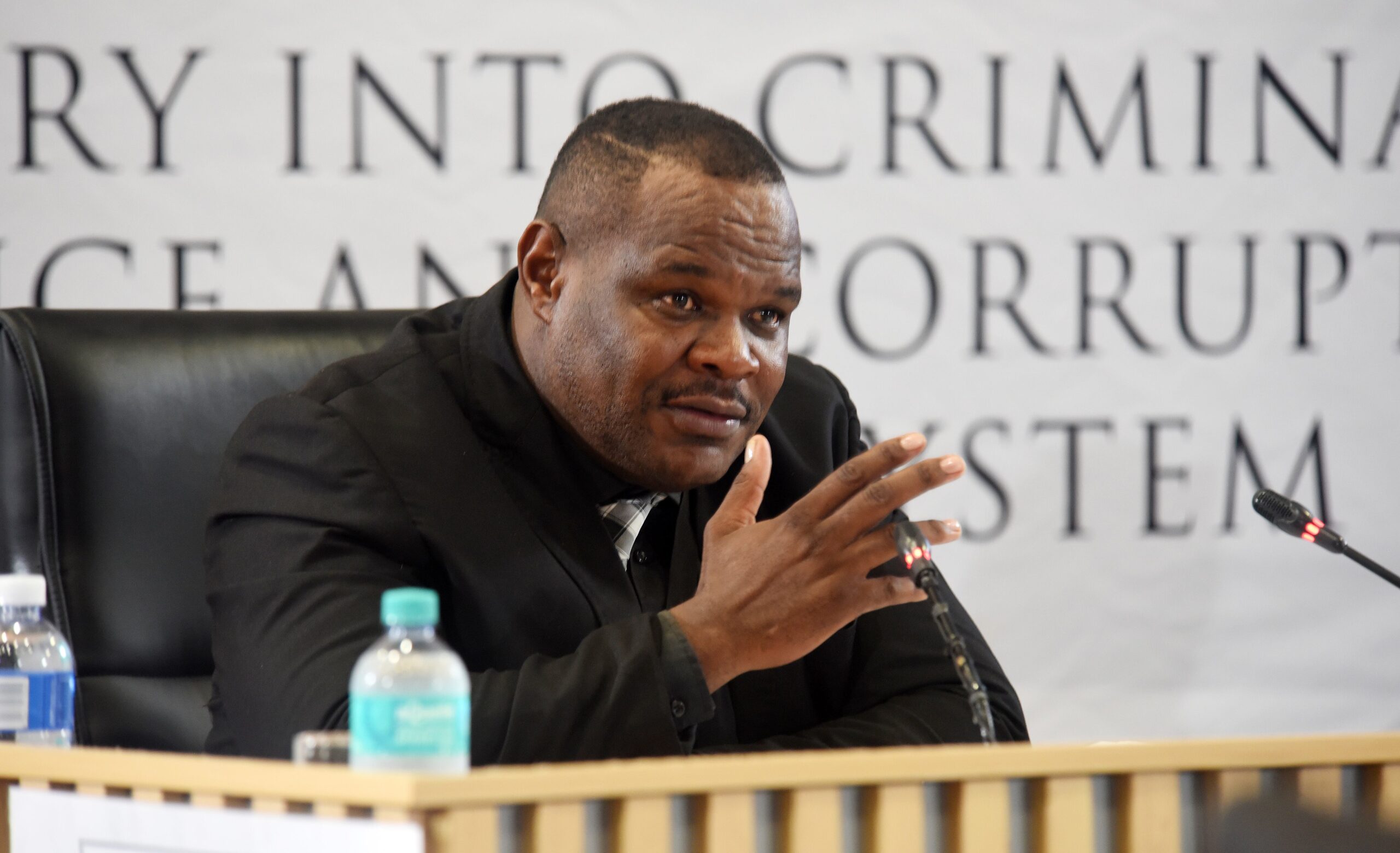
The Madlanga Commission of Inquiry, presided over by Justice Mbuyiseli Madlanga, was originally established to probe the murky depths of political interference within the South African Police Service (SAPS). However, in recent weeks, it has morphed into a theatre of the absurd, delivering a series of 'strange' and explosive revelations that have left the nation reeling. At the heart of this unfolding drama is a man who, until recently, was known only by the cryptic moniker Witness F. He has since been unmasked as Sergeant Fannie Nkosi, a member of the elite Gauteng Organised Crime Unit, and his testimony has exposed a system that appears to be rotting from the inside out.
For years, many South Africans suspected that the line between the 'good guys' and the 'bad guys' had become blurred, but few could have imagined the extent to which state intelligence had been privatised. Under oath, Sergeant Nkosi admitted to a betrayal of his badge that is as staggering as it is systematic. He confessed to sharing highly confidential and classified police documents with a list of recipients that reads like a who's who of the South African underworld: powerful taxi bosses, notorious tenderpreneurs, and even a mysterious Pakistani informant.
Perhaps the most strange detail to emerge from the commission's hearings involves the currency of this illicit trade. It wasn't just cash changing hands—though investigators did find R385,000 in a safe at Nkosi's home, which he implausibly claimed he was merely keeping for his brother. Instead, the intel was often exchanged for a bizarre array of favours and gifts that suggest a culture of deep-seated entitlement and corruption. The commission has heard testimony regarding everything from weight-loss drugs to exotic game meat and even expensive plastic surgery.
In one particularly surreal exchange, it was revealed that high-ranking officers were allegedly receiving gifts from Vusimuzi 'Cat' Matlala, a controversial businessman and taxi boss who appears to be the sun around which this web of corruption orbits. Brigadier Rachel Matjeng admitted to the commission that she had asked Matlala to purchase Ozempic—a drug used for diabetes and weight loss—for her personal use. Even more bizarre were the allegations involving impalas. Sergeant Nkosi claimed he had personally delivered carcasses of the game animals from Matlala to Shadrack Sibiya, the former head of the Hawks in Gauteng. Sibiya has vehemently denied these claims, but the image of police generals trading state secrets for venison has become a symbol of the strange truth currently being unearthed.
The rot, however, extends even further. The commission heard evidence suggesting that the 'privatisation' of intelligence reached the highest echelons of the SAPS. There were even questions raised about whether Matlala had funded or been aware of a Brazilian Butt Lift (BBL) procedure for Deputy SAPS Commissioner Lt-Gen Hilda Senthumule. While these details might seem like tabloid fodder, they point to a devastating reality: in the world of South African organised crime, police information is used as a currency to gain influence, protection, and personal luxury.
The case of Musa Khawula, a well-known and controversial celebrity gossip blogger, provides a chilling example of how this favour-trading works in practice. Sergeant Nkosi admitted to leaking an arrest warrant for Khawula to a civilian—specifically, to Cat Matlala. When asked why a police sergeant would care about a gossip blogger, the hidden details suggested a more sinister motive. Khawula had allegedly been attempting to extort money from Matlala in exchange for not posting damaging information online. By providing Matlala with the warrant, Nkosi was effectively giving an underworld figure the ammunition he needed to neutralise a nuisance.
This wasn't an isolated incident of a rogue cop acting alone. Nkosi's testimony hints at a pervasive culture within the SAPS where the word classified has simply come to mean for sale. He described a system where he was often the middle man, facilitating the flow of information between the police and those they were supposed to be investigating. He even claimed that he was personally introduced to a Pakistani informant by his big boss, Major-General Richard Shibiri, further illustrating the top-down nature of these questionable associations.
The political dimensions of this scandal are equally troubling. The commission has been presented with evidence of political fixing and the manipulation of public tenders. Nkosi testified about irregularities involving a lucrative City of Tshwane security contract, where companies allegedly linked to CIC Juju—a reference to Economic Freedom Fighters (EFF) leader Julius Malema—were given preferential treatment. According to Nkosi, a list of seven preferred bidders was provided to Tshwane Metropolitan Police Department (TMPD) officials, with the implication that the bidders required political vetting before being awarded the contract.
The fallout from these revelations has already begun to claim casualties. Tshwane Mayor Nasiphi Moya recently suspended Kholofelo Morodi, an ActionSA councillor and MMC for Corporate and Shared Services, following allegations that she had leaked internal procurement documents to Nkosi. WhatsApp exchanges presented to the commission allegedly tie Morodi to the sharing of sensitive information, further blurring the lines between police work, political influence, and private interests.
Throughout his testimony, Sergeant Nkosi has maintained a tone that is at once matter-of-fact and defensive. He has frequently used simple English to describe complex legal and conspiratorial arrangements, perhaps in an attempt to make his actions seem less like high treason and more like the standard operating procedure of a system he didn't create. "I am not 007," he told the commission at one point, attempting to downplay his role as a master spy, even as he detailed how he shuffled documents and facilitated meetings that compromised national security.
The Madlanga Commission has effectively pulled back the curtain on a system that has been hollowed out by greed and a total lack of accountability. By simplifying these complex legal proceedings, the strange truth becomes clear: the very people sworn to protect the citizens of South Africa are often the ones providing the intel to those who exploit them. The betrayal by officers like Sergeant Nkosi is not just a personal failing; it is a systemic catastrophe.
As the commission continues its work, the list of strange and explosive revelations is likely to grow. From the sale of arrest warrants to the delivery of impala carcasses and the procurement of weight-loss drugs, the testimony of Witness F has provided a roadmap of the corruption that has infested the SAPS. It is a story of a nation's secrets being bartered for the most mundane and bizarre of prizes, and it serves as a stark reminder that when the guardians of the law become the facilitators of crime, the entire social contract begins to unravel.
Witness F hasn't just exposed his own misconduct; he has exposed a system that is rotting from the inside out. The challenge now for Justice Madlanga and the people of South Africa is to determine whether such a system can be reformed, or if the rot has gone too deep to be excised. For now, the nation watches in a state of grim fascination as the strange truth of the SAPS continues to spill out, one bombshell at a time.