

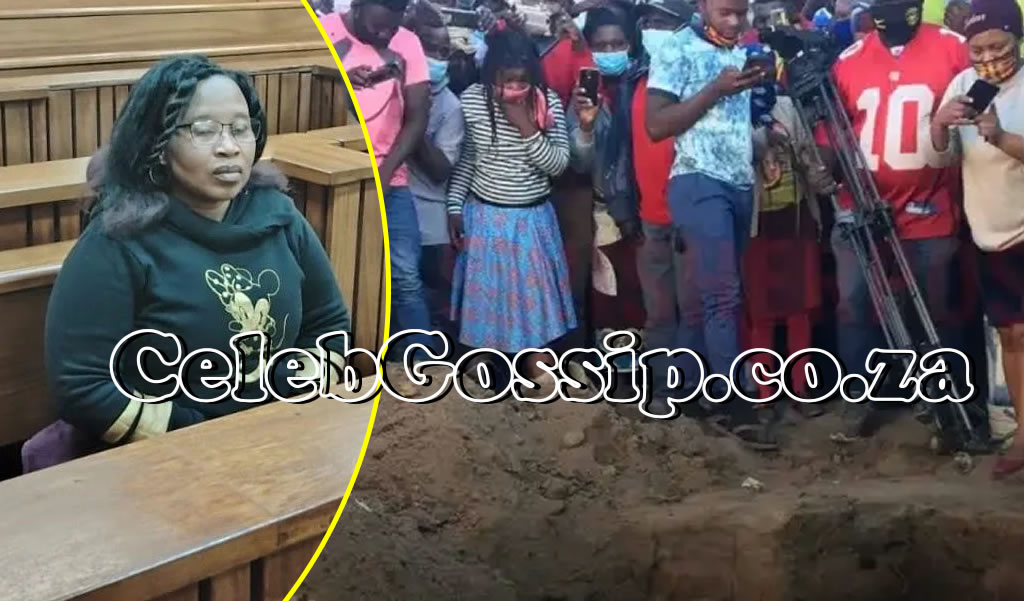
PRETORIA – In the dusty, narrow streets of Olievenhoutbosch, a township on the outskirts of Centurion, life often moves to the rhythm of survival. For years, patrons gathered at a local shack to drink, laugh, and escape the pressures of the day. They sat on makeshift benches, clinking glasses of illicit liquor, unaware that just inches beneath their feet, the earth held a gruesome secret. Three bodies—two men and a teenage boy—lay stacked in a single, shallow grave, buried by the very woman who served the drinks.
The secret finally unravelled in the winter of 2020, but the full weight of justice only descended this year. In the Pretoria High Court, Justice Mosopa brought a chilling conclusion to a saga of betrayal that has gripped the nation. Pamela Ncumisa Selani, a 47-year-old mother, was handed three life sentences for the premeditated murders of her two boyfriends and her own son.
"All the deceased in this matter were not treated with dignity by the accused, even in their death," Justice Mosopa remarked during the sentencing. "They died in a degrading, callous and heinous manner. The accused continued to live a normal life as if nothing gruesome occurred in her yard."
The story of the Olievenhoutbosch backyard grave is not just a tale of murder; it is a descent into a darkness where revenge, greed, and a mother’s ultimate betrayal intertwined to create a literal house of horrors.
A Cycle of Blood: The Timeline of Terror
The killings began in 2016, sparked by a diagnosis that Selani viewed as a death sentence. Upon discovering she had contracted HIV, she did not seek medical support or counselling. Instead, she sought blood. She blamed her Malawian boyfriend, Michael Changisa, for infecting her—a claim the court later viewed with significant doubt, noting that Selani had multiple partners at the time.
Rather than confronting him, she allegedly manipulated another lover, a Zimbabwean national named Gift (also known as Michael Phiri), into helping her "eliminate" the problem. Changisa was lured to his death and bludgeoned with a hammer. His body was dragged into the backyard and buried in a shallow pit.
With the first victim under the soil, Gift moved into the house, stepping into the dead man’s shoes and his property. But the alliance of convenience was short-lived. By 2017, the relationship had soured. According to court records, Selani’s teenage son, Avile Jonjwana, grew to resent how Gift treated his mother. In a terrifying display of domestic collusion, mother and son allegedly turned on Gift. He was poisoned before his head was forced into a dustbin filled with water until he drew his last breath.
Gift was buried directly on top of Changisa. Two men, once rivals for Selani’s affection, were now roommates in a narrow grave.
The final act of this tragedy occurred in 2018, and it was the most heart-wrenching of all. Avile, the son who had helped his mother conceal the first two murders, had become a liability. Struggling with substance abuse and perhaps the crushing weight of his secrets, the 18-year-old began blackmailing his mother. He demanded money for drugs, threatening to go to the police and expose the bodies in the yard if she did not comply.
Faced with the choice between a mother’s love and her own freedom, Selani chose the latter. She attacked her own flesh and blood with a brick, killing him in the same yard where his victims lay. Avile became the third and final layer in the backyard grave.
The Healer and the Ghost
For two years, Selani lived a life of chilling normalcy. She continued to sell liquor, her "shebeen" business thriving as patrons sat atop the remains of her family and lovers. She even took in tenants, charging them R250 a month to live in a home built on a cemetery.
The truth did not come from a police investigation or a forensic breakthrough. It came from the spiritual world—or at least, a young boy’s perception of it. In 2020, Selani’s youngest son, who was only five years old when he witnessed the final murder, began to fall ill. Believing the boy was being haunted by the restless spirits of the dead, he was taken to a traditional healer for a consultation.
It was there, in the presence of the healer, that the boy spoke the unspeakable. He described the "ghosts" in the yard and the things he had seen his mother do. Horrified, the healer alerted the community and the police. When investigators arrived at the property in August 2020, they began to dig. One by one, the skeletal remains were unearthed, confirming the child’s nightmare.
A Pattern of Betrayal in the "New" South Africa
The Selani case is an extreme example of a disturbing trend in South African crime: the "backyard burial." While the nation is no stranger to violence, the intimacy of these crimes—murders committed within the family home and concealed on the property—has shocked even seasoned investigators.
The case draws immediate comparisons to other recent horrors. In 2018, the community of Vlakfontein was devastated when seven bodies—three women and four children—were found buried under piles of sand inside a family home. The suspect, Ernest Mabaso, committed suicide in his cell before he could face justice, leaving the motive forever buried with him.
More recently, the trial of Nomia Rosemary Ndlovu, a former policewoman, captivated the world. Ndlovu was convicted in 2021 of killing six people, including her sister and her boyfriend, to claim life insurance payouts. Like Selani, Ndlovu showed a complete lack of remorse, even laughing during parts of her trial.
In Olievenhoutbosch, the community remains scarred. "We drank there… we sat right there," said one former patron who asked not to be named. "To think that we were laughing and talking while those poor souls were rotting under us… it makes me sick to my stomach."
Justice Without Remorse
Throughout her trial, Pamela Selani remained defiant. She refused to take responsibility for the killings, instead attempting to shift the blame onto her surviving son and other associates. "It pains her to be convicted of killing people that she did not kill," she told the court in her testimony, a statement that Justice Mosopa dismissed as a blatant lie.
The probation officer’s report painted a picture of a woman who was a "danger to her own family, relatives and broader society." It also revealed even darker allegations: that Selani had allegedly murdered two people, including her own grandmother, in the Eastern Cape before moving to Pretoria. While she was never charged with those crimes, the shadow of a serial killer loomed over the courtroom.
In handing down the sentence, the court noted that the families of the two foreign nationals, Changisa and Gift, could not even be traced to be told of their deaths. They disappeared from the world, their lives snuffed out and their bodies hidden in a foreign land by the woman they trusted.
As Selani begins her life behind bars, the house in Olievenhoutbosch stands as a grim reminder of the secrets that can hide behind an ordinary door. The "Backyard Killer" may have been silenced by the law, but for the community and the children who witnessed the blood, the echoes of the hammer, the brick, and the dustbin will never truly fade.
The Pretoria High Court has sent a clear message: the right to life is absolute, and those who bury their secrets in the soil will eventually find that the earth always gives up its dead.
Research Notes and Related Incidents
To understand the gravity of the Selani case, one must look at the broader context of multi-victim domestic murders in South Africa. The following incidents highlight the recurring nature of these "hidden" crimes:
|
Case Name
|
Location
|
Year Discovered
|
Number of Victims
|
Summary
|
|
Vlakfontein Massacre
|
Vlakfontein, Gauteng
|
2018
|
7
|
A man claiming to be a relative killed an entire family and buried them under sand inside their house.
|
|
Nomia Rosemary Ndlovu
|
Tembisa/Polokwane
|
2021 (Convicted)
|
6
|
A policewoman who orchestrated the murders of her relatives for insurance payouts.
|
|
Julius Mndawe
|
Masoyi, Mpumalanga
|
2019
|
5
|
Known as the "Facebook Serial Killer," he lured women to his home and buried them in his backyard.
|
|
The Welkom Graveyard Case
|
Welkom, Free State
|
2011
|
1
|
A ritualistic killing involving dismemberment that shocked the local community.
|
The Selani case stands out for its unique "stacking" of victims—a chronological history of her life told in layers of earth. From the revenge killing of 2016 to the desperate blackmail murder of 2018, each layer represented a new chapter of moral decay.
In South Africa, where gender-based violence (GBV) is often described as a "second pandemic," the Selani case offers a rare and terrifying subversion: a female perpetrator who used the tools of domestic life—a hammer, a brick, a water bin—to systematically eliminate the men in her life.
The investigation also highlighted the role of traditional healers in the South African justice system. Often the first point of contact for families in distress, healers like the one who reported Selani play a crucial role in uncovering crimes that remain hidden from formal authorities. Without the healer’s intervention, the three lives buried in Olievenhoutbosch might still be hidden beneath the feet of unsuspecting patrons, lost to time and the cold Pretoria soil.