

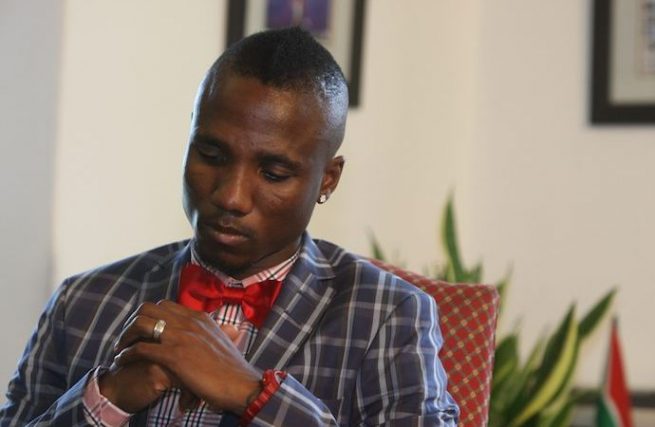
Former South African footballer Teko Modise has reopened a national conversation on dating expectations for professional athletes after telling viewers on the iDiski Dine podcast that footballers are often pressured to “date up” — to choose partners in prestigious, high-earning careers. His comments, shared widely on social media, have stirred spirited debate about class, perception and whether relationships should follow social expectations or develop organically.
In a clip making the rounds online, Modise described being challenged by people who tell players they should aim higher when choosing partners. “You’ll go around, greet a lady, and they’ll talk to you and say to us, ‘You guys always date the same people. Same type, same looking. Like, no, guys, you need to date up.’” He added, “You need to date lawyers, chartered accountants, and engineers.”
Modise pushed back on the suggestion that players who choose partners from their own circles are being unimaginative or lacking ambition. He argued that relationships are shaped by lived experience and environment — and that for many athletes their social world simply makes certain partners more accessible. Players, he said, are more likely to meet and date people who move in similar circles, not necessarily because they refuse to “date up”, but because that is where life takes them.
He also tackled a long-standing stereotype about footballers’ intellect, a perception that has often coloured how their romantic choices are judged. “We had a stigma that we are dom (Afrikaans phrase meaning dumb) and that we just need to chase this round ball and that’s it. I sat there, like, ‘Okay, sharp’. I may not be the brightest guy in the room, but I have more opportunities than any other people who have played me in my era. So how do I better myself by still opening opportunities for other guys?” Modise said.
The former midfielder’s comments have generated a mix of reactions online. Some people dismissed the idea that a partner’s job automatically improves a relationship, pointing to the reality that professionals in prestigious fields also have financial and personal demands. “Wait till he learns that the lawyers and accountants still ask for money lol,” one X user joked, highlighting how monetary expectations can cut across professions.
Others raised a practical concern about the nature of professional sport: careers can be short and uncertain. “Sometimes those women don’t want to date guys with 2-minute careers,” another X user remarked, underscoring a fear that the brief window of peak earnings for athletes might make long-term commitment less attractive to some prospective partners.
Modise’s intervention is notable because he is not only a retired footballer but also a media personality and entrepreneur. Since hanging up his boots he has remained visible as a football analyst and as a public figure who routinely comments on issues beyond the game. That visibility has given his words weight; they do not come from an anonymous voice but from someone who navigated the pressures of professional sport and public scrutiny.
In addressing dating norms, Modise touched on broader social issues: class mobility, public perception, and how society defines success. The debate his comments prompted is not just about who dates whom; it’s about whether social advancement should be signalled through romantic partnerships and whether public expectations unfairly judge people whose lives differ from typical middle-class trajectories.
The spotlight on players’ love lives is hardly new. Professional footballers are often associated with conspicuous displays of wealth — flashy cars, designer clothes and glamorous lifestyles — and the public frequently pairs them with models or social-media influencers. In South Africa, as elsewhere, the moment a player reaches a certain level of success he is likely to be linked with a well-known personality, and that pairing tends to affirm social fantasies about what success looks like.
Yet Modise’s point was less about fashion or status and more about accessibility and mutual experience. Dating within one’s circle, for many athletes, can be a function of geography, background and shared daily realities rather than an inability to “climb” social ladders through relationships. He suggested that opportunities athletes gain through sport can be channelled into bettering themselves and helping others, hinting at a responsibility beyond personal advantage.
For critics, the debate raises uncomfortable questions about transactional views of relationships. If a partner’s profession becomes a threshold for worthiness, does love and compatibility get reduced to a résumé check? Supporters of the “date up” idea argue that choosing a partner with financial stability or a prestigious career could provide security after sports, especially given the unpredictable nature of athletic livelihoods. Skeptics counter that personal chemistry, shared values and lived experience matter more than job titles.
Modise’s personal life has also attracted public interest. He was previously married to Felicia Modise and was later linked to entrepreneur Koketso “Koki” Chipane. Reports suggest the couple celebrated a traditional marriage ceremony and share children, though recent coverage has indicated they may be living apart, fuelling speculation about their relationship status. Modise’s own experiences in relationships and family life lend personal context to his wider comments about how athletes manage love and life under public scrutiny.
The conversation he reignited now sits at the intersection of sport, social mobility and cultural expectation. Whether South Africans ultimately side with Modise’s view that relationships grow out of environment and access, or with those who believe partners should “date up” for financial security, the debate has exposed deeper anxieties about class and identity in modern South Africa.
For many, the bigger question remains: should romantic compatibility be measured by profession and prestige, or by understanding, shared history and opportunity? Modise’s remarks have reminded the public that, for footballers and everyone else, relationships rarely fit neatly into social checklists.