

Sovereignty, Crowns, and Chaos: The Tensions Tearing at the Heart of the Eastern Cape
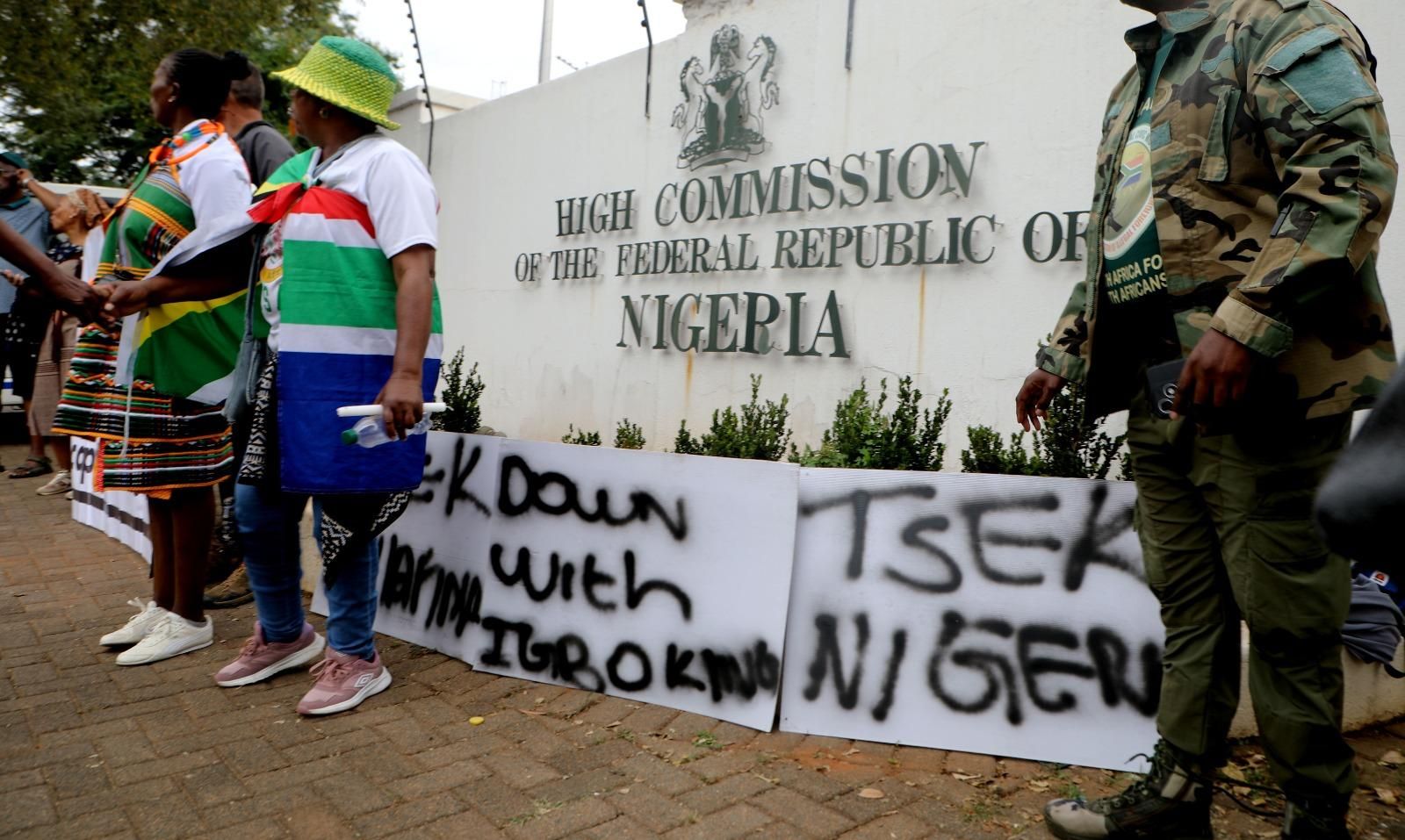
KUGOMPO, SOUTH AFRICA – The air in the streets of KuGompo, the city formerly known as East London, remains thick with the acrid scent of charred rubber and the lingering residue of tear gas. What began as a dispute over a ceremonial title has rapidly escalated into a diplomatic and security crisis, forcing the Nigerian High Commission in Pretoria to issue an unprecedented "Advisory to All Nigerians Living in the Republic of South Africa." The message is stark: scale back public activity, avoid gatherings, and prioritise personal security.
The trigger for this sudden descent into unrest was the reported coronation of Chief Solomon Ogbonna Eziko as the "Igwe Ndigbo Na East London"—a title that translates to the Igbo traditional ruler of East London. To his supporters, the move was a celebration of cultural identity for the thousands of Nigerians living in the Eastern Cape. To local traditional leaders and a growing wave of South African civic movements, it was an intolerable affront to the sovereignty of the land and its ancestral protocols.
By Monday, the tension snapped. What was intended to be a peaceful demonstration by local traditional leaders and residents quickly spiralled out of control. Protests turned violent as demonstrators clashed with security forces and, in some instances, targeted property. Reports have emerged of vehicles being torched and businesses being shuttered as the city’s central business district became a theatre of conflict.
"The protest began as a planned peaceful demonstration by various traditional leaders over the alleged coronation of an Igbo king," said Brigadier Nobuntu Gantana, a spokesperson for the South African Police Service (SAPS). As the situation deteriorated, authorities were forced to deploy additional units to manage the crowds. Amidst the chaos, a stabbing was reported. While Brigadier Gantana clarified that "the stabbed person is not linked to the march," the incident has only served to heighten the sense of fear pervading the community.
However, the narrative of the violence is as contested as the crown itself. Jacinta Ngobese-Zuma, the firebrand leader of the "March and March Movement"—a civic group known for its hardline stance on illegal immigration—claimed on social media that the victim of the stabbing was, in fact, one of her members. Her movement, which has gained significant traction over the past year, has been at the forefront of the opposition to the Nigerian coronation, framing it as a symptom of a "borderless" South Africa where foreign nationals operate outside the law.
The controversy has struck a raw nerve within South Africa’s own traditional leadership structures. The AbaThembu Kingdom, one of the most influential traditional authorities in the region, moved swiftly to distance itself from the lawlessness while simultaneously critiquing the governance failures that allowed the situation to reach a boiling point.
"We wish to unequivocally distance ourselves from the acts of violence, looting, and destruction of property that occurred during the recent march in East London, KuGompo," the kingdom said in an official statement. While the kingdom emphasised its support for the right to lawful protest, it rejected the criminal conduct that overshadowed the march. The statement further highlighted concerns regarding how the reported installation of a foreign traditional leader was handled by state authorities, suggesting that the lack of clear regulation on such matters has created a vacuum for conflict.
The Nigerian High Commission, sensing the gravity of the backlash, has moved into damage-control mode. In a circular titled "Advisory to All Nigerians Living in the Republic of South Africa," the mission cited rising tensions and urged immediate caution. Behind the scenes, diplomatic sources suggest the embassy was blindsided by the scale of the coronation event, which took place on Saturday, March 14, 2026.
In a rare move, the High Commission has since disowned the installation, offering an apology for the confusion. The mission clarified that it does not recognise the title of "Igwe Ndigbo" within South African borders and urged its citizens to respect the laws and traditional customs of their host country. This distancing is particularly significant given the profile of the man at the centre of the storm. Chief Solomon Ogbonna Eziko is no stranger to leadership; he is a former President of Ohanaeze Ndigbo Lagos, one of the most prominent Igbo socio-cultural organisations in Nigeria. His emergence as a "King" in the Eastern Cape has puzzled many, especially as the South-East Council of Traditional Rulers in Nigeria has previously moved to abolish the use of the "Eze Ndigbo" title by leaders residing outside of Nigeria.
The "Eze Ndigbo" phenomenon has long been a source of friction across the African continent. Similar controversies erupted in Ghana in 2025, where the installation of a Nigerian traditional leader triggered protests over national sovereignty. Critics argue that these titles create a parallel system of authority that competes with local traditional leaders, who are recognised under South African law.
Under the Traditional Leadership and Governance Framework Act (Act 41 of 2003) and the more recent Traditional and Khoi-San Leadership Act (Act 3 of 2019), traditional leadership in South Africa is strictly regulated. The law recognises specific kingdoms and traditional councils that have ancestral ties to the land. There is no provision for the recognition of foreign monarchs or the establishment of foreign traditional enclaves. To many South Africans, the coronation of an "Igwe" in East London is not merely a cultural ceremony but a political statement that challenges the very foundations of the South African state.
For the Nigerian community in the Eastern Cape, the fallout has been immediate and terrifying. Many have shuttered their shops, fearing that the "Igwe" controversy will be used as a pretext for a new wave of xenophobic violence. The memory of previous "Operation Dudula" style campaigns remains fresh, and the rhetoric from groups like March and March has many Nigerians wondering if they are still welcome in the country.
"We are just here to work and provide for our families," said one Nigerian businessman in KuGompo, who asked to remain anonymous for fear of reprisals. "The coronation was supposed to be a cultural day, a way to remember our roots. We did not know it would lead to this. Now, we are afraid to even go to the grocery store."
The diplomatic relationship between Pretoria and Abuja has often been described as a "frenemy" dynamic—a mix of economic cooperation and deep-seated rivalry. This latest incident adds another layer of complexity to an already strained partnership. As the South African government remains silent on the specific legal status of the "coronation," the burden of maintaining peace has fallen on overstretched police units and the common sense of community leaders.
As night falls over KuGompo, the streets are quieter than usual. The heavy police presence remains, a visible reminder of the fragile peace. The Nigerian High Commission’s advisory remains in effect, a haunting document for those who call South Africa home but feel the ground shifting beneath their feet. The battle over a title may have ended with an apology and a disavowal, but the underlying tensions—over land, identity, and the right to belong—continue to simmer, waiting for the next spark.
In the end, the story of the "Igwe of East London" is less about a crown and more about the boundaries of a nation. It is a story of how a single act of cultural expression can be interpreted as an act of aggression in a country still grappling with its own history of dispossession and identity. For now, the people of KuGompo are left to pick up the pieces, while the Nigerian community waits in the shadows, hoping that the advisory will soon be a memory rather than a daily reality.
Key Figures and Statements
|
Name
|
Role/Affiliation
|
Key Statement
|
|
Chief Solomon Ogbonna Eziko
|
Alleged "Igwe Ndigbo Na East London"
|
Reported to have been crowned on March 14, 2026, triggering the unrest.
|
|
Brigadier Nobuntu Gantana
|
SAPS Spokesperson
|
“The protest began as a planned peaceful demonstration by various traditional leaders over the alleged coronation of an Igbo king.”
|
|
Jacinta Ngobese-Zuma
|
Leader, March and March Movement
|
Claimed the stabbing victim was a member of her movement; active in anti-foreigner rhetoric.
|
|
AbaThembu Kingdom
|
Traditional Authority
|
“We wish to unequivocally distance ourselves from the acts of violence, looting, and destruction of property…”
|
|
Nigerian High Commission
|
Diplomatic Mission
|
Issued an urgent safety advisory; apologised for the coronation controversy.
|
Chronology of Unrest
- March 14, 2026: Reported coronation of Chief Solomon Ogbonna Eziko in KuGompo.
- March 20-25, 2026: Rising social media backlash and mobilisation by local traditional leaders and civic groups.
- March 30, 2026 (Monday): Protests in KuGompo turn violent; vehicles torched; stabbing reported.
- March 31, 2026: Nigerian High Commission issues "Advisory to All Nigerians Living in the Republic of South Africa."
- April 1, 2026: High Commission disowns the coronation and issues a formal apology.
Investigation continues…