Over 100 unsafe taxis pulled from Gauteng roads in week-long crackdown
More than 100 minibus taxis were taken off Gauteng’s roads in a week-long enforcement blitz that laid bare serious safety and compliance failures across some of the province’s busiest public transport routes.
The Gauteng Transport Inspectorate (GTI), working with the Road Traffic Management Corporation (RTMC), conducted intensified stop-and-search operations between 20 and 26 April 2026 in Johannesburg, Tshwane and Ekurhuleni.
Officers were deployed along major public transport corridors identified as high‑risk for traffic offences and unsafe operations, targeting routes used daily by thousands of commuters.
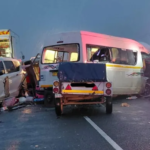
Authorities say the taxis that were discontinued were in such poor condition that they posed an immediate danger to passengers and other road users. Mechanical faults uncovered during roadside inspections included faulty braking systems, dangerously worn tyres, broken headlights, defective brake lights and indicators, as well as cracked windscreens that obscured visibility.
Many of the vehicles were allowed to continue operating only after serious defects were identified in the field, underscoring long-standing concerns that a portion of the taxi fleet is being run to the brink of mechanical failure.
Beyond the initial removals, GTI issued a further 128 discontinuation notices, 21 in Tshwane, 43 in Johannesburg, and 64 in Ekurhuleni, as part of ongoing efforts to remove unsafe vehicles from the road.
A discontinuation notice compels the operator to remove the vehicle from service until prescribed repairs are carried out and the vehicle is cleared through a formal roadworthy test. Officials say this tool is being used more aggressively to prevent unsafe taxis from simply returning to the road after inspections.
The operation did not only expose technical defects; it also highlighted high levels of non-compliance among operators and drivers.
The crackdown also revealed significant levels of operator non-compliance. A total of 195 minibus drivers were found operating without valid driving licences, while 75 vehicles were found without valid licence discs. Authorities say these violations remain a major concern and have prompted engagement with provincial taxi leadership to address what they describe as persistent illegal practices in the sector.
For commuters, the figures confirm what many have long feared: that some drivers at the wheel of overcrowded and high‑speed minibus taxis are not properly licensed, and that some vehicles are running without proof they are legally registered or roadworthy.
Enforcement teams issued more than 900 manual infringement notices during the operation. A further 772 electronic infringement notices were processed through the e-Force system, reflecting an increased reliance on digital enforcement tools to strengthen accountability.
Officials say the use of the e‑Force system – which captures and processes infringements electronically – is intended to reduce opportunities for on-the-spot bribery and to improve follow‑up on fines and outstanding penalties.
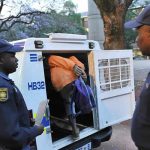
The operation also extended to criminal enforcement, resulting in the arrest of three motorists for serious offences, including driving under the influence (DUI), bribery, and interference with law enforcement officials.
While three arrests may seem modest in the context of hundreds of vehicles stopped, authorities say they are significant because they relate to behaviour that directly undermines road safety and the integrity of enforcement operations.
Gauteng MEC for Roads and Transport Kedibone Diale-Tlabela said the results send a clear signal that the province is prepared to act decisively against non‑compliance in the public transport sector.
Gauteng MEC for Roads and Transport Kedibone Diale-Tlabela said the outcomes of the operations demonstrate the province’s firm stance on road safety and law enforcement.
“The arrests as a result of these operations should send a clear message that criminal conduct and reckless behaviour on our roads will not be tolerated,” she said. “Those who continue to endanger others on public roads must know the law will catch up. You will be held to account.”
She added that the coordinated blitz is not a once‑off show of force, but part of a broader strategy to clamp down on unsafe practices and reduce the province’s high rate of road deaths and serious injuries.
She added that the coordinated operations form part of a broader provincial strategy to improve compliance and reduce road fatalities.
“These coordinated operations form part of ongoing efforts to improve compliance with traffic laws, enhance road safety, and address criminal conduct on the province’s roads,” Diale-Tlabela said.
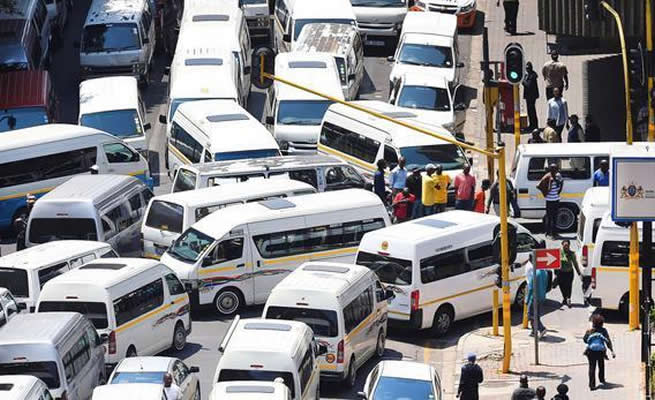
Gauteng remains the country’s busiest province in terms of vehicle volumes and public transport demand, with minibus taxis carrying the majority of working‑class commuters. The combination of high traffic density, tight margins in the taxi industry and weak maintenance cultures has long made enforcement a priority – and a point of friction – between the state and operators.
Provincial officials say they are engaging with taxi associations about the findings from the April operation, with a focus on encouraging operators to improve vehicle maintenance, ensure that drivers are properly licensed and that vehicles carry up‑to‑date licence discs and roadworthy certificates.
The MEC also commended front-line officers for their role in the crackdown, emphasising that sustained, visible enforcement is essential if drivers and operators are to take regulations seriously.
The MEC also commended enforcement officers for their professionalism and commitment, saying their work remains critical in protecting commuters and improving safety within Gauteng’s public transport system.
Transport authorities argue that while compliance drives can cause short‑term disruption – including longer queues and fewer taxis on certain routes – they are critical to preventing tragedies caused by mechanical failure or reckless, unlicensed driving.
For commuters who rely on minibuses daily, the operation is a reminder of the hidden risks they face when climbing into vehicles whose safety they have little capacity to verify. For law enforcement, the April blitz is being held up as evidence that, with targeted deployments and digital tools, it is possible to make inroads into a sector where corners have too often been cut.
Officials have indicated that similar operations will continue throughout the year, with a particular focus on peak travel periods, school reopening dates and long weekends, when the pressure on the public transport system – and the temptation to put unsafe vehicles on the road – is at its highest.