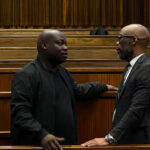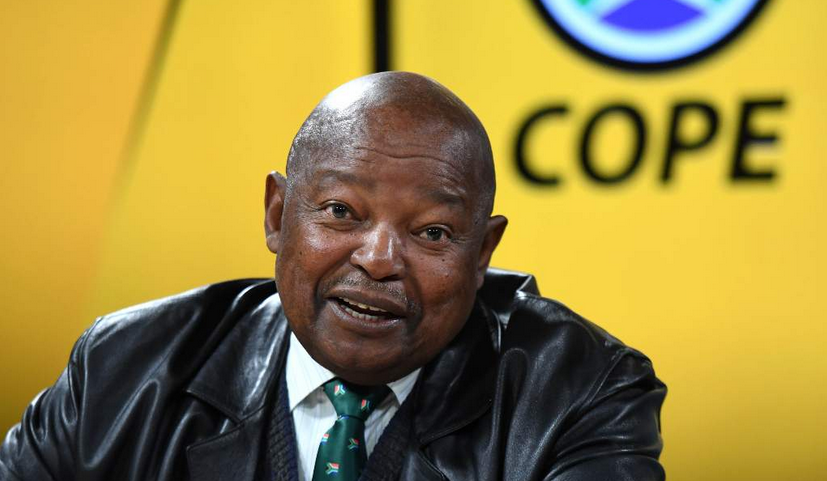
Pretoria, Gauteng – The legacy of Mosiuoa "Terror" Lekota, the anti-apartheid stalwart and former leader of the Congress of the People (COPE), has been thrust into a bitter and unseemly legal war following his death in March 2026. At the heart of the storm is a scathing High Court ruling that has branded his romantic partner a "predatory" figure who allegedly emptied his bank accounts while he was mentally incapacitated.
Advocate Luzelle Adams, Lekota’s partner of several years, is now launching a fierce legal appeal against the judgment, labeling the findings as a product of "pure spite" from Lekota’s estranged wife and children. The case has captivated the nation, offering a tragic glimpse into the final days of a political giant whose mental decline became the catalyst for a multimillion-rand family feud.
The Court's Scathing Verdict
The Gauteng High Court in Pretoria recently delivered a judgment that sent shockwaves through the political landscape. The court found that between May 2025 and Lekota’s death on March 4, 2026, the veteran politician was not of "sound mind" and was legally incapacitated due to a sharp deterioration in his health.
During this period of vulnerability, the court ruled that Adams transferred more than R2 million from Lekota’s personal and joint accounts. In one particularly chilling finding, the court noted that R600,000 was withdrawn just weeks before he passed away at the age of 77. The presiding judge did not mince words, suggesting that Adams had exploited Lekota’s declining condition for personal gain.
"The evidence suggests a calculated effort to drain the estate before the inevitable," the judgment read. The court further ordered that Adams repay the funds to the estate and even recommended that she face professional disciplinary action for her conduct.
'Pure Spite': The Lover's Defense
However, Adams is not going down without a fight. In her application for leave to appeal, she has launched a blistering counter-attack against Lekota’s estranged wife, Cynthia Lekota, and his children. Adams maintains that she was the one who cared for "Terror" in his final years while his biological family was largely absent.
"This is nothing more than pure spite," Adams argued in her court papers. She contends that the transfers were made with Lekota’s full knowledge and consent, often to cover his significant medical expenses and the upkeep of their shared household. She further claims that Lekota remained lucid enough to make financial decisions much longer than the court has acknowledged.
"To suggest that I 'emptied' his accounts while he was a helpless victim is a gross distortion of the truth," Adams stated. "I was his partner, his confidante, and his primary caregiver. These funds were used for his benefit and at his direction."
A Family Divided: The Wife's Perspective
On the other side of the courtroom stands Cynthia Lekota, the politician’s estranged wife, who has led the charge to freeze the accounts and recover the missing millions. For Cynthia and her children, the case is about protecting the legacy and the rightful inheritance of a man who spent his life fighting for justice.
The family’s legal team presented medical reports indicating that Lekota’s cognitive functions had begun to fail as early as April 2025. They argue that by the time the bulk of the money was moved, Lekota was unable to recognize his own family members, let alone authorize the transfer of millions of rands.
"Our father was a man of integrity. To see his final days overshadowed by this kind of financial exploitation is heartbreaking," a family spokesperson said. "We are not acting out of spite; we are acting out of a duty to protect him when he could no longer protect himself."
The Legacy of 'Terror'
Mosiuoa Lekota was a titan of the liberation struggle, a man who survived Robben Island and went on to serve as the first Premier of the Free State and the Minister of Defence. His decision to "cope" and break away from the ANC to form COPE in 2008 was one of the most significant political shifts in post-apartheid South Africa.
However, the "Terror" of old—the fiery orator and principled leader—was a far cry from the frail man described in the recent court papers. The details of his illness, including periods of severe confusion and physical dependency, have painted a somber picture of his final chapter.
A Legal Precedent in the Making?
Beyond the gossip and the family drama, the Lekota case raises critical legal questions about the protection of the elderly and the mentally infirm. The High Court's decision to intervene in the private financial affairs of a high-profile figure has set a powerful precedent for how "deathbed" transfers are viewed in South African law.
As the appeal process unfolds, the nation watches as the memory of a hero is picked over in the courts. For Luzelle Adams, it is a battle for her reputation and her financial survival. For the Lekota family, it is a fight for the "Terror" they knew. And for South Africa, it is a tragic end to the story of a man who once stood as a beacon of hope for a new democracy.