The body of missing runner Elizabeth “Tsontso” Moselakgomo has been identified as police investigate the deaths of five women found in and around Kempton Park.
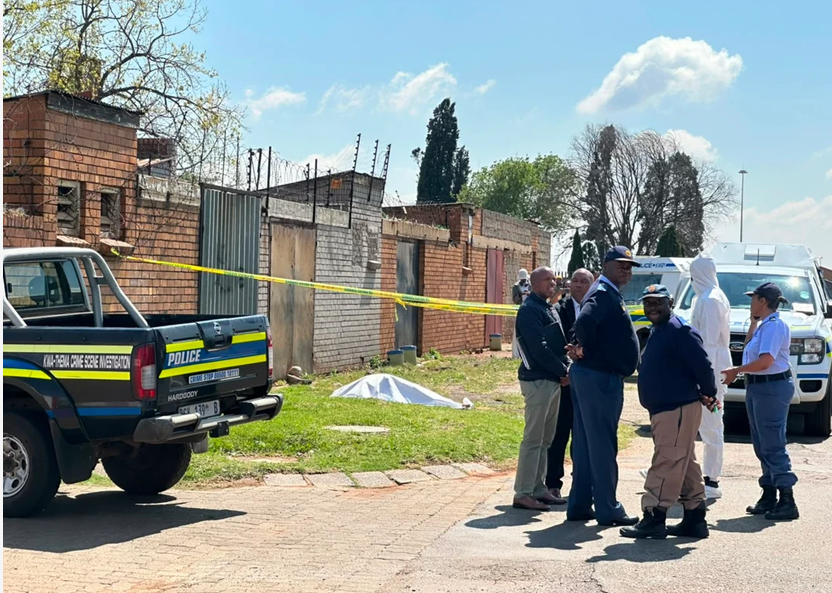
Moselakgomo’s family confirmed that the body discovered near York Street in Rhodesfield on Saturday was hers. The 38-year-old had failed to return home on 9 September, leaving relatives facing days of uncertainty before the identification was made.
She leaves behind a minor child. Her family now wants a thorough investigation into her death and for those responsible to be brought to justice.
The identification comes as police examine whether the five deaths were committed by one person or by different perpetrators. The cases initially raised fears that a serial killer could be operating in the area, but investigators have not confirmed that conclusion.
Sources close to the investigation said police were considering the possibility that more than one killer could be responsible. The Kempton Park station commander reportedly told a closed meeting that there was not enough evidence to point to a serial killer and that the cases did not all share the same method of killing.
The commander reportedly described the latest investigation as a “wake-up call”.
Although all the victims were women and several bodies were discovered in or around the Kempton Park and R21 areas, differences between the deaths have made it difficult for investigators to establish a single pattern.
The latest body was found near the R21, closer to Olifantsfontein. Police have confirmed that a suspect arrested in connection with the first woman’s murder in July remains behind bars.
The fact that the suspect is still in custody does not establish responsibility for the other deaths. Investigators will need to examine each case separately and determine whether evidence links any of the incidents.
Alleged Abduction Adds New Concern
The investigation has also been complicated by the reported escape of a woman who was allegedly abducted from Mosquito Park in Kempton Park.
The woman, who works at a hospitality venue near the park, reportedly escaped from her alleged captor and arrived at Tembisa police station. The details of the incident remain sketchy, and it has not been confirmed whether it is connected to the deaths of the five women.
The possibility that she may have been targeted as a potential seventh victim has raised further concern, but this remains an unconfirmed question rather than an established fact.
Police will need to take the woman’s statement, establish where she was allegedly held, identify the person involved and determine whether the account has any link to the other investigations. Her information may also help detectives understand whether someone has been targeting women in the area or whether the incidents are unrelated.
The reported escape has increased fear among residents, especially women who walk, run or travel alone. It has also added pressure on police to explain the investigation and communicate clearly with the public.
Acting national police commissioner Lieutenant-General Puleng Dimpane has confirmed that a multidisciplinary team of detectives and specialised policing resources has been ordered to intensify the investigations.
“We will not rest until we have established the truth,” she said.
The task team is expected to examine the five deaths, review earlier cases and consider whether there are links between victims, locations, vehicles or suspects. Specialist investigators may also re-examine forensic evidence and previous statements to determine whether information was overlooked.
Residents Demand Better Communication
Mike Waters, a Democratic Alliance member of the provincial legislature and local political head, attended the meeting where the police update was discussed. He said the meeting had left him with more questions, including whether the investigators assigned to the task team would focus exclusively on the deaths.
He was also critical of the communication with residents.
“Women, in particular, are scared. That’s why we need proper communication and more visible policing.”
DA ward 17 councillor Simon Lapping, whose ward includes Rhodesfield, said communication from police had been inadequate. He argued that information about the killings should have been shared through community-policing structures rather than emerging through media reports.
The concerns come as residents try to understand the difference between confirmed facts and unverified claims. Police have not confirmed that a serial killer is responsible, but the number of bodies and the locations have created fear across the area.
Clear communication is important because residents need to know what precautions to take, where to report suspicious activity and how to avoid spreading claims that could interfere with the investigation.
The family of Moselakgomo said identifying her body had ended days of agonising uncertainty, but it had also confirmed the worst fears of her loved ones. The family now wants the investigation to explain what happened to her after she failed to return home.
Calls For Forensic Evidence To Be Processed
Action Society national spokesperson Juanita du Preez said the discovery of the women’s bodies exposed the dangers created by delays in South Africa’s forensic DNA system.
Du Preez said Action Society had previously reported that DNA analysis identified 486 serial rapists among 10 493 prioritised cases processed between July 2021 and May 2022.
“At least 4.6% of the sexual offenders identified were repeat offenders.”
She called for forensic evidence from the Kempton Park scenes to be processed without delay.
“Women cannot be told to stay indoors and hope they’re not next.
“If DNA evidence is allowed to disappear into the backlog, another woman may pay for that failure with her life,” she said.
The call places the spotlight on the importance of forensic evidence in the current investigation. DNA, fingerprints, ballistic evidence, clothing, cellphone records and surveillance footage could help determine whether the five deaths are connected.
However, forensic evidence must be collected, preserved and tested properly before it can support a criminal case. Investigators will also need to connect any forensic result to a particular suspect and establish when and how the contact occurred.
Portfolio committee on police chair Ian Cameron said the developing situation was deeply concerning and called for investigators to establish whether a wider pattern was emerging.
“Investigators have to establish whether we are seeing a broader trend or pattern. This is why specialist investigative capability matters.”
His comments reflect the central challenge facing police: the deaths may appear connected because the victims were women and several bodies were found in the same broad area, but similarities alone do not prove that one killer was involved.
The station commander’s reported view that the cases did not share the same method of killing may point to different circumstances or perpetrators. Investigators will now have to compare the crime scenes, medical findings and available evidence before reaching a conclusion.
What Police Still Need To Establish
The investigation must answer several questions. Detectives need to identify the circumstances of each death, establish the timelines, determine the last known movements of the victims and examine the relationships between the women and any possible suspects.
They will also need to examine whether the bodies were found at the locations where the women were killed or whether they were moved. The locations near the R21, Kempton Park and Olifantsfontein may provide evidence, but the distance between scenes could also complicate the search for a common link.
Residents, motorists, security guards and workers in the area may have seen vehicles, people or unusual activity connected to one or more of the cases. Anyone with information should contact the police rather than posting unverified claims online.
The reported abduction survivor may also have information that could assist detectives, but her account must be investigated separately and sensitively. Police will need to protect her privacy while determining whether the incident forms part of the wider investigation.
The first murder suspect remains in custody, but the public should not assume that this person is responsible for all five deaths. Each allegation must be supported by evidence and tested through the legal process.
For Moselakgomo’s family, the identification has brought an end to uncertainty but begun a painful search for justice. For the families of the other women, the investigation continues without clear answers.
Police have promised to intensify their work, while residents and community leaders are demanding better communication and more visible policing. The fear in Kempton Park will not ease until investigators establish whether the deaths are linked, whether more than one killer is involved and whether anyone else is at risk.
For now, no serial-killer link has been confirmed. What is confirmed is that five women are dead, Moselakgomo has been identified, a reported abduction is being examined and a multidisciplinary police team has been ordered to find the truth.