

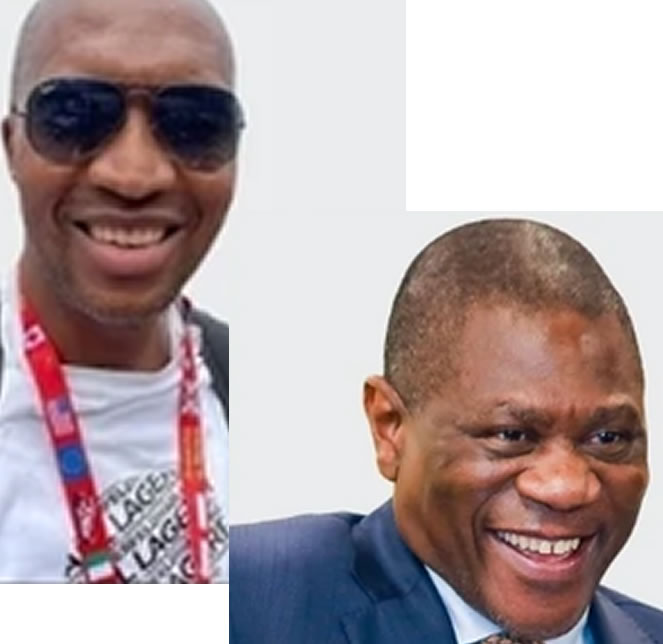
Deputy President Paul Mashatile’s son-in-law, Nceba Nonkwelo, has repaid money owed to the Gauteng Partnership Fund after a failed inner-city housing project left the state-backed agency pursuing him for R12.6 million.
The repayment was made under a settlement agreement between the GPF and Nonkwelo. Neither party has disclosed the amount that was paid, but both confirmed that the dispute has been resolved.
The settlement brings an end to a long-running fight over loans granted to companies linked to Nonkwelo for a housing development in Highlands, Johannesburg.
The project was originally intended to provide affordable housing. It was later changed to student accommodation, but the site remains undeveloped more than a decade after the first funding was approved.
The GPF had previously approached the High Court to force Nonkwelo to honour a settlement agreement worth R12.6 million. That agreement was signed in 2023, but the money was not paid at the time.
Instead of continuing directly through the court process, the parties entered mediation talks.
Nonkwelo said the final agreement was confidential and declined to disclose the amount paid.
“The agreement contains confidentiality provisions, and I am contractually bound by those provisions. I am therefore not at liberty to disclose or comment on the contents, terms or circumstances surrounding the agreement,” Nonkwelo said.
“What I can say is that the matter has been resolved. I regard it as concluded and firmly behind me, and I have no further comment to make on the matter.”
The GPF confirmed that the payment had been made in line with the settlement agreement.
“The GPF confirms that the matter has been settled and that the agreed funds have been paid to the GPF in accordance with the settlement agreement,” GPF stakeholder relations officer Andile Ndlovu said.
The agency did not disclose the amount paid when asked for further information.
Loans For A Project That Never Materialised
Nonkwelo’s companies were awarded three loans to develop housing in Highlands between 2013 and 2017. The total value of the loans was about R37 million.
The first loan, granted in 2013, was a R5.5 million bridging loan linked to an R8 million loan from the National Housing Finance Corporation.
Those loans were cancelled in March 2017, while Mashatile was serving as Gauteng human settlements MEC.
Two new loans were granted at the same time: one worth R12.9 million and another senior loan valued at R17.8 million. The senior loan followed the withdrawal of NHFC funding from the project.
The funding structure meant that the GPF took on a greater role in a development that had already experienced major problems.
According to information contained in court documents, Nonkwelo’s companies drew down about R7.2 million of the available funding. A further R5.4 million in interest was calculated.
Despite the money advanced, no housing development was completed on the site.
The project encountered significant obstacles, including large rock formations that had not been identified during the original geological surveys.
The site remains undeveloped today.
The development was initially approved as affordable housing, but the scope was later changed to student accommodation. The change was intended to make the project financially viable and attract further funding.
An investigation into the GPF’s handling of the loans found that there was no legal basis for approving the scope change.
Investigation Raises Governance Questions
A law firm was appointed to examine the decisions behind the loans after concerns were raised about the project and the way it had been funded.
The investigation could not make conclusive findings about whether all GPF policies and procedures had been followed because some documents could not be located.
It also raised questions about the due diligence done before the funding was approved.
The investigators found that there may have been negligence by both Nonkwelo Investments and the GPF because a proper site investigation may not have been completed before the loans were granted.
They also found that the GPF had not used all the remedies available to it to recover the money owed.
The report questioned why additional funding had been approved after it had become clear that the project was not viable.
The GPF is funded by the Gauteng human settlements department and was created to support social housing in Johannesburg. Its mandate includes providing higher-risk loans to emerging entrepreneurs.
Between 2016 and 2018, the agency operated under the oversight of the Gauteng human settlements department while Mashatile was MEC.
The largest of the three loans linked to the project was granted in March 2017, during Mashatile’s tenure.
The loan records place the transaction within the period when he was responsible for the department, but the available findings did not establish that Mashatile personally approved the loans or committed wrongdoing.
The investigation also stated that it had not found evidence of an actual or perceived conflict of interest involving staff members or trustees who dealt with the applications.
It noted that the GPF’s conflict-of-interest policy had been introduced only in 2016 and did not require Nonkwelo to declare his relationship to the MEC because an MEC was not an employee or trustee of the fund.
Settlement Dispute Drags On
The dispute over the money continued after the original project failed to take shape.
In December 2023, Nonkwelo entered into a settlement agreement with the GPF to repay the funds. When payment did not follow, the agency issued letters of demand and later filed court papers in January 2025.
The GPF’s claim related to money owed under the settlement and the loans linked to the undeveloped project.
The agency had initially sought to recover R12.6 million, including the outstanding amount and interest calculated in the court papers.
The matter was then redirected towards mediation, resulting in the agreement under which the funds were eventually paid.
The confidentiality clause means that the public does not know whether Nonkwelo paid the full amount sought, a negotiated amount or a sum calculated under different terms.
The GPF has confirmed only that the agreed funds were paid in accordance with the settlement.
The repayment closes the specific financial dispute between the agency and Nonkwelo, but it does not erase the questions raised about how the loans were approved and why money continued to flow into a project that was already facing serious obstacles.
The GPF investigation highlighted missing records, uncertainty around the project’s scope change and possible failures in due diligence.
It also raised concerns about the agency’s decision to continue funding the development after the senior funder withdrew.
Property Questions Remain Separate
The GPF dispute forms part of wider public interest in the financial affairs of people connected to the deputy president.
Nonkwelo was previously linked to the purchase of properties used by members of Mashatile’s family, including a luxury home in Waterfall and a property in Constantia, Cape Town.
The source of funds for the Cape Town property was previously reported to be under investigation by the Hawks.
Those property-related questions are separate from the GPF settlement and should not be treated as resolved by the repayment of the housing-project money.
Likewise, the settlement does not establish that Mashatile was involved in wrongdoing, nor does it provide a finding about the source of funds for any separate property purchase.
Mashatile’s office had previously attempted to distance his tenure as MEC from the loan issued to Nonkwelo. However, the loan agreements show that the larger of the three loans was granted in March 2017, when Mashatile was the MEC responsible for human settlements and the GPF.
The timing has continued to attract attention because the agency was a relatively small public entity that had been tasked with managing major housing projects worth billions of rands.
The loans to Nonkwelo’s companies were made under a programme intended to help historically disadvantaged emerging developers participate in the affordable rental-housing market.
The project’s failure meant that the intended homes were never delivered, while the public agency was left trying to recover money from the developer.
What The Repayment Means
For the GPF, the settlement means that the money agreed between the parties has been returned and that its court dispute with Nonkwelo has been concluded.
For Nonkwelo, the payment ends the immediate recovery action brought by the agency.
But the details of the agreement remain private, including the amount that changed hands and whether the figure was the same as the R12.6 million originally demanded.
The project itself remains a failed development. The land has not produced the affordable housing or student accommodation promised when the loans were approved.
The unanswered questions now concern the oversight of the project, the missing records and the decisions that allowed it to continue after its viability had been questioned.
They also concern whether public agencies have strengthened their controls to prevent similar loans from being approved without proper site investigations and enforceable recovery plans.
The GPF’s purpose is to support housing projects that serve communities and expand opportunities for emerging developers.
When projects fail, the cost is not limited to a balance sheet. It can also mean that people waiting for affordable homes or student accommodation receive nothing while public funds remain tied up for years.
In this case, the money dispute has ended through settlement, but the housing project remains unfinished and the site remains undeveloped.
The GPF and Nonkwelo have confirmed that their agreement has been paid and concluded.
The amount paid has not been made public, while separate questions about the original loan approvals and related property matters remain part of the wider public record.