

JOHANNESBURG – A sinister new human trafficking syndicate is targeting undocumented Zimbabweans living in South Africa, luring them with false promises of lucrative jobs in Russia only to send them to the bloody front lines of the war in Ukraine. As anti-foreigner sentiment rises in South Africa, desperate migrants are becoming easy prey for recruiters who are now facing a major crackdown by Zimbabwean authorities.
The Zimbabwean government has confirmed the arrest of eight individuals between March and July 2026, all charged with human trafficking. These arrests have exposed a sophisticated network that uses the messaging app Telegram to process recruits, often under the guise of securing employment as firefighters or truck drivers.
The South African Connection
While the initial arrests took place in Zimbabwe, investigators have discovered that the recruiters have shifted their focus to South Africa. The "March and March" anti-immigrant protests, which have gripped parts of the Eastern Cape and Gauteng, have created a climate of fear that syndicates are now exploiting.
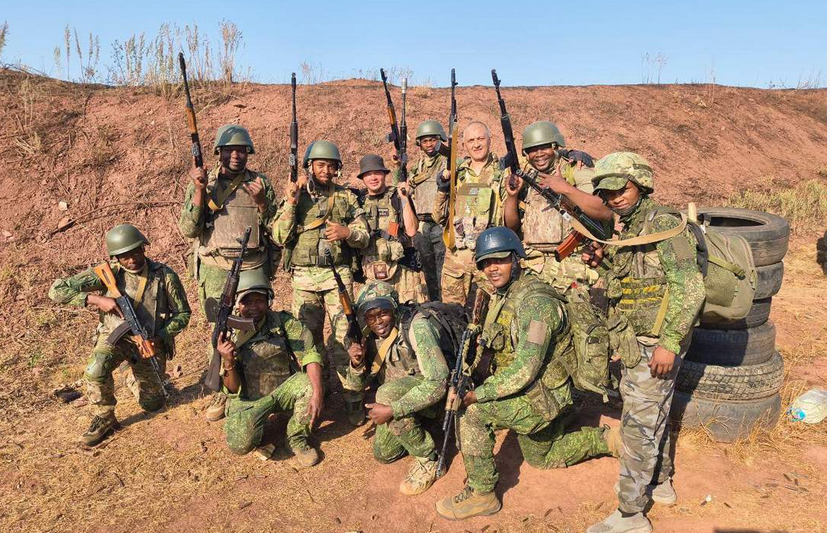
With over 100,000 undocumented Zimbabweans reportedly returning home in the last two months due to the hostile environment, those who remain in South Africa are increasingly desperate. One recruit, currently fighting in Ukraine’s far eastern Luhansk province, shared his harrowing story through his brother.
“I moved to Johannesburg from the Eastern Cape when the anti-foreigner marches broke out, but there was no hope for me,” the man said. “A friend linked me and four others to a syndicate that got us here. Two of us are already dead.”
His message to others back home is a chilling warning: “If anyone reads this, please, they should stay away from these Russian jobs. We are being killed like flies.”
The Money Trail and the Russian Link
The investigation has uncovered a clear financial link to Russia. During the court appearance of four suspects—Edson Dudzayi Nyamudeza, Obert Hlavati, Tonderai Maphosa, and Tanaka Malcolm Gwarada—the state revealed a money trail of R130,000 sent from a contact in Russia identified only as "Ivan."
The syndicate’s operations were further exposed following the arrest of a 20-year-old Russian national, Sofia Leonova, in Harare this past May. While Leonova remains in custody, five other Russian nationals linked to the ring managed to evade arrest and are believed to have crossed the border into South Africa to continue their recruitment efforts.
The recruiters target vulnerable individuals, often promising salaries as high as US$1,500 (R24,000) per month. For many struggling to survive in the informal settlements of Johannesburg or Pretoria, this sounds like a lifeline. In reality, it is a death sentence.
The Heartbreak of the Families Left Behind
For the families of those who have already fallen, the tragedy is compounded by a bureaucratic nightmare. The Zimbabwean government estimates that at least 18 of its nationals have died in Russia so far. However, only four bodies have been repatriated.
The cost of bringing a loved one’s remains home is staggering, often reaching as much as $16,000 (R261,000). For most families, this is an impossible sum, forcing them to accept cremations or pauper’s burials in a foreign land.
One mother, speaking on condition of anonymity, described the agony of not knowing if her son is still alive. “My son only sent money once – US$1,500. But the person who gave me the money has since disappeared. That’s the only link I have to my child. I fear he might be dead.”
The lack of closure is a recurring theme. Another family was forced to allow their son to be buried by Russian authorities after months of failed negotiations between the Zimbabwean embassy in Moscow and the Russian government. “We will never get closure,” the mother lamented.
A Crisis of Identity
Information Minister Zhemu Soda has highlighted a further complication: many of the recruits travel using South African particulars. This makes it nearly impossible for the government to track the exact number of Zimbabweans involved until their families come forward.
“There are problems knowing the exact nationalities because some travelled using South African documents,” Soda explained. This suggests that the death toll could be significantly higher than the official figures suggest.
As the war in Ukraine continues to grind on, the demand for "cannon fodder" on the front lines shows no sign of slowing down. For the thousands of Zimbabweans living on the margins in South Africa, the promise of a "firefighter" job in Russia remains a tempting, yet deadly, trap.
The Zimbabwean police are continuing their search for the runners and recruiters still operating within South Africa’s borders. They have urged the public to be extremely cautious of any job offers that require travel to Russia or Eastern Europe, warning that the "dream job" could end in a shallow grave thousands of miles from home.
For now, the families of those trapped in the Luhansk and Donetsk regions can only wait and pray, hoping that their loved ones will be among the few who manage to escape the "meat grinder" of the front lines.