

A mother of five was allegedly stabbed to death and her body dumped at a dumping site in Lingelethu West, Khayelitsha, in a killing that has left residents angry and frightened as the country marks Women’s Month.
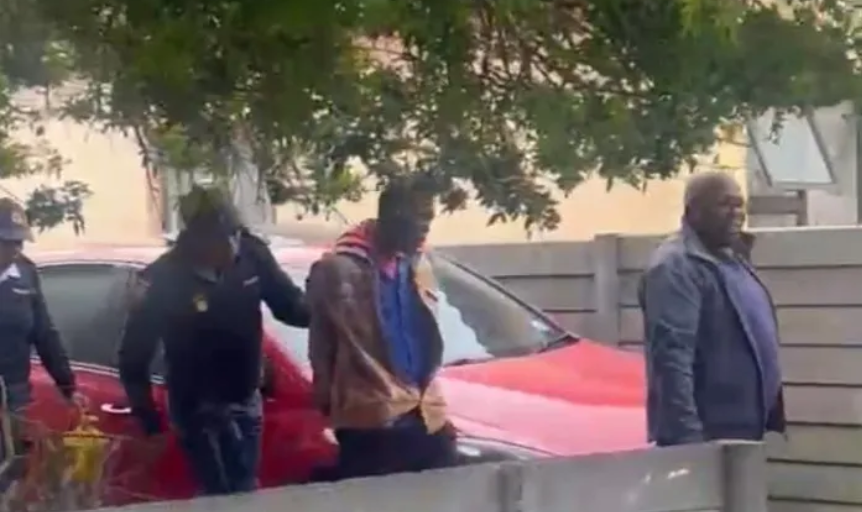
The woman, who lived in H Section, was found dead in F Section on Monday morning after passers-by heading to work came across her body at about 8am. A man alleged to be her boyfriend has been arrested, appeared in the Khayelitsha Magistrate’s Court on Wednesday on a charge of murder, and is expected to return to court on 12 August.
Police have confirmed a murder case was opened after the body of an adult woman was found at the dumping site. Provincial police spokesperson Constable Ndakhe Gwala confirmed the details of the discovery and the arrest.
"This office confirms that Lingelethu West police registered a case of murder following the discovery of a body of an adult female at a dumping site in F section Lingelethu West on Monday 3 August 2026 at about 8am.
"A male suspect was arrested and he appeared at the Khayelitsha Magistrate’s Court on Wednesday 5 August 2026."
Residents say the discovery of the body sparked immediate outrage. The dumping site, like many informal rubbish areas across the Cape Flats, is used daily by locals walking to work and public transport, and the idea that a murdered woman was left there has deepened community fear.
A resident who said they knew the deceased described the murder as particularly brutal and claimed the suspect was a “new boyfriend” who had been involved with the woman for less than six months. The resident said he was not the father of her children.
“She has five children. This is not the children's father, he is a new boyfriend. I think he has not even been in the picture for six months.
"I don't know how he killed her but her body was found dumped in F Section. According to my understanding he is a murderer who apparently ran away from another murder in Eastern Cape because he is not from our area, he is a tenant.
"He murdered her in a cruel manner because as a community, we went to the scene and it was terrible what we saw. Her intestines were outside.
"On Monday, we had loadshedding in the area and there was mist during the early hours of the morning. So the people who were on their way to work walked past the body."
The resident’s description suggests the body was discovered after the early morning hours, when poor visibility, mist and loadshedding may have left the area darker and quieter than usual. Although the woman was found at around 8am, the resident’s account indicates people may have walked past the area earlier without realising what had happened.
The resident also raised concerns about what will happen to the victim’s children, saying the youngest child has a mental disability and will now be raised by elderly grandparents.
"She was a very quiet woman, even until her death, nobody was bothered or insulted by her, that is why it is such a shock for us. Her youngest is mentally disabled."
Police have not released the woman’s name publicly, and it remains unclear whether her family has been formally identified in official statements. It is also not clear at this stage where the alleged stabbing took place, when exactly the killing occurred, or whether the woman was attacked at home or elsewhere before being dumped.
The allegation that the suspect is a “tenant” and “not from our area” speaks to a familiar tension in many communities: when a violent crime is committed, residents often search for patterns and background, and rumours can spread quickly. Police have not confirmed claims that the suspect fled from another murder in the Eastern Cape, and those allegations are likely to form part of what investigators verify as they build a case for court.
What is confirmed is that the suspect has been arrested and charged, and that the investigation is now in the hands of the criminal justice system — with the accused due back in court on 12 August.
The killing has also drawn a response from civil society organisations working in the field of gender-based violence. Ilitha Labantu, a Cape Town-based organisation focused on women’s and children’s rights, GBV and community support, said the incident is a painful reminder of how common intimate partner violence remains — and of how often women are harmed by men known to them.
Siya Monakali, Ilitha Labantu’s spokesperson and advocacy coordinator, cautioned against treating Women’s Month as the only time to speak about violence against women, arguing that public concern too often spikes during commemorative periods and fades afterwards.
"As South Africa observes Women's Month, Ilitha Labantu emphasises that violence against women cannot be addressed only during commemorative periods.
"The protection of women is a responsibility that requires sustained attention, coordinated action and meaningful investment throughout the year. Every woman has the right to live free from violence, abuse and fear, irrespective of the time of year.
"Addressing intimate partner violence requires more than a criminal justice response after another woman has lost her life.
"It requires stronger prevention programmes, accessible psychosocial support services, effective referral pathways, greater community awareness and coordinated collaboration between government, civil society, law enforcement and communities.
"Equally important is ensuring that survivors are able to access support without fear, stigma or barriers that prevent them from seeking help."
Monakali’s remarks point to the limitations of relying solely on arrests and prosecutions after a death has occurred. While police action is crucial, the organisation argues that prevention, early intervention and accessible support services are what reduce risk before violence escalates.
In communities like Lingelethu West, where residents often live under the overlapping pressures of poverty, overcrowding and limited safety infrastructure, the burden of preventing harm frequently falls on neighbours, family members and community networks — many of whom are themselves stretched. This case, residents say, has left people questioning how someone they described as “a very quiet woman” could end up killed and dumped, and what warning signs might have been missed or ignored.
For now, the community is left with grief for a mother of five, concern for her children — including a youngest child with a mental disability — and a criminal case that will unfold in the Khayelitsha Magistrate’s Court.
As Women’s Month continues, the case adds urgency to a message repeated by many organisations working in GBV: that public awareness must translate into consistent support systems, and that women should not have to rely on commemorative moments to be taken seriously when they are at risk.