

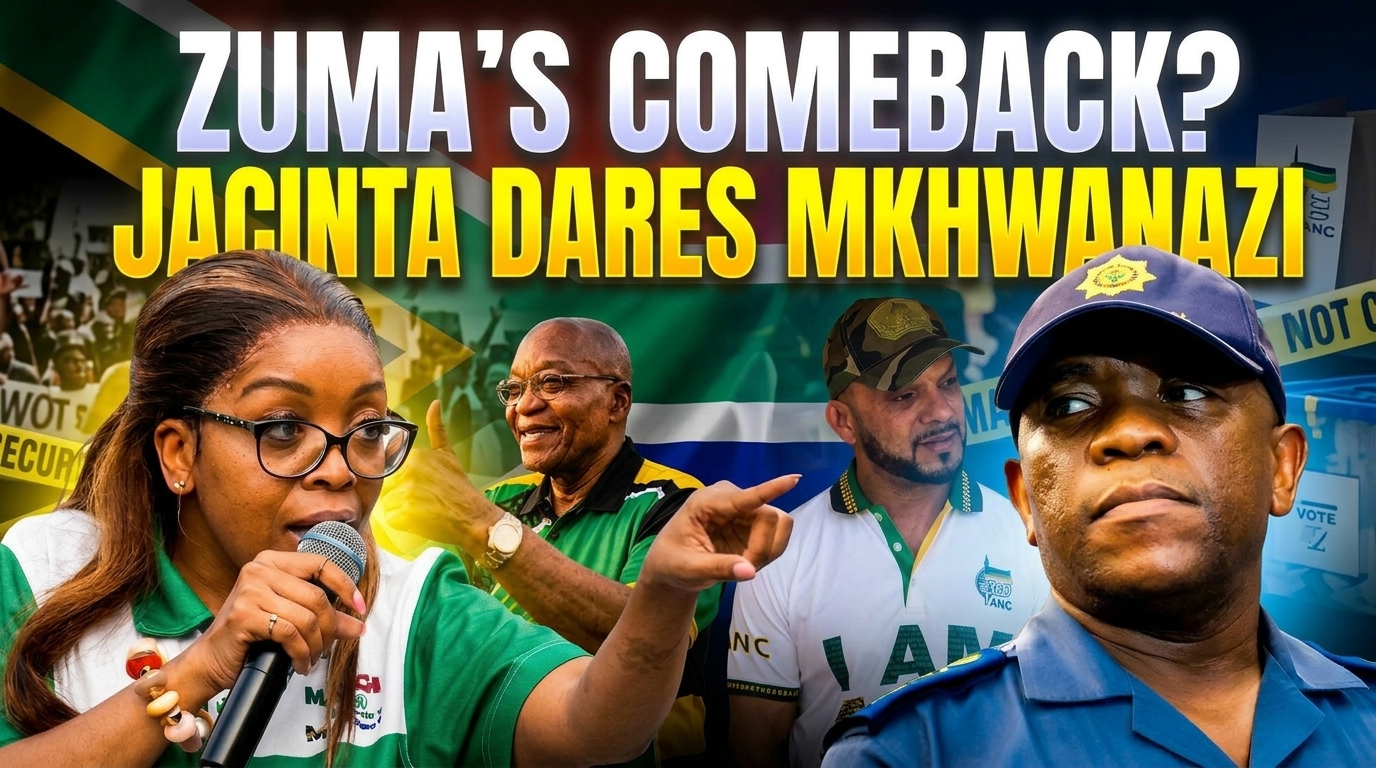
The upcoming South African local government elections, scheduled for 4 November, are taking place against a backdrop of escalating socio-political tension, legal disputes, and heightened security measures. This video explores several colliding storylines, primarily focused on the volatile situation in KwaZulu-Natal and the broader national political landscape.
Central to the current unrest is the protest movement known as March and March, founded and led by activist Jacinta Ngobese-Zuma. The movement has been actively demonstrating in Durban, demanding greater restrictions on undocumented immigration, improved job opportunities for South Africans, better public services, and the regulation of e-hailing and delivery industries. These protests have frequently turned violent, leading to property damage, looting, and arson attacks on critical infrastructure, including the Home Affairs Refugee Reception Centre.
The KwaZulu-Natal police, led by General Nhlanhla Mkhwanazi, sought a court-ordered ban on these demonstrations to maintain public order. However, the Durban High Court stopped short of a total ban. Instead, it issued an interim order imposing strict conditions, including restricted operating hours, a prohibition on carrying weapons, and a ban on wearing masks or disguises that hinder identification. Despite these legal limitations, Ngobese-Zuma remains defiant, asserting that the movement’s constitutional right to protest cannot be curtailed by the authorities.
As election day approaches, the national police force is on high alert. Authorities have classified 331 voting stations across the country as high risk, with the vast majority situated in KwaZulu-Natal and Gauteng. To ensure a peaceful voting process, the police, supported by the South African National Defence Force and other agencies, have launched a comprehensive security operation. This includes escorting ballot materials, providing stationary and roving tactical teams, and strictly enforcing the law, including the prohibition of protest marches on election day.
Meanwhile, the political arena has been energized by the return of former president Jacob Zuma. Following a period of hospitalization, Zuma has re-entered the public eye, campaigning for the MK Party. His message to supporters is clear and ambitious: the MK Party is prepared to govern the country, and the local elections represent a pivotal opportunity for voters to exert control over South Africa’s future. Zuma has urged voters, particularly in black communities, to turn out in large numbers to secure an MK Party victory.
Finally, the video touches upon a separate, high-profile legal matter involving businessman Suliman Carrim. Carrim is currently entangled in complex legal proceedings regarding his failure to appear before the Madlanga Commission of Inquiry, with disputes over his compliance with bail conditions. Simultaneously, he is facing criminal charges in Musina related to fraud and money laundering.
The combination of civil unrest, the testing of constitutional rights, high-stakes political campaigning by Jacob Zuma, and significant security deployments creates an uncertain environment for the November elections. This video provides a comprehensive overview of these unfolding events, raising critical questions about whether the state can maintain order and how the electorate will respond at the ballot box.