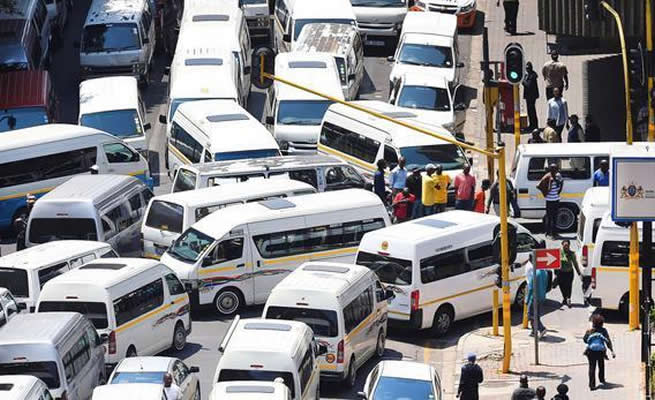
JOHANNESBURG – The powerful and often volatile Johannesburg taxi industry has been thrown into a state of internal division as major associations split over how to handle migrant drivers amid a nationwide government crackdown on undocumented foreigners.
While some associations have taken the unprecedented step of suspending foreign national drivers until they can prove their legal status, others are digging in their heels, insisting that immigration enforcement is a "government problem" that is currently destroying their daily earnings.
The shift follows a massive policy pivot from the Union Buildings. On June 7, President Cyril Ramaphosa announced a phased recruitment of 10,000 labour inspectors and the establishment of dedicated immigration courts to fast-track deportations. The move has sent shockwaves through industries that have long relied on migrant labour, including the multi-billion-rand taxi sector.
The Faraday "Freeze"
The Faraday Taxi Association (FTA), one of the largest and most influential operators in Gauteng, became the first to blink. In a move that has left dozens of drivers stranded, the association announced a temporary suspension of all foreign national operators.
Faraday spokesperson Sihle Makhanya was quick to clarify that the move was not a permanent ban but a "safety and compliance" measure. "This is intended to give affected drivers time to obtain the necessary documentation," Makhanya said. "Once they have sorted out their documents and can show us that they meet the legal requirements, they will be allowed to come back and work."
The association cited growing "safety concerns" as the primary driver behind the decision. With groups like the "March and March" movement increasingly targeting businesses and transport hubs in search of undocumented migrants, the FTA appears to be acting to prevent potential violence at its ranks.
"It’s For The Government To Sort Out"
However, just a few kilometres away in Alexandra, the sentiment is starkly different. The Alexandra Taxi Association (ATA) has flatly refused to play the role of immigration police.
"It is not our concern who is documented and who isn’t. This thing is for the government. They need to sort it out themselves," said ATA spokesperson Mthunzi Nxumalo.
Nxumalo estimated that approximately 100 drivers from Zimbabwe and other neighbouring countries work through the association. He argued that as long as a driver has a valid permit and licence, they have a right to work. "How can we chase them if they’re properly documented? Maybe other people don’t have the right documents, so they should get it. But it is not for us to do that."
Crucially, Nxumalo highlighted the devastating financial impact that anti-migrant protests have had on the industry. The ATA has refused to participate in the "March and March" mobilisations, claiming the unrest has scared passengers off the streets.
"We just want to do our work. These protests have affected our work because now people don’t want to be out on the streets or use our taxis. It has had a big effect on our income and our work," Nxumalo lamented.
The National Directive
The National Taxi Alliance (NTA) has attempted to steer a middle path, revealing that it had already instructed its members earlier this year to verify the status of their employees.
NTA spokesperson Theo Malele said the directive was issued as soon as "dissenting voices" about migration began to grow in South African society. "We made an announcement that taxi owners and associations should ensure that people have the correct documentation to be in the country and to drive taxis," Malele said.
However, Malele admitted there is a major loophole that associations remain powerless to close: cross-border taxis. "The only thing that we can’t control is when taxis come from other countries such as Zimbabwe, Botswana, and Lesotho. When they come from those countries, there’s nothing we can do about them because they’re not owned by South Africans."
A Sector Under Scrutiny
The internal industry friction comes as the Department of Employment and Labour prepares to unleash its new army of 10,000 inspectors. The government has warned that businesses found employing undocumented migrants will face "tougher penalties" than ever before.
Vusi Macheke, Chairperson of the Ivory Park Taxi Association, echoed the need for compliance, regardless of the number of migrant drivers involved. "The number is not the main issue. Any person who is working as a driver must have the correct documents and must comply with SA law," he said.
As the August 2026 deadline for various immigration amnesties and permits approaches, the Johannesburg taxi industry finds itself at a crossroads. For some, the crackdown is a necessary step toward "cleaning up" the sector; for others, it is a politically motivated disruption that is hitting the pockets of operators and passengers alike.
For now, the streets of Johannesburg remain a patchwork of enforcement, with some routes cleared of foreign drivers and others continuing business as usual, while everyone waits to see how the government's 10,000-strong inspection force will change the face of South African transport.