A fierce war of words has erupted between the South African government and organisers of planned anti-illegal immigration demonstrations scheduled for June 30. Protest leaders are accusing authorities of sidestepping the core issues of immigration enforcement, instead focusing on security threats, as the nation braces for potentially volatile demonstrations across several provinces. This escalating dispute highlights deep-seated frustrations over immigration policies and the government’s response to public concerns.
The tension intensified following a stern warning from Acting Police Minister Firoz Cachalia. While acknowledging the constitutional right of South Africans to protest, Cachalia made it unequivocally clear that authorities would act decisively against any form of lawlessness, violence, or destruction of property. His statement, delivered amidst extensive security preparations by the Justice, Crime Prevention and Security Cluster, underscores the government’s apprehension regarding the upcoming demonstrations and its determination to maintain public order.
Addressing the media on Monday, Cachalia detailed the measures being taken, stating that the South African Police Service (SAPS) had significantly strengthened its operational readiness nationwide. He affirmed SAPS’s preparedness to respond to any threats to public order, even hinting at the deployment of military support if necessary. “Should the operational environment require additional capacity, SAPS may request the support of the South African National Defence Force to augment existing policing capacity,” he announced, signalling the gravity with which the government views the potential for unrest.
Cachalia also emphasised the government’s efforts in coordinating ahead of the demonstrations, including engagements with provincial leaders and traditional leadership structures. He acknowledged that many South Africans harbour “genuine concerns about issues affecting our country,” and assured that “Government hears those concerns.” However, he firmly reiterated that “those concerns must always be expressed lawfully,” drawing a clear line between legitimate protest and illegal actions.
This message, intended to reassure and deter, was met with sharp criticism from Jacinta Ngobese-Zuma, leader of the March and March movement, a prominent group backing the demonstrations. Ngobese-Zuma lambasted the government for what she perceived as a misdirected focus, arguing that authorities were prioritising warnings to citizens over addressing the fundamental issues of illegal immigration and alleged weaknesses within the country’s immigration system. “I think our government has a serious communication problem,” she stated, expressing profound frustration.
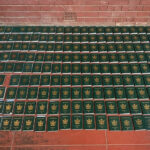
Ngobese-Zuma’s central argument is that the government is failing to tackle the root cause of public anger. “The one thing I’m not understanding is why the government of South Africa is not addressing the real issue, which is the illegal immigration crisis and foreign nationals who are buying documents and corruptly getting onto the system,” she asserted. She contended that the widespread frustrations among South Africans stem directly from what she described as the authorities’ failures to enforce existing laws and combat corruption within state institutions, which she believes facilitates illegal immigration.
In a fiery challenge to the government’s warnings, Ngobese-Zuma declared, “If you feel like threatening anyone, threaten the illegal immigrants who are in the country illegally. Threaten your own officials who are selling off documents. Threaten government officials who haven’t been doing their job.” Her words reflect a deep-seated belief among protest organisers that the government is misplacing blame and failing to hold the correct parties accountable. She further accused the government of ignoring community concerns while directing its warnings solely at those planning to participate in the demonstrations.
Ngobese-Zuma painted a picture of a double standard, where “The same individuals in the country illegally are the ones misbehaving and threatening South Africans, claiming they are armed and ready, yet the only threats are directed towards South Africans.” To illustrate her criticism, she employed a family analogy, suggesting that the government was reprimanding its citizens while neglecting the underlying causes of their anger. “It’s like someone crying to their parents saying, ‘Mommy, Daddy, you’ve been neglecting me and I’m so angry.’ And you say, ‘If you dare touch the children from next door who invaded your space and took over your space, I’m going to beat you up.’ Does that make sense?” she questioned, highlighting the perceived illogicality of the government’s stance.
Crucially, Ngobese-Zuma argued that public concerns about immigration should not be automatically dismissed as xenophobia or ethnic mobilisation. She insisted on a direct engagement with the issue: “Don’t tell us about xenophobia or afrophobia or ethnic mobilisation. Tell us about the crisis of illegal immigration in the country and how you are going to fix it. That’s what we want to hear.” This demand for concrete action over labels reflects a growing impatience among segments of the population who feel their grievances are being ignored or mischaracterised.
The upcoming demonstrations on June 30 are therefore poised to be a significant test for both the government and the protest movements. For the government, it’s a challenge to manage public discontent while upholding the rule of law and protecting all residents. For the organisers, it’s an opportunity to amplify their message and pressure authorities into addressing their concerns about immigration enforcement. The outcome of this confrontation will undoubtedly have lasting implications for South Africa’s social cohesion and political landscape, as the nation grapples with complex issues of migration, national identity, and economic strain.