

The Silent Veranda: The Life and Brutal Death of Valarie Enziar
The wood-panelled walls of the Wynberg Regional Circuit, currently serving as the Western Cape High Court, provided a somber backdrop this week for a case that has come to define the growing vulnerability of South Africa's rural elderly. In the dock stood a seventeen-year-old boy, his slight frame and apparent confusion contrasting sharply with the harrowing list of charges read out against him. He is accused of the rape, robbery, and murder of Valarie Enziar, a seventy-nine-year-old equestrian and artist whose life was ended on the very soil she had chosen as her final sanctuary.
The teenager, who cannot be named due to his status as a minor, was only sixteen at the time of the incident in July 2025. Clad in simple clothing and accompanied by his mother—who struggled to follow the proceedings in English—the boy faced a legal onslaught that included charges under the Older Persons Act, a piece of legislation designed to provide enhanced protection for the elderly. Yet, for Valarie Enziar, the protection of the law arrived far too late.
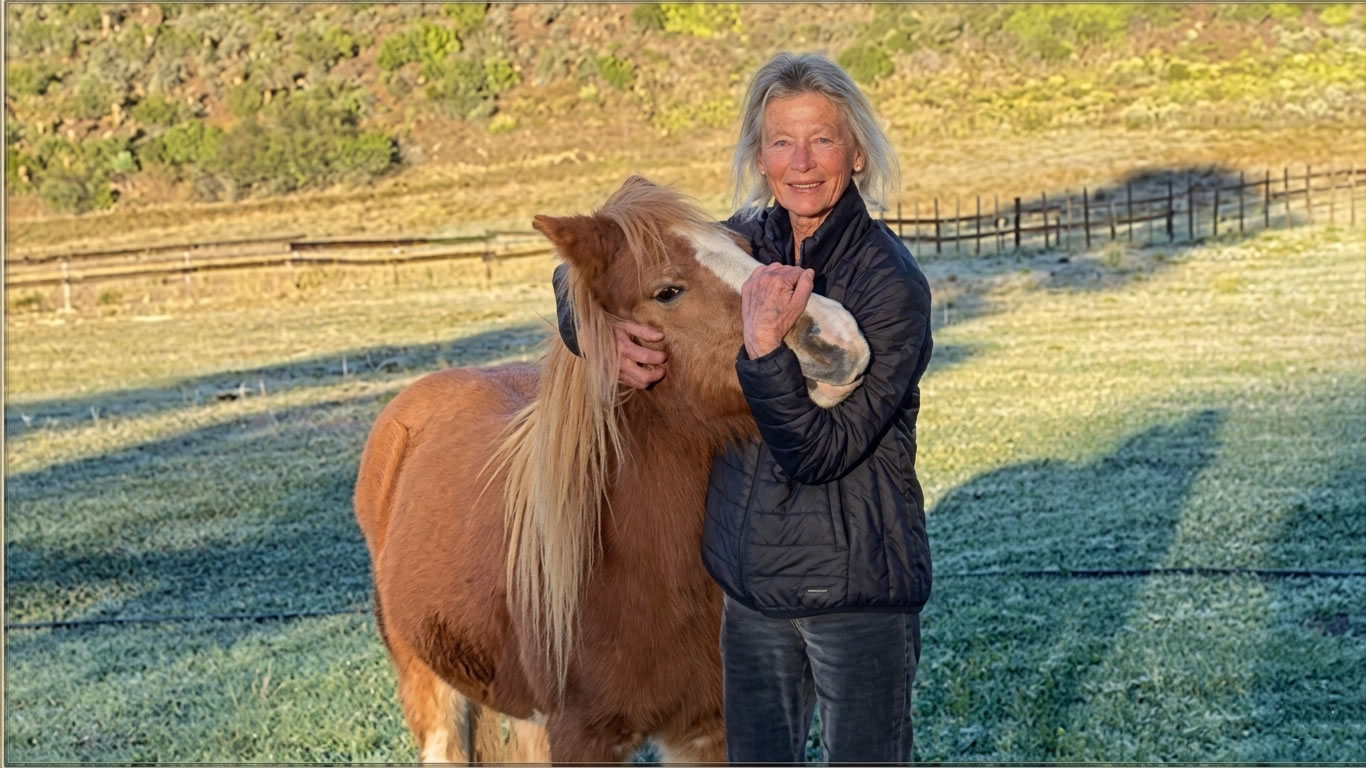
Valarie was not merely a statistic in the grim ledger of South African farm attacks; she was a woman of remarkable spirit and a complex history. Born into a life of Scottish privilege and adventure, she had spent decades navigating the shifting landscapes of Southern Africa. Her journey took her from Scotland to Zimbabwe, where she built a life centered around her twin passions: art and horses. However, the political upheavals and land invasions in Zimbabwe eventually forced her to flee, seeking a new beginning further south.
After a brief period in St Francis Bay, Valarie found her way to the Karoo. She settled on Doringkloof, a modest farm near the tiny village of Van Wyksdorp, outside Ladismith. For nearly twenty years, she lived there alone, finding solace in the rugged beauty of the landscape and the company of her beloved horses. Those who knew her described her as a "force of nature," a woman whose independence was as fierce as the African sun. Her daughter, Georgina Ford, speaking from her home in the United States, remembered her mother as "an incredibly talented artist, her creativity flowing onto canvases that captured the beauty she saw in the world around her."
Georgina's tribute painted a picture of a woman who refused to be diminished by age. "She was also wonderfully stubborn," Georgina noted. "Once her mind was made up, there was simply no changing it. Above all, she cherished her freedom. Even when we tried to persuade her to move closer to family, she refused. That independent spirit and her commitment to living life on her own terms were part of who she was."
However, that independence came with a price. In the weeks leading up to her death, the peace Valarie had sought on Doringkloof was increasingly under threat. According to reports from the advocacy group AfriForum, Valarie had raised repeated concerns about criminal activity on and around her property. She had documented instances of her fences being cut, her animals being poisoned, and strangers engaging in illegal grazing on her land. It is a haunting detail of this investigation that despite her numerous complaints to the authorities, she reportedly received little to no assistance.
The tragedy reached its climax on or about July 14, 2025. Valarie had a routine with a neighbour; she would send a message every morning to signal that she was safe. On that Monday morning, the message never arrived. The neighbour, who was away on holiday, grew concerned and asked one of his workers to check on her. The scene the worker discovered at 09:00 was one of unimaginable violence. Valarie's body was found on the veranda of her farmhouse.
The indictment presented by the State paints a chilling picture of her final moments. It alleges that the teenager gained access to the property and subjected the elderly woman to a brutal assault. She was raped and strangled. The motive, at least in part, appeared to be a desperate and haphazard robbery. The teenager is accused of forcibly taking several items, including a laptop, a mobile phone, and Valarie's bank cards. In a bizarre and tragic twist, he also allegedly stole one of her horses.
The investigation moved swiftly. Shortly after the body was discovered, reports surfaced of a young man using Valarie's bank cards at local shops in Van Wyksdorp. This digital trail, combined with the theft of the horse, led police directly to the sixteen-year-old suspect. He was arrested on the same day the murder was discovered. Residents of Van Wyksdorp, a village where everyone knows everyone, were left reeling. One local, who asked to remain anonymous, described the boy as a "bad apple" notorious for disruptive behaviour. "He just doesn't care about others," the resident said. "We've feared something like this would happen for a long time."
The case against the teenager is multifaceted. Beyond the central charges of murder and rape, he faces counts of house robbery, theft, and stock theft. The inclusion of the Older Persons Act in the indictment is a significant move by the prosecution, reflecting a growing judicial determination to address the epidemic of violence against the elderly in rural areas.
Valarie's death is part of a broader, more systemic crisis. Statistics released in April 2026 by AfriForum highlight the scale of the danger. In 2025 alone, there were at least 184 farm attacks and 29 farm murders across South Africa. The Western Cape, often perceived as safer than the northern provinces, saw 25 attacks and three deaths during that period. These are not just numbers; they represent a sustained level of extreme violence that target some of the most isolated members of society.
In March 2026, just months before this trial began, another farmer, Hugo Louw, was left fighting for his life after a clash with suspected sheep thieves near Lamberts Bay. These incidents underscore a reality where rural safety is often a luxury that the state fails to provide. For Valarie Enziar, the warnings were there, written in the cut wire of her fences and the carcasses of her poisoned animals.
Sue Venter, Valarie's best friend of over forty years, spoke of the woman who had survived so much only to fall victim to a local youth. "She was an accomplished artist and an exceptional equestrian. She loved horses; they were her life," Venter said. "Valerie fell in love with Africa during her time in Zimbabwe but fled the country during the land invasions. She settled in Van Wyksdorp about twenty years ago, hoping to live out her days on earth in peace."
The irony is as sharp as a blade. Valarie had survived the tumultuous land seizures of Zimbabwe, only to be murdered on a quiet farm in the Karoo. Her daughter revealed that Valarie seemed to have a premonition of her end. She had left specific instructions to be buried, without fuss, on the land she loved so dearly. "She lived her life fully and authentically," Georgina said. "Though she's no longer physically with us, the mark she left on the world will never fade. Her spirit, as wild and free as the African landscape she adored, will continue to inspire us all."
As the trial continues in the Western Cape High Court, the focus remains on the evidence. The State intends to prove that the teenager's actions were not a momentary lapse of reason but a calculated and brutal attack on a defenceless woman. The defence has yet to fully outline its strategy, but the teenager's apparent confusion in court suggests a possible focus on his age and background.
For the community of Van Wyksdorp, the trial is a painful reminder of the fragility of their rural idyll. The village, characterized by its reliance on agriculture and its low-skilled labour market, is now at the centre of a national conversation about crime, punishment, and the failure of rural policing. The Kannaland Municipality, already on the brink of financial collapse according to reports from late 2025, struggles to provide even basic services, let alone the intensive security required to protect isolated farms.
Valarie Enziar's story is a tragedy in several acts: the Scottish girl who sought adventure, the woman who survived a revolution, the artist who captured the Karoo's light, and finally, the victim of a crime that should have been prevented. Her death has left a void in the lives of those who knew her, but it has also served as a rallying cry for those demanding better protection for the elderly.
As the legal proceedings unfold, the silent veranda at Doringkloof stands as a testament to a life lived with courage and ended in cruelty. The quest for justice for Valarie Enziar is now in the hands of the court, but the questions her death raises about the safety of South Africa's rural citizens remain unanswered.
The trial continues, with the next session expected to delve deeper into the forensic evidence and the testimony of the farm worker who made the grim discovery. For now, the people of Van Wyksdorp wait, hoping that the legal system will provide the closure that Valarie's warnings could not secure. In the words of her friend Sue Venter, "She was a gentle, kind-hearted woman. She did not deserve to die like this."
The legacy of Valarie Enziar will not be defined solely by the violence of her end, but by the vibrancy of her life. Yet, as long as farm attacks continue at such a staggering rate, her story will remain a sobering reminder of the work that remains to be done to ensure that "peace, safety, and dignity" are not just words in a statute, but a reality for every South African.