

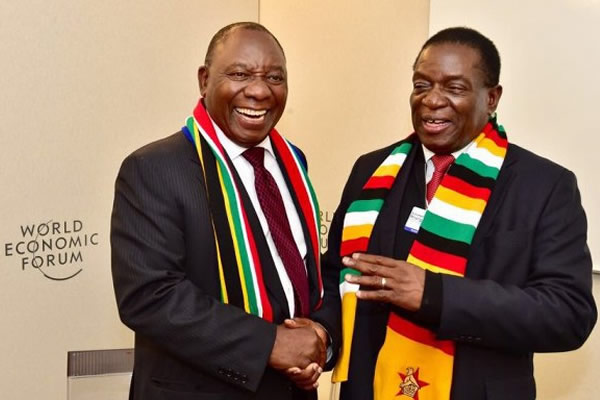
Pretoria, Gauteng – President Cyril Ramaphosa and his Zimbabwean counterpart, Emmerson Mnangagwa, have held a significant in-person "catch-up" meeting this week, as the Zimbabwean leader continues to consolidate his grip on power amid a growing storm over a potential unconstitutional third term.
The meeting, which took place against a backdrop of increasing regional tension, comes at a critical time for both leaders. While the South African presidency has described the encounter as a routine diplomatic engagement, the timing has raised eyebrows across the Southern African Development Community (SADC) region.
A Quiet Meeting with Loud Implications
The "catch-up" session between the two leaders occurred just as Zimbabwe’s corridors of power are being rocked by a fierce internal struggle within the ruling Zanu-PF party. Mnangagwa, who has publicly stated he would step down in 2028, is facing accusations from both the opposition and members of his own military-backed administration of plotting to extend his stay in office until at least 2030.
HE President @CyrilRamaphosa earlier today, undertook a working visit to the Republic of Zimbabwe for an engagement with his Zimbabwean counterpart, HE President Emmerson Mnangangwa, to discuss issues of mutual and bilateral interests.
South Africa and Zimbabwe maintain a… pic.twitter.com/DZID0gEYpK
— The Presidency 🇿🇦 (@PresidencyZA) May 3, 2026
The meeting in South Africa is seen by many analysts as a strategic move by Mnangagwa to seek regional validation. However, sources close to the South African presidency suggest that Ramaphosa used the opportunity to express quiet concern over the potential for constitutional changes in Harare to spark wider regional instability.
The Third Term Shadow
The primary shadow hanging over the meeting is the controversial "ED2030" movement in Zimbabwe, which seeks to amend the constitution to allow Mnangagwa to serve beyond his current two-term limit. While Mnangagwa has officially distanced himself from the campaign, his silence on the aggressive actions of his supporters has fueled suspicions.
In March 2026, public hearings on the proposed constitutional amendments erupted in chaos in Harare, highlighting the deep divisions within the country. For South Africa, the prospect of a constitutional crisis in its northern neighbour is a major concern, particularly given the potential for another wave of economic migration.
"South Africa cannot afford another crisis in Zimbabwe," said a regional diplomatic analyst. "Any move that undermines the democratic process in Harare directly impacts Pretoria, especially as South Africa continues to navigate its own domestic pressures regarding migration and regional security."
Consolidation and Conflict
The meeting also follows reports of an "explosive showdown" between Mnangagwa and his powerful deputy, Constantino Chiwenga. The feud between the two leaders, which has simmered since the 2017 coup that ousted Robert Mugabe, has reportedly reached a boiling point over the 2030 power grab.
Mnangagwa’s consolidation of power has seen him systematically placing loyalists in key military and security positions, a move that has reportedly alienated the Chiwenga-aligned faction of the army. Ramaphosa’s meeting with Mnangagwa is seen by some as an attempt to gauge the stability of the Zimbabwean state as these internal fissures widen.
The Regional Stakes
Beyond the internal politics of Zanu-PF, the Ramaphosa-Mnangagwa meeting touched on broader regional issues, including trade, border security, and the ongoing challenges of the Beitbridge border post. However, the political "elephant in the room" remains the SADC’s stance on democratic governance.
South Africa, as a leading voice in SADC, has historically struggled to balance "quiet diplomacy" with the need to hold regional peers accountable. With Zimbabwe’s economy still in a fragile state and political choice appearing increasingly limited, the pressure on Ramaphosa to take a firmer stand is growing.
The meeting also comes at a time when Zimbabwean citizens living in South Africa have stepped up their protests against the move by Zanu-PF to extend Mnangagwa’s term. These protests have added a domestic dimension to the diplomatic challenge for the South African government.
Looking Ahead
While the official communique from the meeting emphasized "fraternal relations" and "economic cooperation," the true nature of the discussions likely focused on the volatile transition period ahead for Zimbabwe. As Mnangagwa continues to navigate the treacherous waters of Zanu-PF succession, the eyes of the region remain fixed on Pretoria.
For Ramaphosa, the challenge remains to ensure that South Africa’s interests are protected while avoiding a direct confrontation that could destabilize the region further. For now, the "catch-up" meeting serves as a reminder that the "Zimbabwe Question" remains one of the most complex and pressing issues on South Africa’s foreign policy agenda.