

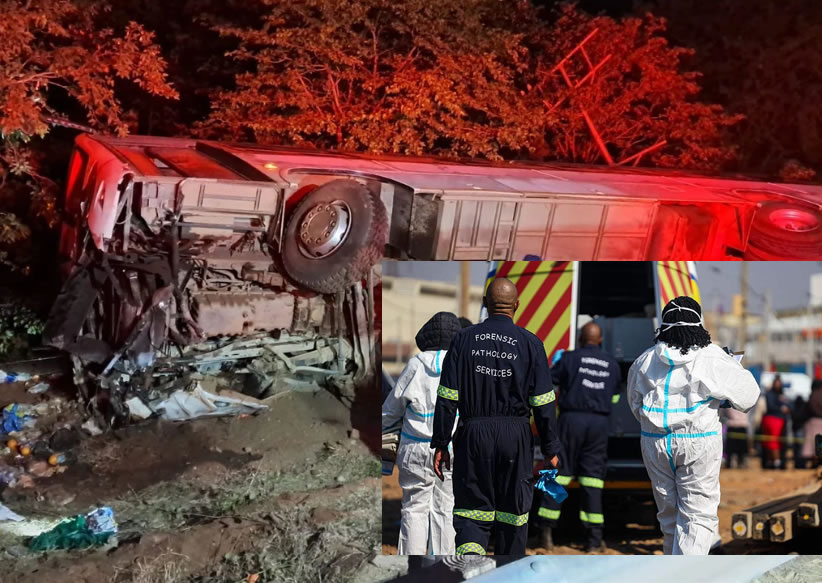
One person has died and 11 others were injured after a bus transporting people from KwaZulu-Natal to a repatriation camp in Limpopo crashed and overturned on the N1 near Musina, just a few kilometres from the Beitbridge Border Post.
The crash, which the Limpopo transport department says may have been linked to driver fatigue, happened at a time when the northern corridor has been under intense pressure, with increased cross-border movement and heightened activity around Musina and Beitbridge linked to repatriation processing and travel towards the border.
Limpopo transport department spokesperson Mashudu Mabata said the accident occurred around four kilometres south of the Beitbridge Border Post, near Musina. He said preliminary information indicates the driver allegedly lost control of the vehicle due to fatigue, causing the bus to overturn on the N1.
According to Mabata, the driver died at the scene, while passengers sustained injuries of varying severity and were taken for treatment.
“The driver has been confirmed deceased, while 11 passengers sustained injuries. The injured were transported to Musina Hospital for medical treatment,” Mabata said.
While authorities have not yet released the identity of the deceased driver, or the names and ages of the injured passengers, the crash has raised immediate questions about the circumstances of the trip, the condition of the vehicle, and the travel schedule leading up to the incident.
The bus was reportedly carrying people from KwaZulu-Natal to a repatriation camp in Limpopo. This detail is likely to draw attention given ongoing national focus on repatriation centres, border processing and the movement of foreign nationals through temporary facilities ahead of June 30-related mobilisation and broader immigration enforcement efforts. It remains unclear at this stage who exactly was on board, whether they were being transported as part of an official process, or what arrangements were in place to ensure the journey was conducted safely.
Mabata’s statement points to fatigue as a suspected factor, an issue that continues to feature in serious crashes on South Africa’s long-distance routes — particularly on corridors such as the N1, where drivers may travel overnight or for extended hours. Fatigue-related loss of control can be difficult to prove immediately and is typically tested against evidence such as witness statements, cellphone records, driver rest patterns, and, where available, vehicle tracking data.
Investigators will also have to establish what time the bus departed KwaZulu-Natal, how long the driver had been on duty, and whether any scheduled stops were made before the crash. If the bus was part of a structured transport operation to a repatriation camp, attention may also turn to whether there were guidelines governing driver shifts and rest periods, and whether those were followed.
Despite the seriousness of the crash, Mabata said the N1 remained open to traffic, although he cautioned that temporary closures could be implemented depending on conditions at the scene and recovery operations.
Mabata added the road was open to traffic, but temporary closures could be implemented.
Motorists travelling on the route near Musina were advised to remain alert for possible disruptions, especially given the proximity to the Beitbridge Border Post and the presence of emergency services responding to the incident. Even when roads remain technically open, crashes involving heavy vehicles can create hazards ranging from debris and fluid spills to reduced visibility and sudden congestion as drivers slow down near the scene.
The injured passengers were transported to Musina Hospital, which often receives casualties from incidents along the northern corridor, including crashes linked to long-haul buses, taxis and freight trucks. At this stage, there has been no official word on the seriousness of the injuries, whether any of the passengers required transfer to other facilities, or whether additional medical resources were activated.
The crash is also likely to intensify concern about the safety of mass transport linked to repatriation logistics, particularly when people are moved across provinces to temporary processing sites. Such journeys can be long and physically taxing for passengers, while the drivers face the pressures of distance, road conditions and time constraints.
Officials have not yet provided details about the bus operator, whether the vehicle underwent a roadworthiness check before departure, or whether any mechanical issues were detected after the crash. These are among the questions typically addressed in the early stages of an investigation, alongside the driver’s experience, licensing, and whether the vehicle complied with passenger transport regulations.
In the coming days, authorities are expected to clarify the purpose of the trip to the repatriation camp, the identities of those travelling, and whether further support is being provided to the injured passengers. The department’s initial account suggests the investigation is still in its early stages, and that conclusions about the cause of the crash remain preliminary.
For now, what is confirmed is the human toll: the driver has died, and 11 people who were on their way to a repatriation camp have been taken to hospital after a bus overturned on one of the country’s key national routes near the border.
This is a developing story.