

BLOODY EASTER: MOB OF FORTY STONES GANG SHOOTER TO DEATH IN BONTEHEUWEL
CAPE TOWN — The Easter weekend in the Cape Flats began with a scene of harrowing brutality as a suspected gang member was chased, cornered, and stoned to death by a mob of more than 40 people. The incident, which unfolded in broad daylight on Friday afternoon, April 3, 2026, has once again highlighted the volatile intersection of gang violence and vigilante justice in Cape Town's most vulnerable communities.
The violence began just after 12:00 noon in the neighbouring area of Kalksteenfontein. According to eyewitness accounts and police reports, an unidentified adult male began firing indiscriminately at community members. The shooter allegedly wounded two people in separate locations before the community, reaching a breaking point after weeks of relentless bloodshed, turned on him. What followed was a desperate high-stakes pursuit that spanned several blocks and ended in the residential streets of Bonteheuwel.
One eyewitness, who spoke on the condition of anonymity for fear of reprisal, described the terrifying speed with which the situation escalated. "Apparently, he shot and wounded two people in different areas, then the community from those areas chased him," the witness explained. The suspect, finding himself outnumbered and pursued by a growing crowd, fled towards Redberry Street in Bonteheuwel. In a final, futile attempt to escape, he ran into a private yard, hoping for sanctuary or a way out.
However, the mob, which had swelled to dozens of people, was not to be deterred. "He ran to this side and ran into one of the people's yards, but the mob pulled him out and stabbed him and stoned him to death," the witness added. The sheer scale of the attack was unprecedented even for an area accustomed to violence. "There were more than 40 people who attacked him. The incident took place just after twelve noon, it was broad daylight."
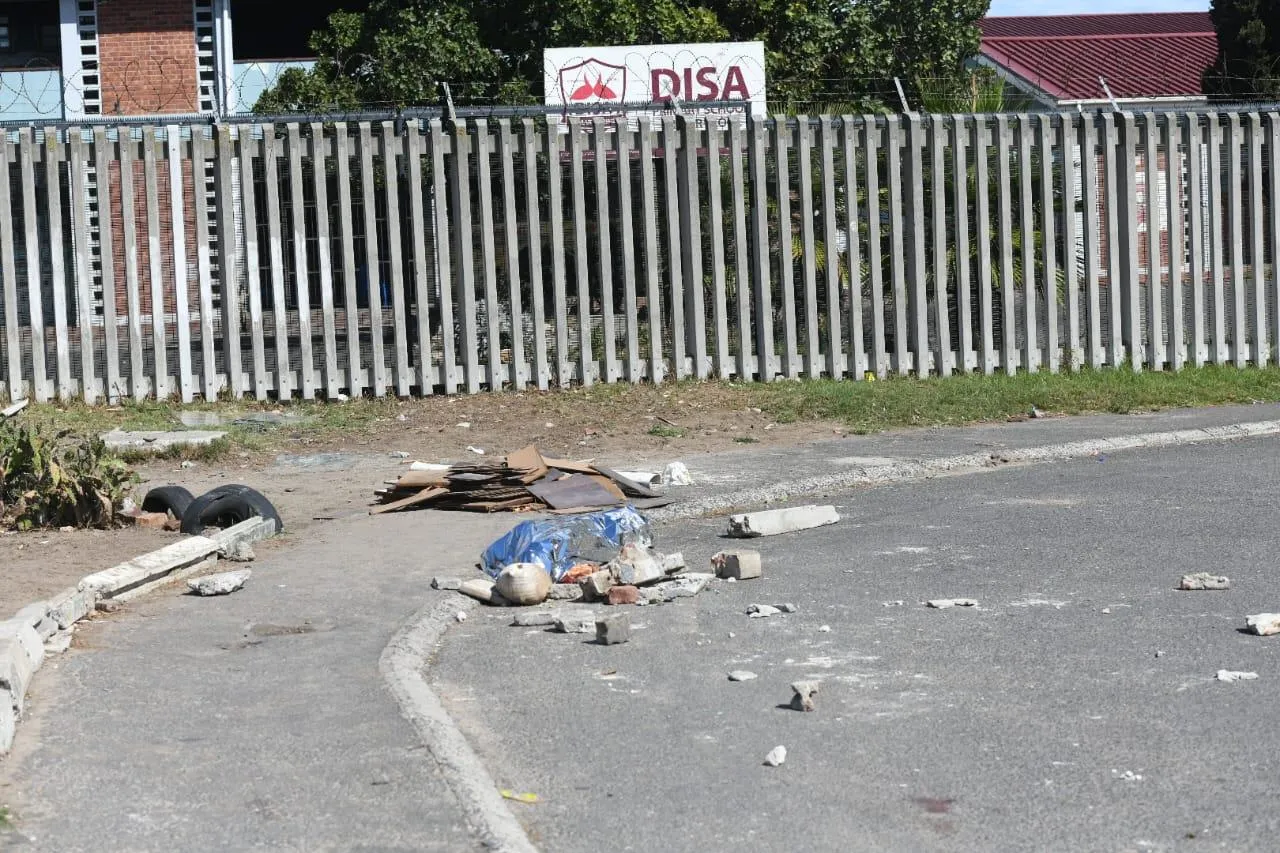
The details of the killing are particularly gruesome. Witnesses described how the crowd used whatever weapons they could find, including slabs of concrete and bricks. "They attacked him all over his body, they took slabs of concrete and threw it on him. It was horrible to witness something like that," the anonymous source remarked. When the dust settled, the man's body lay surrounded by the very stones used to end his life, a stark and bloody tableau on the suburban pavement.
|
Incident Overview
|
Details
|
|
Date & Time
|
Friday, April 3, 2026, approx. 12:15 PM
|
|
Location
|
Redberry Street, Bonteheuwel (Started in Kalksteenfontein)
|
|
Victim
|
Unidentified adult male, suspected gang member
|
|
Estimated Mob Size
|
40+ individuals
|
|
Method of Killing
|
Stabbing and stoning with concrete slabs/bricks
|
|
Current Status
|
Murder investigation opened; no arrests made
|
The aftermath of the killing was equally chaotic. As the victim lay dying, a group of young boys, referred to by locals as 'laaities', reportedly swooped in to scavenge from the scene. Another source told the Daily Voice: "The deceased shot at a group of people, and they started chasing him. When he got here, they got him and stof'd him af." The source further detailed the chilling moment the victim's firearm was seized: "They were jong laaities who attacked him. I cannot say if they are all gangsters or if his bullets were finished because when they got to him, they rukked his gun and said, 'dis os gun'."
The tragedy was compounded by the arrival of the victim's family. His mother and two sisters were seen at the site, tasked with the grim duty of identifying his remains amidst the heavy police presence. "His mother and his two sisters came to the scene to identify the body, apparently he was involved in gangsterism," the first witness noted. Despite the swift arrival of medical personnel, there was nothing to be done. "We do not know the people. By the time the ambulance got to the scene, they assessed the victim, who sadly passed away."
The South African Police Service (SAPS) arrived to find a crime scene cordoned off by yellow tape and littered with the heavy debris used in the attack. Sergeant Wesley Twigg, a police spokesperson, confirmed that a formal murder investigation has been launched. "Bishop Lavis police registered a murder case for investigation following an incident on Redberry Road, Bonteheuwel, in which an unknown adult male was fatally injured," Twigg reported. He added that when officers arrived, they found the victim with "multiple injuries to his body" and that he was "declared deceased on the scene by medical personnel."
However, the prospect of justice for this particular killing remains slim. The collective nature of the attack has made it nearly impossible for authorities to identify specific perpetrators. "When police came, they could not arrest anyone because they did not know who was responsible, because they were such a large group," the witness observed. Sergeant Twigg echoed this sentiment, stating that "the circumstances surrounding the incident are under investigation, and arrests are yet to be made."
To understand the ferocity of the mob's actions, one must look at the context of the preceding weeks. Kalksteenfontein and Bonteheuwel have been gripped by a "low-level war" that has left the community reeling. In the seven days leading up to mid-March 2026 alone, Kalksteenfontein recorded seven murders. The violence has been indiscriminate, often claiming the lives of those with no ties to the criminal underworld.
On March 12, just weeks before this latest stoning, a mass shooting occurred where three men, aged 40, 64, and 66, were killed while sitting outside a residence. Community leaders were quick to point out that the elderly victims were innocent bystanders. Pastor Seth Oosthuizen, a local executive member of the Community Policing Forum, remarked at the time: "They were not involved in any gang activities. They were just in the wrong place at the wrong time. They were drinking at the house when another person who was being pursued ran in there. That is how they were shot."
The relentless nature of these attacks has fostered a deep sense of abandonment among residents, many of whom feel that the police have lost control of the streets. This perception of state failure is a primary driver of the "mob justice" phenomenon that is increasingly common across Cape Town's townships. Pastor Oosthuizen has previously noted the internal conflict within the community: "The honest truth is that the majority of people are standing together against this gang violence, but there are also some who endorse it by not standing up. It's time all of us stand up against it. Innocent people cannot continue to die like this."
The statistics paint a grim picture of a city under siege. As of early 2026, Cape Town was ranked 16th globally in the Crime Index, with a safety index of only 26.3. The South African Police Service's own data for the second quarter of the 2025/2026 financial year showed a disturbing rise in vigilante killings, reflecting a public that has increasingly taken the law into its own hands. Despite the deployment of over 1,000 elite SAPS members to the city's hotspots earlier this year, the bloodshed has continued unabated.
Graham Lindhorst, chairperson of the Bishop Lavis Crime Prevention Forum, has been vocal in his criticism of the current security strategy. Following a double murder in Buttercup Street on March 16, where two young men aged 18 and 22 were gunned down, Lindhorst issued a blistering demand to the authorities: "Get a grip on crime, and particularly murders in the precinct." His calls for "decisive disruptive intervention" seem to have gone largely unanswered, leaving a vacuum that is now being filled by the brutal, summary justice of the mob.
The stoning on Redberry Street is a symptom of a much larger malady. It is the result of a community pushed to the edge by the constant threat of the gun, responding with the primitive violence of the stone. While the police continue their investigation into the murder of the unidentified shooter, the residents of Bonteheuwel and Kalksteenfontein remain trapped in a cycle of retribution that shows no sign of slowing. For now, the only certainty is that the peace of the Easter weekend has been shattered, replaced by the grim reality of a war that has no clear end in sight.
The broader implications of this incident are profound. When a community feels compelled to act as judge, jury, and executioner, it signals a fundamental breakdown in the social contract. The residents of Kalksteenfontein and Bonteheuwel are not inherently violent people; they are citizens who have been pushed to the brink by a relentless tide of criminality. The fact that a mob of over 40 people felt justified in stoning a man to death in broad daylight is a damning indictment of the state's inability to protect its most vulnerable populations.
Furthermore, the involvement of young boys, the 'laaities' who reportedly stole the victim's gun, highlights the generational cycle of violence that plagues the Cape Flats. These children are growing up in an environment where brutality is commonplace and where the rule of law is often superseded by the rule of the gun. The normalisation of such extreme violence ensures that the trauma of today will inevitably become the tragedy of tomorrow.
As the investigation into the Redberry Street murder continues, the authorities face an uphill battle. The sheer number of people involved in the mob attack makes it highly unlikely that anyone will be held accountable. This lack of accountability only serves to embolden those who believe that vigilante justice is the only effective means of dealing with crime. It is a vicious cycle that can only be broken through a sustained and comprehensive effort to address the root causes of gang violence and to restore faith in the criminal justice system.
In the meantime, the residents of Bonteheuwel and Kalksteenfontein must continue to navigate the treacherous waters of their daily lives. They must contend with the constant fear of stray bullets and the ever-present threat of gang warfare. They must also grapple with the moral complexities of living in a community where the line between self-defence and murder is increasingly blurred.
The events of this bloody Easter weekend serve as a stark reminder of the urgent need for intervention in the Cape Flats. The government must do more than simply deploy additional police officers; it must invest in the social and economic development of these communities. It must provide young people with alternatives to gang life and ensure that the justice system is both fair and effective. Until these systemic issues are addressed, the cycle of violence will continue, and the tragic scenes witnessed on Redberry Street will undoubtedly be repeated.
Police are appealing to anyone with information regarding the incident on Redberry Road to contact Crime Stop on 08600 10111 or use the MySAPS mobile application anonymously. However, in a community where the line between victim and perpetrator has become so blurred, many wonder if anyone will ever come forward. The silence that follows such incidents is often as deafening as the violence itself, a testament to the pervasive fear that grips the Cape Flats.