

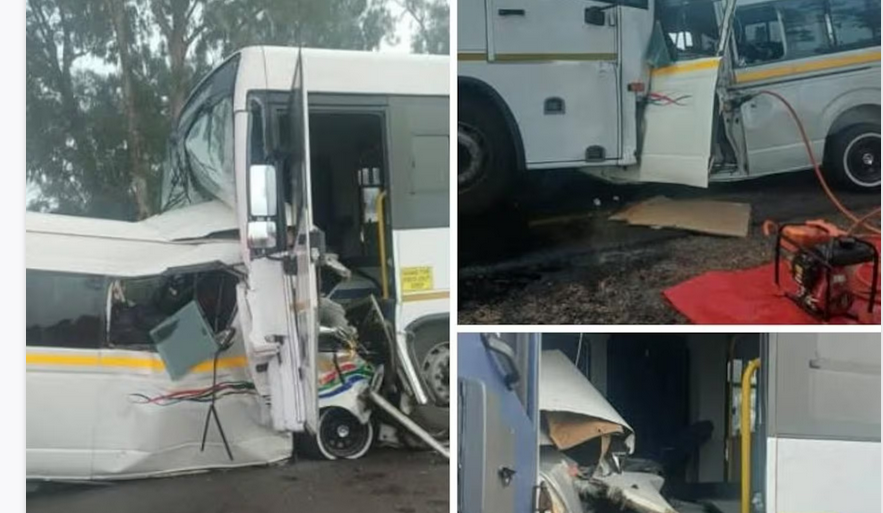
The early morning commute turned into a scene of unimaginable horror on Thursday as a catastrophic head-on collision between a minibus taxi and a bus claimed the lives of ten people. The fatal crash, which took place on the notoriously busy R39 road, has once again cast a dark and gloomy shadow over the safety of South Africa's public transport network.
The tragedy unfolded in the early hours of the morning, just as the sun was beginning to rise. At approximately 5:15 am, a heavily loaded minibus taxi travelling from Morgenzon to Standerton collided head-on with a large passenger bus travelling in the opposite direction. The sheer force of the impact between the lightweight taxi and the heavy-duty bus proved to be absolutely devastating, resulting in a staggering loss of life.
The disparity in size and weight between the two vehicles meant that the occupants of the minibus bore the absolute brunt of the horrific impact. The metal frame of the taxi was completely crumpled, trapping the commuters inside a mangled wreck.
Mpumalanga community safety spokesperson Moeti Mmusi painted a grim picture of the aftermath, confirming the heavy death toll and providing details on the victims.
“The deceased were occupants of the minibus taxi, including the driver,” Mmusi stated, confirming that no one inside the smaller vehicle was spared from the deadly consequences of the crash.
Emergency medical personnel and rescue teams rushed to the bloodied scene on the R39, but for many of the passengers, it was already too late. First responders were met with absolute devastation as they frantically tried to extract the victims from the crushed metal.
Mmusi detailed the tragic timeline of the fatalities, highlighting the desperate battle to save those who had survived the initial impact. “Eight people died at the scene, one died while being transported to hospital, and another passed away while receiving treatment at a hospital in Standerton.”
In stark contrast to the utter devastation suffered by the minibus taxi occupants, the driver of the large bus miraculously managed to escape the ordeal with only minor injuries.
As authorities began the arduous task of clearing the wreckage and identifying the deceased, attention immediately turned to what could have caused such a catastrophic error on the road. Weather conditions are currently playing a major role in the preliminary investigation. Mpumalanga is well known for its dense, heavy morning fogs, which can obscure the vision of even the most experienced drivers.
Speaking on the conditions of the route at the time of the fatal accident, Mmusi explained the environmental factors at play. “The taxi was travelling from Morgenzon to Standerton, while the bus was travelling from Standerton to Morgenzon. Reports indicate the road was misty at the time of the crash, which may have reduced visibility,” he said.
However, while the mist undoubtedly created a treacherous driving environment, authorities are not ruling out human error. The culture of impatient driving on South African roads, especially involving public transport vehicles trying to meet strict morning deadlines, is a chronic issue that claims thousands of lives every single year.
Mmusi made it clear that investigators are looking into every possible angle to determine exactly how the two vehicles ended up in a deadly head-on path. “The cause of the crash is under investigation. Reckless and negligent driving cannot be ruled out at this stage,” he confirmed.
The tragic loss of ten lives on a single Thursday morning serves as a painful reminder of the daily risks ordinary South Africans face simply trying to commute to work or school. Families who waved goodbye to their loved ones in the early hours of the morning will now be receiving the most devastating news imaginable. As the forensic teams continue to piece together the exact sequence of events that led to the R39 bloodbath, the province mourns the heavy, senseless loss of life on its roads.