

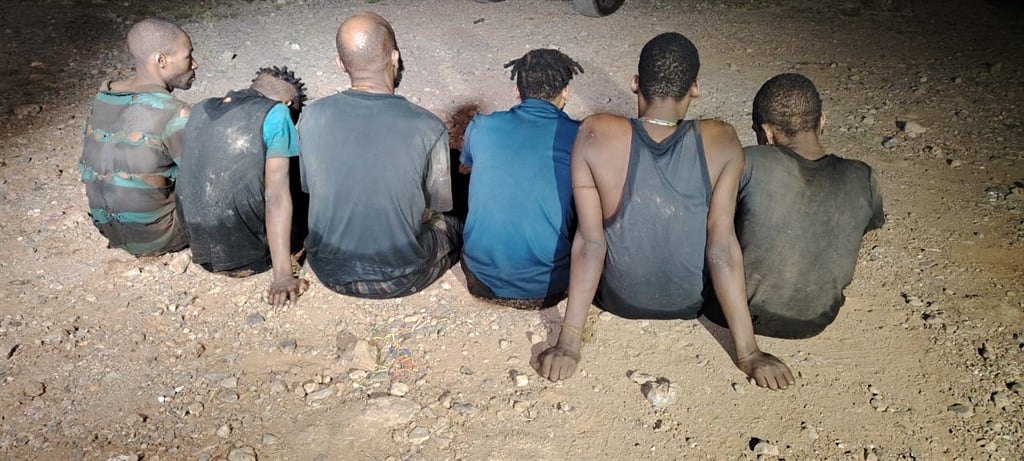
Residents say their town has become “stone dead” after police operations drove zama zamas (illegal miners) underground in parts of North West, while other townships in the West Rand continue to depend on illegal mining to keep local economies afloat.
In Khuma, outside Stilfontein, Operation Vala Umgodi — launched to clamp down on illegal mining — led many zama zamas to hide underground. The result, community members say, has been an abrupt collapse in local spending: businesses closed, the only filling station shut down, and desperate residents began selling petrol in two‑litre bottles to survive. Longtime resident Mbulelo “Gasoline” Nelson described Khuma as a “ghost town,” saying the regular flow of cash that once came from miners has vanished.
By contrast, communities around Durban Deep and Roodepoort still host active illegal mining networks. In Matholesville and nearby townships, zama zamas live in shacks, rent local accommodation, buy food, and sustain informal traders who sell everything from lamps to boots. Animal‑welfare worker Cora Bailey says residents coexist with miners out of necessity: “They keep the economy going.”
Large‑scale operations intended to tackle illegal mining have met with mixed results. Operation Vala Umgodi — funded to the tune of about R1 billion — was demobilised after the budget was exhausted. Its replacement, Operation Prosper, carries a price tag of roughly R800 million but residents and local officials say it has so far been ineffective in disrupting illegal networks. In several townships visited, Prosper made little lasting impact; soldiers described being demoralised and some raids yielded only arrests of equipment operators and confiscations of homemade mills.
The social consequences are stark. In Khuma, youth unemployment and closed businesses have pushed residents into informal, risky livelihoods and fuel talk of migration to other provinces. In Roodepoort‑area settlements, persistent illegal mining has produced environmental degradation (sinkholes, broken roads) and cycles of violence — residents report robberies, intimidation and shootings linked to zama zamas. Some families have been displaced temporarily; others live in fear, locking doors early and avoiding certain routes.
Local leaders and MPs have raised concerns about planning and funding. DA MP James Lorimer questioned why Vala Umgodi was halted and urged creation of a specialist unit to tackle organised illegal mining, pointing to a reported national economic loss of up to R60 billion a year from illegal operations and associated damage. Community representatives, meanwhile, say police action has been short‑term and poorly sequenced: while enforcement can remove illegal miners, no parallel economic interventions were put in place to replace the cash flow they provided — leaving towns like Khuma struggling.
Voices from the ground
- Mbulelo “Gasoline” Nelson (Khuma): “It’s stone dead… The zama zamas used to spend here. Now all that is gone.”
- Zanele* (Khuma): Buys 25‑litre cans of petrol and resells in bottles because there are no jobs or shops nearby.
- Sam Sithole (Khuma vlogger): Says miners go underground to survive — “They don’t mine to get rich, they mine to put food on the table.”
- Cora Bailey (West Rand, CLAW): “We have no choice but to live with them… They keep the economy going.”
- Residents of Sporong and Jerusalema: Report intimidation, theft and forced displacement during waves of mining‑related crime.
What’s at stake
- Economic: Informal economies in some townships depend heavily on illegal miners; removing them without economic alternatives can deepen poverty.
- Safety and environment: Active mining creates violence, makes roads impassable, causes sinkholes and damages property.
- Policy and enforcement: Large, costly operations have shown limited, short‑term gains; questions remain about coordination, budgeting and whether enforcement is paired with social and economic measures.
Conclusion
The contrasting outcomes in Khuma and Roodepoort illustrate a central dilemma: law‑enforcement action against illegal mining can remove a dangerous and criminal activity, but if it is not accompanied by viable livelihoods or development interventions, enforcement risks deepening local poverty. Community leaders and some MPs are calling for better‑resourced, specialist units and comprehensive plans that combine policing with socioeconomic alternatives to prevent towns from becoming “stone dead” after zama zamas are pushed out.
*Name changed for protection.