

Cape Flats Bloodshed Persists Amidst SANDF Deployment Paradox
Cape Town – The dawn of 1 April 2026, intended to mark a new chapter in the fight against rampant gang violence on the Cape Flats with the deployment of the South African National Defence Force (SANDF), was instead stained by further bloodshed. Just hours into the military's anticipated presence, two men were brutally murdered in Hanover Park, casting a grim shadow over the efficacy and immediate reach of the intervention.
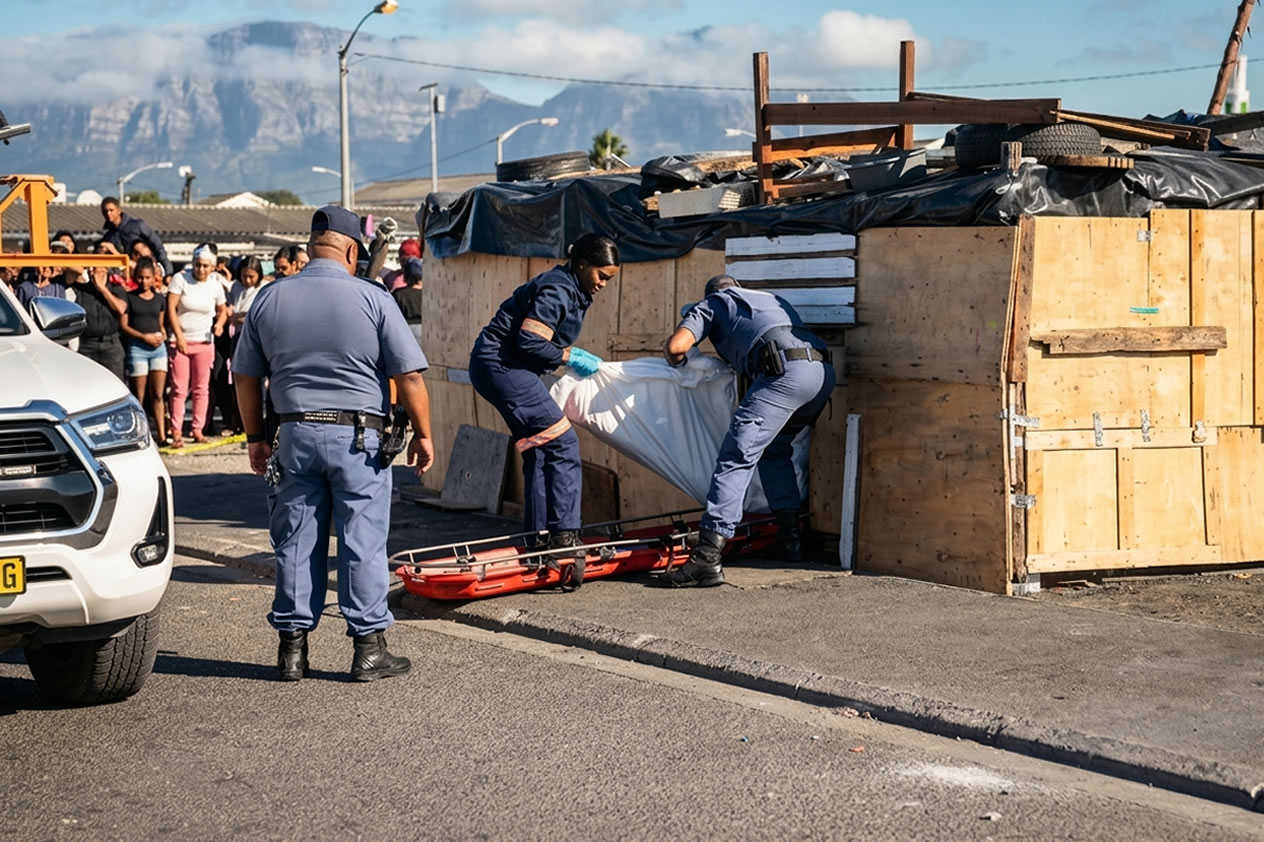
The victims, identified as 25-year-old Tougheed, known locally as Mow, and 33-year-old Taswil, or Tebba, were shot dead inside a makeshift dwelling in Turfburg Walk around 5am. This tragic incident unfolded on the very day the SANDF was officially scheduled to begin its operations across the Western Cape's most volatile areas. The stark reality of these killings has ignited urgent questions about the immediate impact of the military deployment and the persistent grip of gang warfare on these communities.
Family members of the deceased expressed profound sorrow, yet also a weary acceptance of the harsh realities of life in the Cape Flats. A relative of Tougheed stated, "We are sad, but we are glad he is in a better place. I don't know the other guy who was shot, but the two were friends. They did not stay in that makeshift house." This poignant remark underscores the transient and often perilous existence faced by many in these areas, where even temporary shelters can become sites of unspeakable violence.
Police spokesperson Sergeant Wesley Twigg confirmed the double murder, providing official details of the incident. "Philippi police registered two counts of murder for investigation following a shooting incident on Wednesday morning, 1 April 2026, at about 5am where two males aged 25 and 33 were shot and fatally wounded," Sergeant Twigg reported. He further elaborated, "Police members were called to the crime scene in Turfburg Walk, Hanover Park, where they found the victims inside an informal dwelling with gunshot wounds to their bodies. The 25-year-old victim was declared deceased on the scene by medical personnel, while the other victim was transported to a medical facility in a private vehicle where he was declared deceased on arrival at the hospital. The motive for the attack is subject to an investigation by the South African Police Service. The suspect/s fled the scene and are yet to be arrested." The police are appealing to anyone with information to contact Crime Stop or use the MySAPS mobile application anonymously.
However, the immediate aftermath of the Hanover Park murders revealed a critical disconnect between the announced deployment and the on-the-ground reality. Kashiefa Mohammed, spokesperson for the Hanover Park Community Police Forum (CPF), voiced the community's frustration and disillusionment. "The army is not yet in Hanover Park. I hope the army will be deployed soon in Hanover Park, so that the community will become a peaceful place and that the people can live in harmony," Mohammed lamented. Her words highlight the desperate hope placed in the military intervention, a hope that, for Hanover Park residents, remained unfulfilled on the critical first day.
Mohammed painted a vivid picture of the relentless terror endured by the community, a situation that has become a tragic norm. "For many years, people had to duck and dive through bullets, innocent people were shot, our pensioners could not walk to the shop or withdraw their pension because there was constant shooting and gangsters robbing," she explained. The pervasive fear has even robbed children of their childhood, with Mohammed adding, "It's school holidays, but you don't see children playing outside because gangs are running with open guns." The CPF's trust in the army is palpable, as Mohammed concluded, "We put our trust in the army and will see what changes they can bring for my community. Let us unite and stand together and fight this crime. We are struggling with gangsters shooting day and night."
The deployment of the SANDF was not a sudden decision but a response to an escalating crisis that has plagued the Cape Flats for years. President Cyril Ramaphosa, in his February 2026 State of the Nation Address, announced the military's support for police efforts to curb gang violence. This intervention was envisioned as a "force multiplier," with the army assisting in high-risk search operations, manning roadblocks, and patrolling critical infrastructure, thereby freeing up police resources for investigations. The scale of this operation is significant, with over 2,200 soldiers designated for deployment nationwide, approximately 800 of whom are earmarked for the Cape Flats.
Prior to the full deployment, a "discreet operational scanning exercise" was conducted by a select contingent of SAPS officials and SANDF members on 18 and 19 March 2026. This preparatory phase involved limited air and ground operations in identified hotspots such as Kraaifontein, Manenberg, Mitchells Plain, Lavender Hill, Delft, Khayelitsha, Philippi East, and Mfuleni. Brigadier Novela Potelwa of the SAPS underscored the strategic importance of this secrecy, stating, "The element of surprise is crucial to the success of joint SAPS and SANDF operations in hotspot areas. Its purpose is to pounce on alleged gang leaders and suspected drug kingpins and catch them off guard." General Rudzani Maphwanya, chief of the SANDF, further affirmed the objective during a National Joint Operational and Intelligence Structure (NatJoints) briefing on 15 March, emphasising the goal to empower the state apparatus to have the "monopoly of force."
However, the grim statistics preceding the deployment painted a stark picture of the challenge ahead. In just 11 days, between 8 March and 18 March 2026, the Cape Flats recorded a staggering 23 murders. These incidents highlight the brutal reality that necessitated military intervention:
Philippi East (8 March): Four individuals – three men and one woman – were shot dead, and another person injured, in the Marikana informal settlement. Two gunmen reportedly entered a yard on Disa Road and opened fire.
Kalksteenfontein (12 & 17 March): Five lives were lost in two separate incidents. A mass shooting on 12 March resulted in three fatalities and four injuries, followed by a double murder on 17 March. Both incidents were believed to be gang-related.
Elsies River (18 March): Two teenage boys, aged 16 and 19, were killed in Leonsdale, while a 12-year-old girl and a 63-year-old woman sustained injuries in a shooting incident. Another incident on 17 March saw a 42-year-old man killed and a 54-year-old injured, with victims found in a lime-green Toyota Auris. Motives in Elsies River were also suspected to be gang-related.
Delft (12 & 16 March): Three people were gunned down in a suspected taxi-related attack at a taxi rank on Delft Main Road in Voorbrug on 12 March. Preliminary reports indicated shots were fired from a Toyota Quantum before the suspects fled. On 16 March, two more individuals were killed in another alleged taxi-related attack near the Palm taxi rank in Delft South. A 25-year-old man was also shot dead in Koonap Street on 18 March.
Mitchells Plain (18 March): Two men, aged 18 and 27, were shot dead, and a 26-year-old man wounded, in Tierkloof Street, Tafelsig. This incident was also believed to be gang-related.
Lavender Hill (18 March): Police responded to a shooting in Eltister Road, where they found two men, aged 50 and 51, with gunshot wounds. The 51-year-old was declared dead at the scene.
These incidents underscore the pervasive nature of the violence and the complex web of gang rivalries, drug trafficking, and illicit activities that fuel it. The community's plea for help has been constant and desperate. Conny Jonkers, a 61-year-old mother from Elsies River, a particularly hard-hit area, articulated the profound despair. "The rattling sound of gunfire and bodies lying strewn in our community is heart-wrenching. The police cannot stop the killings and we are praying that the army can bring peace to our communities so that our children can play safely," she shared, her words echoing the sentiments of countless residents.
Abie Isaacs, chairperson of the Cape Flats Safety Forum, expressed cautious optimism but also a grave warning. He believed the SANDF deployment could make a meaningful difference, but stressed the urgency. "Our people – especially mothers – are crying. The longer the delay, the more it allows alleged gangsters and drug dealers to reorganise, move illicit guns and drugs and expand their territory, fuelling increasingly deadly turf wars," Isaacs cautioned. He further added, "We hope that whoever leads the operation from the command centre is capable of taking the fight to the criminals and leading it decisively."
The initial hours of April 2026, marked by the double murder in Hanover Park, serve as a stark reminder that military deployment alone is not a magic bullet. While the SANDF's presence is a welcome sign of increased state intervention for many, its effectiveness hinges on swift, coordinated, and comprehensive action that reaches all affected areas without delay. The ongoing bloodshed, even as soldiers begin to patrol, highlights the deep-seated nature of the problem and the immense challenge that lies ahead for authorities in bringing lasting peace and stability to the embattled communities of the Cape Flats. The eyes of a weary nation remain fixed on this critical intervention, hoping it can finally turn the tide against the relentless tide of violence.