

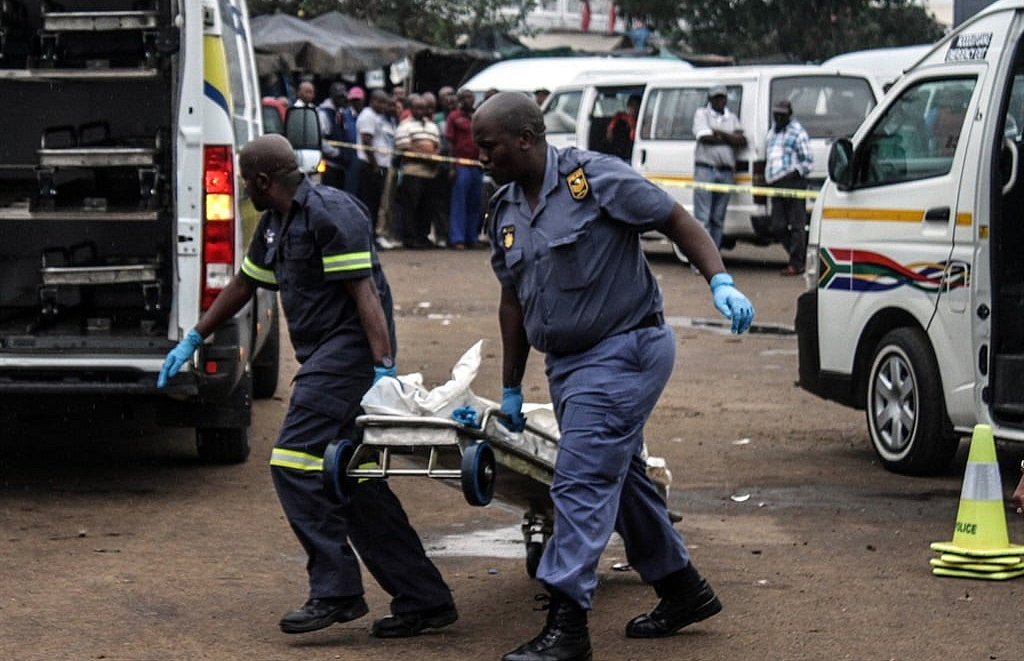
The term izinkabi — Zulu for “bulls” or “tough men” — has been used for years in some parts of South Africa to describe armed enforcers employed by taxi bosses. What once might have been local muscle for rank protection and labour disputes has, investigators say, hardened into armed groups willing to carry out contract hits and intimidation across provinces.
Police evidence laid out in the Matlala and Sibanyoni probes shows how rapidly the role of paid gunmen has expanded. The taxi industry’s growth, the lure of cash from lucrative routes and tenders, and the intersection of criminal syndicates and legitimate business interests have produced a market for heavily armed protection. These men are not simply street fighters; investigators describe them as trained and coordinated, sometimes with military-style tactics.
Sibanyoni told police that Msibi “started beefing up his security, surrounding himself with gunmen, so-called izinkabi … Vusi Matlala also became a regular on this farm. Mswazi started grooming Vusi Matlala, telling him that his only threat was me, and that if he killed me he would take after him in terms of being a leader of the taxi business that Mswazi was a boss of.”
That comment highlights how succession disputes in the taxi councils can become recruitment pitches for violent men. The farm in Hammanskraal — described in testimony as an operations base — became a place where people moved to plan operations and to run illicit businesses, including drugs. Katiso Molefe is alleged to have shifted his drug operations to the farm, while Matlala became a familiar presence.
The professionalisation of armed groups also tracks with the growth of other criminal economies. Where gangs and cartels operate, weapons proliferate, and tactical skills spread. Police records show use of false plates, surveillance of targets, coordinated driving teams, and follow-up logistics — all signs of planning beyond street brawls.
There are other troubling consequences. Communities are terrorised when disputes are settled with rifles and handguns. Drivers and rank attendants find themselves vulnerable to recruitment or extortion. And efforts by law enforcement are complicated when local enforcers maintain ties to powerful patrons who can shield them.
As the Matlala criminal case progresses, prosecutors must prove not only who pulled the triggers but who financed the guns, supplied vehicles and issued the orders. The state’s allegations of money-laundering and fraudulent invoices are central to that story. Tracking the flows of cash could reveal how easily illicit profits feed into security operations.
Policy responses will need to be practical. Strengthening policing capacity in taxi hotspots, tightening firearm controls, and improving intelligence-sharing between provinces are immediate steps. But experts also argue for deeper structural change: cleaning tender systems, separating criminal influence from legitimate taxi governance, and offering alternative livelihoods so that communities do not become dependent on violent patronage networks.
For now, the rise of izinkabi highlights a bitter truth: where power, money and weak oversight meet, violence becomes a business. Only sustained state action, community involvement and judicial follow-through will be able to reduce that market and restore safer streets for commuters and taxi workers alike.