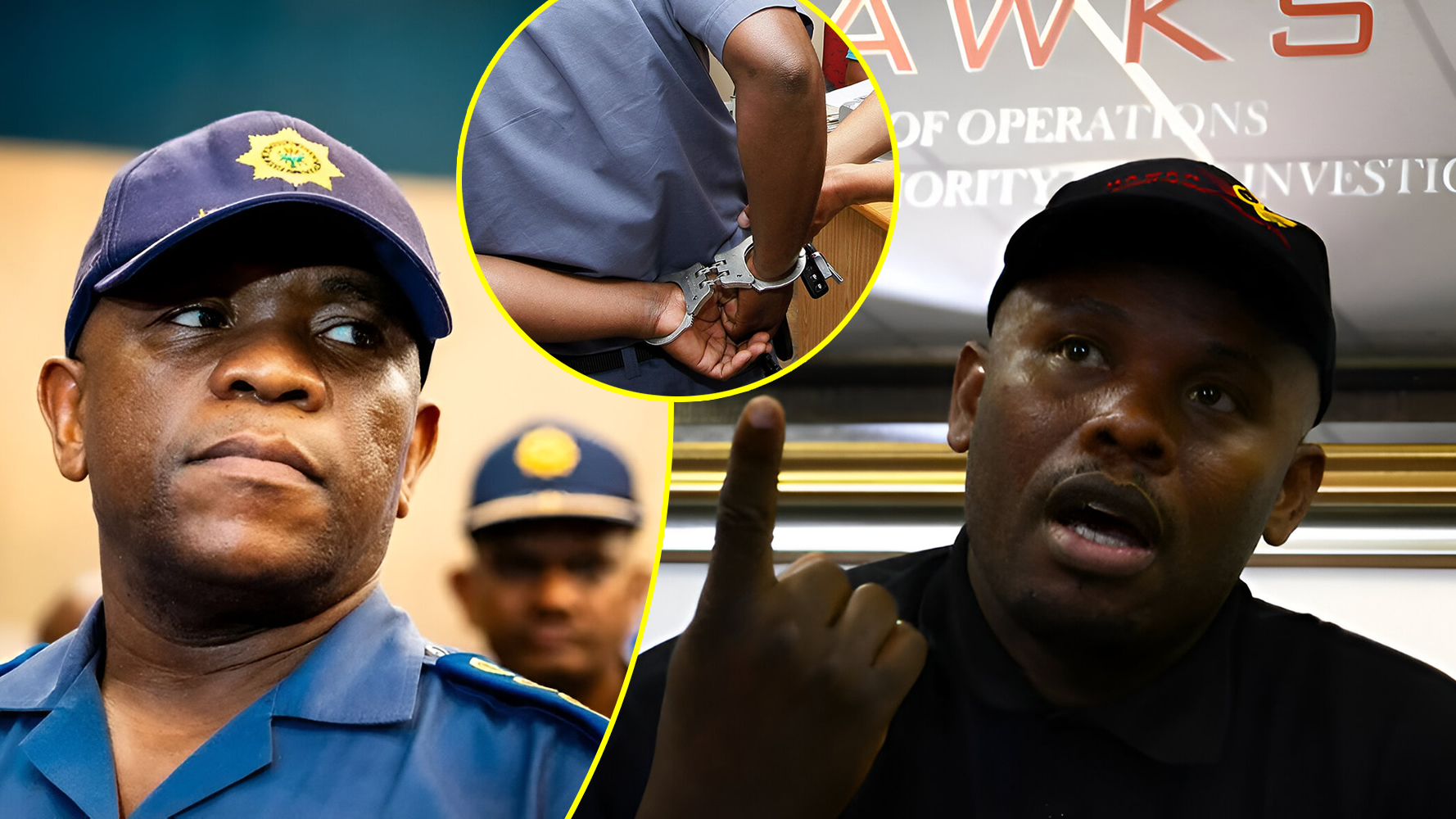
In a dramatic turn of events at the ongoing Madlanga Commission, suspended Deputy National Commissioner Lieutenant-General Shadrack Sibiya unleashed a torrent of accusations, alleging that KwaZulu-Natal Police Commissioner Lieutenant-General Nhlanhla Mkhwanazi orchestrated a social media campaign to discredit him. Sibiya's testimony, delivered with palpable tension, painted a picture of a calculated smear effort, claiming Mkhwanazi's
"'"TikTok fans, flamed by MK, flayed me.""'
The explosive statement, which has sent ripples through the South African Police Service (SAPS), suggests a deep-seated rivalry and a battle for control within the upper echelons of law enforcement. Sibiya, who is currently suspended, told the commission that he believes Mkhwanazi is behind a network of paid social media accounts dedicated to tarnishing his reputation and bolstering Mkhwanazi's public image. "I have reason to believe that there are people who are paid on social media to promote him," Sibiya stated, adding that these online attacks intensified after he made the decision to shutter the controversial "PKTT" (Political Killing Task Team) in KwaZulu-Natal
.
The commission, chaired by retired Judge Zukile Madlanga, is investigating allegations of state capture, corruption, and fraud in the public sector. Sibiya's testimony has now opened a new and unsettling chapter, exposing the underbelly of power struggles and alleged dirty tricks within the SAPS.
At the heart of the matter is the now-disbanded PKTT, which Sibiya claims was never meant to be a permanent unit. He testified that the decision to close it down was his alone, and that he had communicated this to the relevant authorities. However, he alleges that Mkhwanazi has used this decision to fuel a narrative that Sibiya is soft on crime and politically motivated. The TikTok videos and other social media posts, according to Sibiya, are a key part of this strategy.
"These are not just random people on the internet," Sibiya insisted. "This is a coordinated campaign. They take my picture, they write things about me, they say I am a criminal. They are trying to destroy my name."
Sibiya also took aim at the uMkhonto weSizwe (MK) party, suggesting that they have been "flamed" by Mkhwanazi to join the chorus of criticism against him. This adds a political dimension to the saga, hinting at a complex web of alliances and enmities that extends beyond the SAPS.
The allegations have cast a long shadow over the Madlanga Commission, which is already grappling with a mountain of evidence related to state capture. The suggestion that senior police officials may be using social media as a weapon to settle personal scores and influence public opinion is a deeply troubling one. It raises serious questions about the integrity of the SAPS and the potential for abuse of power.
For his part, Mkhwanazi has yet to respond to Sibiya's allegations. However, the battle lines have been drawn, and the stage is set for a dramatic showdown. The commission will now have to decide how to proceed with these explosive claims. Will they call Mkhwanazi to testify? Will they launch a separate investigation into the alleged social media campaign? And what will be the ultimate fallout for the SAPS and the individuals involved?
As the Madlanga Commission continues its work, the people of South Africa are left to wonder about the state of their police service. The image of a top cop being "flayed" by TikTok fans is a powerful and disturbing one, and it speaks to a deeper malaise within the country's institutions. The truth, it seems, is still a long way off.