

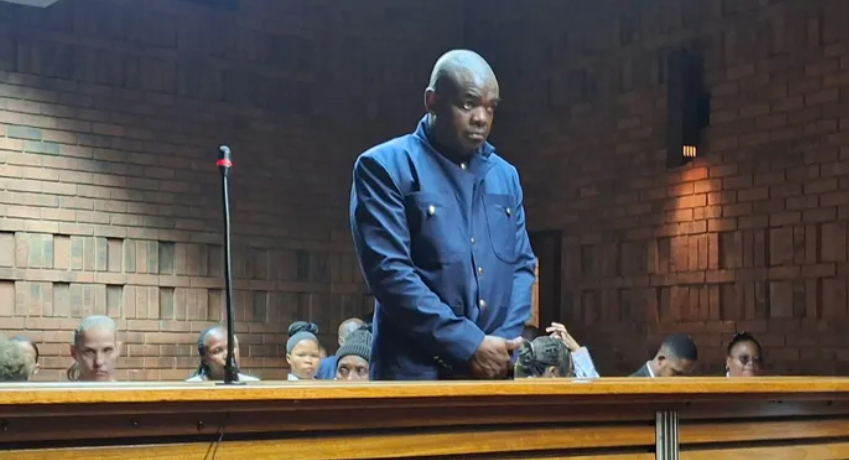
Pretoria, South Africa – A high-ranking official within the South African National Defence Force (SANDF) intelligence unit, Brigadier General Johannes Prince Mkhabela, has been thrust into the spotlight after appearing in the Pretoria Magistrate’s Court on corruption charges. The 53-year-old general is accused of attempting to bribe an investigating officer with a staggering R1.5 million to quash a case of intimidation against him. This sensational development has cast a harsh light on alleged corruption within the country’s defence structures, raising serious questions about integrity and accountability at the highest levels.
The allegations against Brigadier General Mkhabela are particularly troubling given his position within military intelligence, a unit entrusted with safeguarding national security. The case, which has quickly garnered significant public attention, centres on an alleged attempt to subvert justice through illicit means. According to court documents and reports from the National Prosecuting Authority (NPA), Mkhabela is accused of offering the substantial bribe to an officer who was investigating a separate case of intimidation in which the general was implicated. This brazen act, if proven, represents a profound breach of public trust and a direct challenge to the rule of law.
Details emerging from the investigation suggest that the alleged bribery attempt was not a spur-of-the-moment decision but a calculated manoeuvre. It is understood that Mkhabela allegedly paid an initial R50,000 as a down payment, with the promise of the remaining R1.45 million to follow once the intimidation case was successfully made to disappear. This intricate scheme points to a disturbing level of confidence in the ability to manipulate the justice system, a confidence that has now been publicly exposed. The investigating officer, whose identity has been protected, is to be commended for upholding their duty and reporting the attempted bribe, thereby allowing the legal process to take its course.
The appearance of a Brigadier General in court on corruption charges is a rare and significant event, underscoring the seriousness of the allegations. The SANDF, as a critical state institution, is expected to operate with the utmost integrity, and any hint of corruption within its ranks is met with widespread condemnation. This incident comes at a time when South Africa is battling pervasive corruption across various sectors of government and state-owned enterprises. The public, increasingly weary of such scandals, is demanding swift and decisive action to ensure that justice is served, regardless of the rank or position of the accused.
Political commentators and defence analysts have expressed deep concern over the implications of Mkhabela’s arrest. "Corruption within intelligence structures is particularly dangerous because it compromises the very mechanisms designed to protect the state and its citizens," noted Dr. Thandiwe Mkhize, a defence policy expert. "It can lead to the erosion of operational effectiveness, the leakage of sensitive information, and ultimately, a weakening of national security." The incident also raises questions about the internal oversight mechanisms within the SANDF and whether sufficient safeguards are in place to prevent such alleged misconduct.
The case is likely to prompt a broader examination of ethical conduct within the SANDF, particularly concerning senior officers. While the military has its own internal disciplinary processes, the involvement of the civilian justice system in such a high-profile case highlights the gravity of the alleged offence. The outcome of Mkhabela’s trial will not only determine his personal fate but could also set a precedent for how similar cases are handled in the future, potentially influencing the military’s efforts to root out corruption and foster a culture of transparency.
For the average South African, the news of a military general allegedly involved in bribery is a stark reminder of the challenges facing the nation. It reinforces the perception that corruption is deeply entrenched and that no institution is immune. However, it also offers a glimmer of hope that law enforcement agencies are willing and able to pursue cases against powerful individuals, signalling a commitment to fighting corruption at all levels. The public’s trust in state institutions is fragile, and cases like this, when handled transparently and justly, can play a crucial role in rebuilding that trust.
As Brigadier General Mk`habela’s legal battle unfolds, the focus will remain on the Pretoria Magistrate’s Court. The prosecution will be tasked with presenting compelling evidence to substantiate the bribery charges, while the defence will undoubtedly mount a robust challenge. The verdict, whatever it may be, will have significant ramifications, not only for the individual concerned but for the broader narrative of accountability and integrity within South Africa’s defence establishment. The nation watches, hoping that this high-profile case will serve as a powerful deterrent against future acts of corruption.