

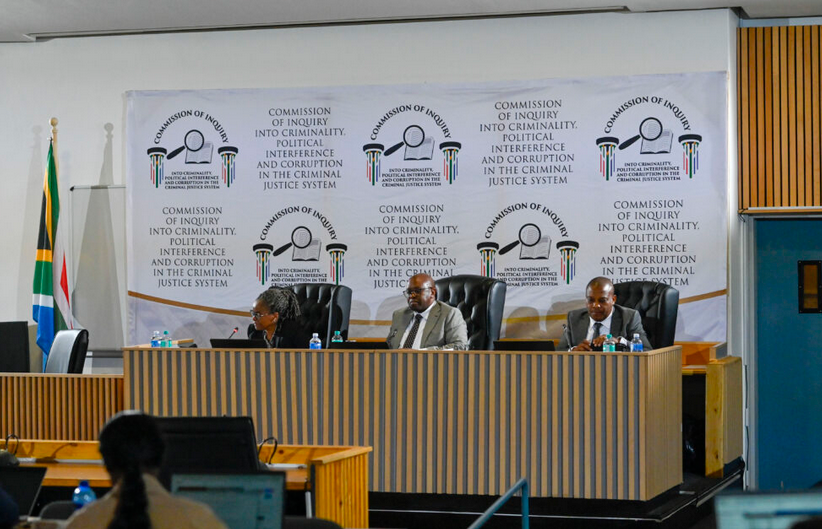
The highly anticipated hearings of the Madlanga Commission of Inquiry were unexpectedly disrupted this week after a key witness, known only as Witness F, was hospitalised. The development has forced a postponement of testimony that was expected to shed light on serious allegations of corruption and misconduct within South Africa’s criminal justice system.
Sudden Postponement
Witness F, a member of the South African Police Service’s organised crime unit, was scheduled to testify at the Brigitte Mabandla Justice College on 16 and 17 February. His testimony was considered crucial, as he had previously linked suspended National Deputy Police Commissioner General Shadrack Sibiya to attempted murder accused Vusimuzi “Cat” Matlala.
However, proceedings were halted when a medical certificate was submitted to the Commission confirming that Witness F had been hospitalised and would not be available until at least 25 February. The Commission has now rescheduled his appearance for 16 March, which is set to be the final day of hearings.
Commission’s Response
Evidence leader Matthew Chaskalson explained to the panel: “Witness F has been hospitalised and is not available today. There is an application for postponement. The medical certificate records that Witness F will not be available until at least 25 February.”
The Commission agreed to the postponement, noting that the witness’s health must take priority. In the meantime, Lieutenant General Shadrack Sibiya will appear before the Commission when hearings resume on 18 February.
Why Witness F Matters
Witness F’s testimony is seen as pivotal in connecting senior police officials to organised crime networks. His evidence could strengthen the case against individuals accused of abusing their positions of power for personal gain.
The delay has frustrated some observers, who argue that the Commission has already faced too many interruptions. Others, however, have expressed sympathy, noting that the witness’s health must come first.
Background of the Commission
The Madlanga Commission was established to investigate corruption and misconduct within the criminal justice system. It has already heard explosive testimony from several witnesses, including claims of police officers colluding with criminal syndicates.
The inquiry has become a focal point for South Africans concerned about the integrity of law enforcement. Many see it as a test of whether the country can root out corruption at the highest levels.
Public Reaction
News of the postponement sparked mixed reactions on social media. Some users expressed disappointment, fearing that delays could weaken the Commission’s impact. Others urged patience, pointing out that the credibility of the process depends on ensuring witnesses are fit to testify.
One commentator wrote: “We need Witness F’s testimony, but we also need him healthy. Let’s not rush justice at the expense of a man’s life.”
The Road Ahead
The Commission will continue with other scheduled testimonies while awaiting Witness F’s return. Lieutenant General Sibiya’s appearance is expected to draw significant attention, given his alleged links to organised crime.
Legal experts believe that Witness F’s eventual testimony could either confirm or contradict Sibiya’s defence, making it one of the most critical moments of the inquiry.
Broader Implications
The delay highlights the challenges of conducting high-profile inquiries in South Africa. Witnesses often face intimidation, health issues, or logistical obstacles that complicate proceedings.
Still, the Madlanga Commission remains determined to complete its work. Chairperson Justice Madlanga has emphasised that the inquiry will not be derailed by setbacks.
Conclusion
While the hospitalisation of Witness F has delayed proceedings, it has also underscored the human dimension of the fight against corruption. The Commission’s work continues, and South Africans will be watching closely when hearings resume.
For now, the spotlight shifts to Lieutenant General Sibiya, whose testimony could provide fresh insights into the web of allegations surrounding the police and organised crime.