

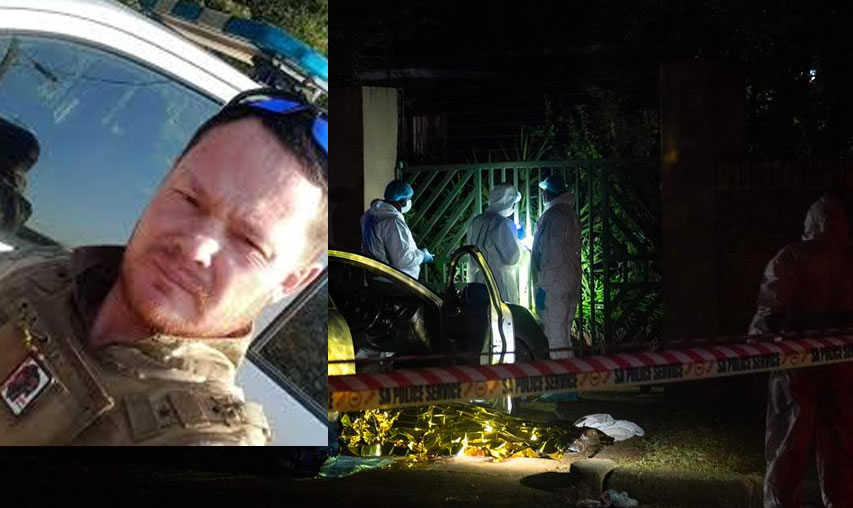
Witness Protection Under Scrutiny Following Assassination of Madlanga Commission Whistle-Blower
The recent assassination of Marius van der Merwe, a key witness at the Madlanga Commission, has raised serious concerns about the effectiveness of South Africa's witness protection programme. Van der Merwe, a former officer in the Ekurhuleni Metropolitan Police Department (EMPD) and owner of a private security firm, was shot dead outside his Brakpan home on Friday evening. His testimony connecting suspended EMPD officer Julius Mkhwanazi to criminal activities has cast a long shadow on how the government safeguards those who expose corruption.
In the wake of Van der Merwe’s death, Minister of Justice and Constitutional Development Mmamoloko Kubayi faced backlash for her assertions that the commission had done everything possible to protect whistle-blowers. Critics, including witnesses who testified and others still awaiting their turn, argue that her claims are unfounded. “We were offered zero protection, and just like with Vlam [Van der Merwe], we are starting to feel that we are next,” one anonymous witness stated, expressing fears for their safety.
Kubayi responded to the criticism, stating she was satisfied with the existing witness protection programme and the commission’s efforts. “In the case of Witness D, as the minister has indicated, witness protection was offered, and it was refused,” her deputy, Andries Nel, added. However, family and friends of Van der Merwe contested this narrative, reaching out to the media to clarify that he would likely have accepted any protection offered due to his concerns for his life.
Reportedly, Van der Merwe had previously survived a life-threatening attack, which intensified his fears and led him to seek greater security. Individuals close to him noted that he was eager to make his plight known publicly, hoping to pressure authorities for better protection for whistle-blowers and diminish the target on his back. The claims of refusal from Kubayi have only added to the confusion and anger surrounding his murder. Van der Merwe’s wife was reportedly unaware of any refusal of protection, reinforcing perceptions that the government failed to offer appropriate safeguards.
Witnesses have described how they themselves have requested protection, only to be ignored or denied, revealing a troubling pattern. “We do not leave our homes without private protection,” one witness claimed. “We are going through hell, but nothing has happened.”
Critics have also suggested that law enforcement personnel used intimidation tactics to secure testimony at the commission. Witnesses alleged they were warned that if they did not provide evidence, they could become targets themselves. “Just threats,” one participant lamented, highlighting a climate of fear that has stifled many from coming forward.
In an official response, the Madlanga Commission acknowledged the concerns surrounding witness safety and stated it was collaborating with various government security divisions to reassess the protection measures in place. "A meeting held in Pretoria at the Natjoints Operations Centre agreed to enhance the commission’s security operational plan over the next two days," a spokesperson stated.
Chad Thomas, an organised crime investigator at IRS Forensic Investigations, noted that Van der Merwe’s assassination could deter other potential witnesses from coming forward, given the heightened sense of danger. “There is a need to be sure why he was killed—was it as a direct link to his testimony at the commission, or was it because of his involvement in other projects?” he questioned, underlining the need for thorough investigations.
Mike Bolhuis, a specialist investigator, asserted that the commission and investigating units should have mandated protection for Van der Merwe. “The killing shows that if a witness or a person has information that can really hurt the people involved in criminal activities, they would be killed,” he said, emphasising the urgent need for improved security protocols for whistle-blowers.
As witnesses now look to Van der Merwe's tragic fate, some hope that going public may compel authorities to take their safety seriously. “Perhaps if we all go public and stand up for justice, there is no way that the state can ignore our actions," one witness suggested fervently. "They would have to protect us, and we will reveal hard truths about South Africa… Perhaps we should do this, in honour of Witness D. He is a hero; he paid for truth with his life.”
The daunting reality is that whistle-blowers remain vulnerable, and the assassination of Marius van der Merwe casts a dark cloud over future efforts to combat corruption and crime within South Africa. Witnesses are left questioning the state’s commitment to their protection, while the call for increased security and accountability becomes ever more urgent. As investigations continue, the spotlight remains firmly on how the authorities will respond to these pressing concerns moving forward.