

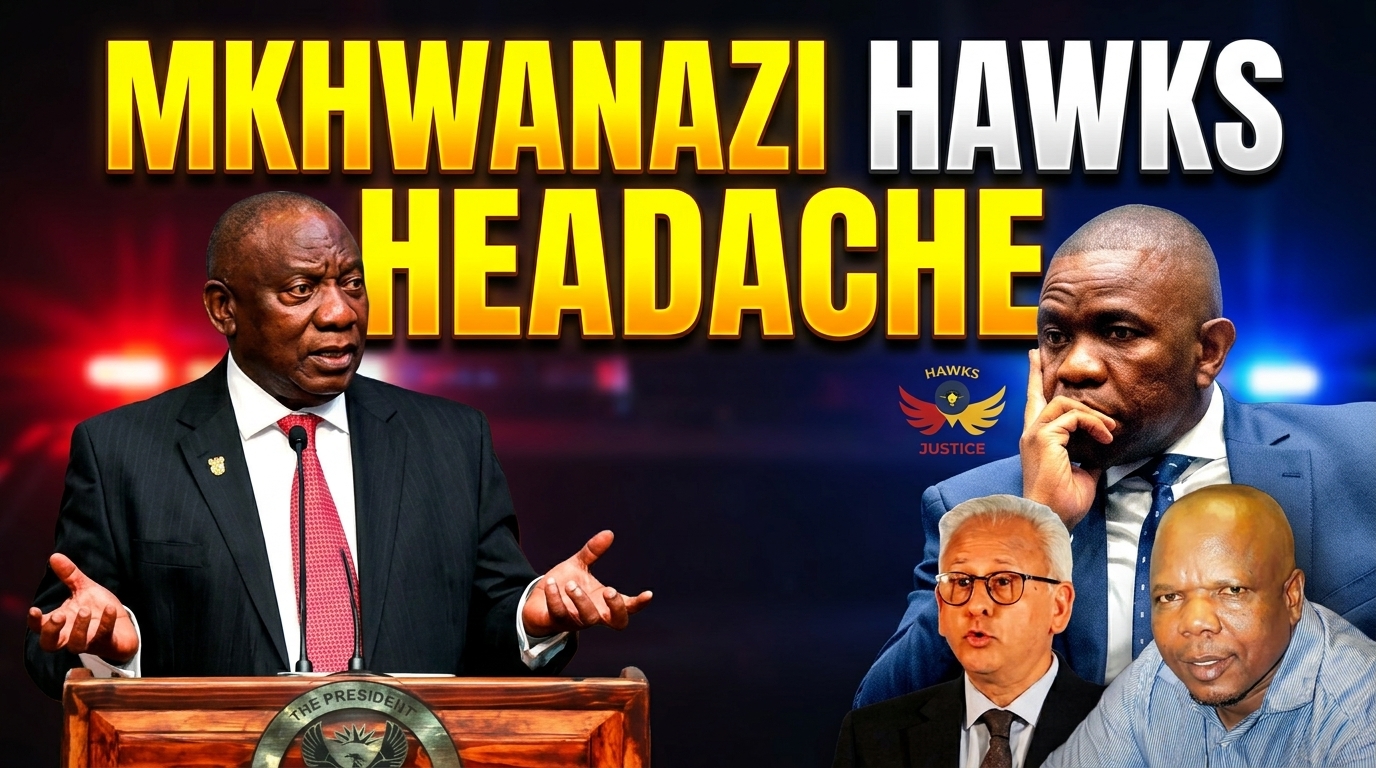
This video episode of "The John Brown Files" provides a comprehensive analysis of three pivotal news stories currently creating significant pressure on South African policing, presidential influence, and the stability of the Government of National Unity (GNU). It aims to offer viewers insight into how these developments intersect with national security, political accountability, and the upcoming local government elections.
The first segment focuses on the controversy surrounding the proposed appointment of Lieutenant-General Nhlanhla Mkhwanazi as the new national head of the Directorate for Priority Crime Investigation, commonly known as the Hawks. Acting Police Minister Firoz Cachalia announced Mkhwanazi’s nomination to the public before securing the mandatory formal concurrence from the Cabinet, a procedural deviation that has sparked intense debate over potential executive pressure.
Mkhwanazi had previously publicly stated his intention to remain in his current role as KwaZulu-Natal provincial police commissioner, making his potential move to national leadership unexpected. Adding to the controversy, forensic investigator Paul O'Sullivan has threatened to seek an urgent judicial review, challenging Mkhwanazi’s suitability for the post based on outstanding, unaddressed allegations. The situation highlights ongoing tensions regarding the transparency and integrity of senior police appointments.
The second segment shifts to the Madlanga Commission and a growing investigation into a set of incriminating WhatsApp messages linking Bejani Chauke, the former political adviser to President Cyril Ramaphosa, with the late Mpumalanga taxi boss Jotham Mswazi Msibi. The inquiry is actively probing discussions between the two men concerning the acquisition of a "grabber" device—restricted technology capable of intercepting mobile communications and tracking locations.
Investigators are scrutinizing whether these communications, which included discussions about a meeting with the President, involved the illicit importation of surveillance equipment under the pretext of police operations. Chauke has denied wrongdoing, claiming his interactions with Msibi were confined to taxi-industry matters. This investigation further complicates Chauke’s already controversial tenure, given his past links to the Phala Phala farm burglary and unauthorized use of presidential VIP protection.
The final segment explores the escalating political rifts within the African National Congress (ANC) regarding its coalition partnership with the Democratic Alliance (DA). Despite remaining the primary partners in the national Government of National Unity, there is a strong movement within the ANC, supported by its secretary-general and various party leagues, to end cooperation with the DA in hung municipalities following the elections.
ANC critics of the deal cite policy disagreements and perceived provocations during recent legal disputes as reasons to seek new partnerships, potentially with the EFF, the MK Party, or other entities. As the nation prepares for local elections, the internal revolt threatens the broader stability of the national coalition and raises fundamental questions about the viability of coalition politics in South Africa. The outcome of these local contests will serve as a critical test for whether the ANC can navigate its internal disputes while maintaining its national governing mandate.