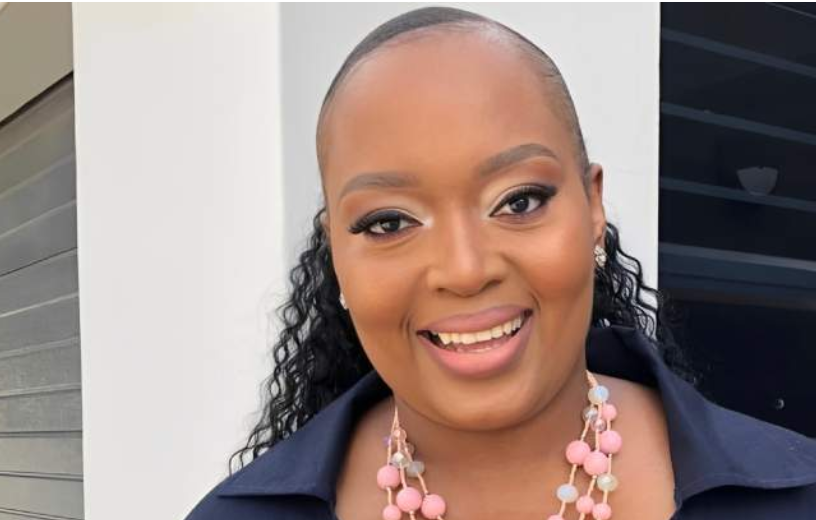
Moja Love presenter Sihle Sibisi is known on screen for her fearless approach on shows like Fake Marriages and Fake Pastors. But away from the cameras, she is living through a private pain that no mother should ever have to endure – the loss of her ten-year-old daughter, Khanyisile.
Her daughter died suddenly on 11 January 2024 from a rare condition called a Ruptured Brain Aneurysm. The shock has left deep emotional scars on the family and has completely changed the way Sibisi sees life, grief and healing.
‘She didn’t have any symptoms’
Speaking to Drum, Sibisi opened up about the day everything changed.
Her pain was made worse by the fact that Khanyisile had seemed fine. There were no clear warnings that something was wrong.
“She didn’t have any symptoms. When she complained of headaches, we rushed her to the hospital, where she was declared deceased on arrival,” she recalls, adding that even if she had survived, her brain activity would have been zero, as the brain bled.
Doctors later explained that with this kind of condition, there are often no symptoms other than severe headaches. For Sibisi, that explanation has been difficult to live with, because things moved so fast there was no time to react or prepare.
She says her daughter’s death from a Ruptured Brain Aneurysm in 2024 shattered her world.
A family trying to hold together
As expected, Sibisi’s life began to unravel after her daughter’s passing. Everyday routines, work commitments and social appearances suddenly felt heavy and empty. She says she was only able to keep going because of strong family support and professional help.
“My family has been my support system throughout the ordeal, and I have also been going through therapy. There’s a group of women in Houston, Texas, in the US, whom I meet with to have therapy via Zoom,” Sibisi said.
Those online sessions with women in Houston, combined with local support and family therapy, have become an important part of her healing journey. But while she was trying to deal with her own grief, she soon realised that her son was also battling in a serious way.
A brother’s silent pain
Her surviving son, whose room is right next to his late sister’s, struggled deeply with the constant reminder that she is no longer there. The shared corridor, the quietness, and the memories became too much to carry.
“My son, who just turned sixteen on 14 January this year, couldn’t cope with the loss of his sister. He began to sleep next to me, and soon thereafter, he started to lose his hair whenever he combed it. He was eventually diagnosed with depression and is still on medication,” she explained.
His hair falling out was the first sign that his body was responding to emotional trauma. For Sibisi, watching her son suffer added another layer of pain, as she had to be strong for him while dealing with her own heartbreak.
Christmas, birthdays and the grave site
Khanyisile was born on Christmas Day, which has turned what was once a day of celebration into a deeply emotional time for the family.
“She says her daughter was born on Christmas Day, so she has been visiting her grave since her passing.”
“My son wasn’t with me this past Christmas, so I went alone to her grave site. He asked me to take him there on his birthday, and I did,” Sibisi said.
These visits to the grave have become a way for mother and son to stay connected to Khanyisile, to honour her memory and to face the reality of their loss together, step by step.
Turning pain into purpose: a podcast on grief and loss
Out of this intense pain, Sibisi has tried to create something that can help others. She has launched a podcast, which went live on 15 January 2026, focused on educating people about Ruptured Brain Aneurysm and opening up conversations about grief.
The podcast started as a response to her daughter’s rare disease, but she is clear that it is not limited to that.
Although hers is a special case, Sibisi is adamant that she doesn’t just deal with women or people who lost their loved ones the way she lost her daughter.
“There are different kinds of grief that the podcast deals with, such as loss of a job, finances, partner, relationship and anything that has to do with loss. Even men are allowed to share their stories, because they also have experience to share,” she said.
Through the show, she wants to create a safe space where people can talk openly about emotional pain – whether it is the death of a loved one or the end of a relationship, the loss of income or any other serious life change.
Understanding a rare and deadly condition
Sibisi says that, according to the doctors’ explanation, this disease has no symptoms other than severe headaches. That reality has pushed her to raise awareness, because many people may dismiss recurring headaches as stress or tiredness without realising that they could be a sign of something serious.
By sharing her story, she hopes families will pay closer attention to such symptoms, push for medical checks and ask questions when something does not feel right.
Strength in the spotlight, grief in private
On television, viewers see Sibisi approaching her presenting jobs on Fake Marriages and Fake Pastors with confidence, energy and boldness.
While she approaches her presenting gigs on ‘Fake Marriages’ and ‘Fake Pastors’ with vigour and chutzpah, in her personal life, she is overcoming grief that no mother should ever have to endure.
Behind the strong on-screen image is a mother still mourning a child who left too soon, a brother still trying to accept life without his sister, and a family slowly learning how to live with a loss that will never fully go away.
Through therapy, family support and her new podcast, Sibisi is trying to turn her deepest wound into a source of knowledge, comfort and understanding for others walking their own paths of grief.