

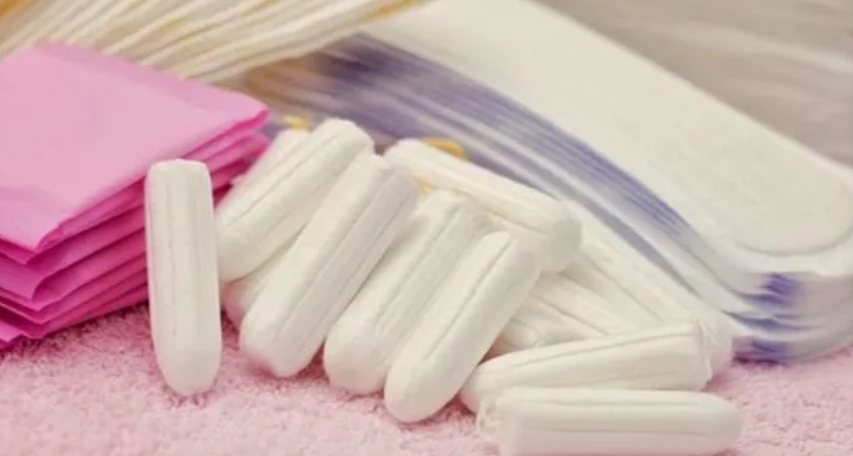
In a country where millions of women already struggle with the crushing weight of "period poverty," a new and terrifying shadow has been cast over the very products meant to provide dignity, health, and a sense of normalcy. A groundbreaking study by the University of the Free State (UFS) has sent a wave of panic across South Africa, revealing that some of the most popular sanitary pads and panty liners on our shelves contain endocrine-disrupting chemicals (EDCs). The news has forced Health Minister Dr Aaron Motsoaledi into a high-stakes damage control exercise, as mothers and young women across the nation ask one simple, haunting question: "Are these products safe, or are we paying to poison ourselves?"
The UFS study, which has been the subject of intense and often heated debate in the halls of Parliament this week, found traces of phthalates and other volatile organic compounds in several local brands that are used by millions of South Africans every day. These chemicals are known to interfere with the body's delicate hormonal system, potentially leading to a host of reproductive issues, early-onset puberty in young girls, and even long-term health complications that may not manifest for years. For a nation that has fought so hard to provide free sanitary products to schoolgirls to keep them in the classroom, the irony is as bitter as it is dangerous. We are providing the solution, but is the solution itself a slow-motion health disaster?
Dr Motsoaledi, co-chairing a joint media briefing with the Social Protection Cluster in Pretoria, was quick to downplay the immediate risks to the public. "It’s safe to use menstrual products," he declared, his voice firm and authoritative, though his eyes seemed to betray the gravity of the situation as he faced a room full of skeptical journalists. "The concentrations of these chemicals found in the study are extremely low, far below the thresholds typically associated with acute toxicity. We must not allow a sense of hysteria to deprive women of essential hygiene products that are vital for their daily lives." He pointed out that of the twenty international publications on this topic, none have conclusively proven that the skin absorption from these products leads to systemic toxicity in the human body.
However, for the women on the ground, the Minister’s reassurances feel like cold comfort in a very hot room. "We are told everything is safe until ten years later when we are all sick and the companies have already made their billions," says Thandiwe Molefe, a community activist in Soweto who has been organizing a protest outside a major retailer. "Why are these chemicals there in the first place? If they are 'low risk,' why not have 'no risk'? Our daughters' bodies are not laboratories for these manufacturers to test their cheap materials." The economic impact of this scandal is also looming large on the horizon. If the government is forced to recall or re-regulate these products, the cost of "safe" or organic alternatives could skyrocket, pushing millions more women back into the dark ages of using rags, newspaper, or even sand to manage their cycles.
The Department of Health has promised to address the findings by engaging with manufacturers and the South African Bureau of Standards (SABS) to review the current safety protocols. But the political tension is already simmering to a boil. Opposition parties have accused the government of being asleep at the wheel, failing to monitor the safety of products that are distributed by the millions in schools and clinics under government contracts.
"This is a failure of oversight that borders on criminal negligence," says a spokesperson for the Democratic Alliance. "We are playing with the health of the next generation of South African women to save a few cents on manufacturing costs. We demand a full independent inquiry into how these products were allowed on our shelves."
As the government moves to "clarify the health and regulatory implications," the trust of the South African public hangs in the balance. For many, this feels like yet another instance where the poor are given the "cheapest" option without regard for the long-term consequences.
In the aisles of supermarkets from the wealthy suburbs of Cape Town to the rural villages of Musina, women are looking at those familiar plastic packages with a new and profound sense of dread. They are reading the labels, searching for ingredients that aren't even listed, and wondering if their monthly cycle is now a game of Russian roulette. The "Sanitary Pad Scandal" is just beginning, and the fallout could change the face of women’s health and the regulatory landscape in South Africa forever. This is not just about hygiene; it is about the fundamental right to a safe life.