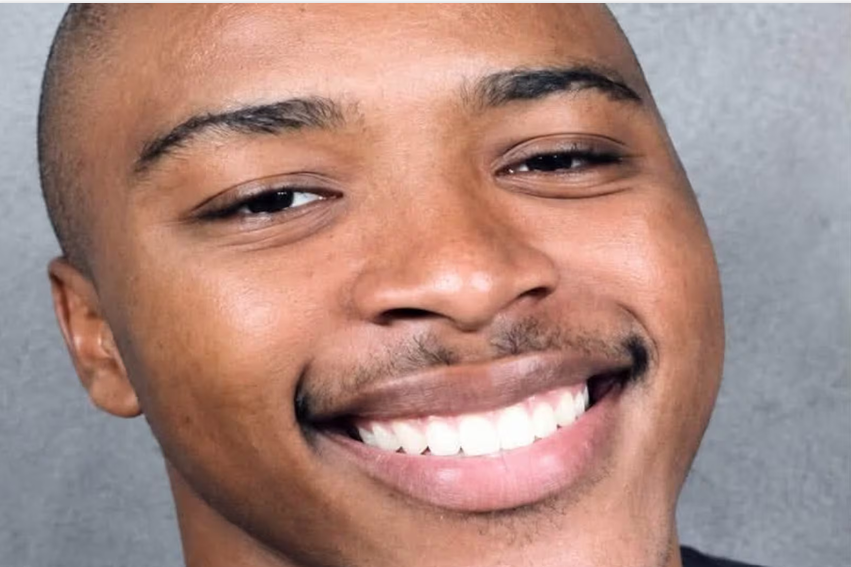
Mob justice in Mpumalanga after Kempton Park rumours: man allegedly killed by residents
The killing of a Mpumalanga man, allegedly at the hands of residents who accused him of having a hand in the Kempton Park killings, has brought mob justice back into the spotlight—and left his family demanding answers about what happened and why.
The man, Vusimuzi Radebe, was beaten to death after his attackers allegedly linked him to the deaths of women from Kempton Park whose bodies were found in the past two months.
According to Radebe’s family, the attack began when he was simply trying to get home.
The family said in a statement that he was returning from his grandmother’s home in KwaGuqa when he was stopped and questioned about where he lived and where he was coming from.
“When he said he was from Kempton Park, assumptions were made about him because of the recent violent attacks on women in the Ekurhuleni town. He was then brutally assaulted and died at the scene,” said his family.
In other words, they claim it was not evidence or proper investigation that led to the violence—just assumptions and anger flowing from recent tragedy.
Family speaks out as questions grow
People close to Radebe say he did not deserve what happened to him. Instead, they insist he was caught in a chain of accusations that spread quickly.
Community and online claims about the Kempton Park killings have been linked to recent violent attacks on women across parts of Ekurhuleni, and Radebe’s family say this is exactly how they believe the fatal misunderstanding escalated.
The family’s account also suggests that once the wrong information took hold, there was no turning back.
Expert warns crowd violence can move fast
Speaking about how mob justice takes hold, Gugu Shabalala, mental health and psychosocial support manager at the Centre for the Study of Violence and Reconciliation in Johannesburg, said crowd behaviour can allow people to feel less personally accountable for violence.
“This is why mob violence can escalate so quickly from confrontation to fatal injury: no single person experiences themselves as the killer,” she said.
Shabalala also explained that mob violence is rarely just about “anger” in the moment. She said it often grows from a mix of distrust in institutions, crowd psychology, and community beliefs.
She said mob justice was often driven by a combination of institutional distrust, crowd psychology and community beliefs.
“One of the most frequently cited drivers of mob justice attacks, she said, was a perception that the criminal justice system was failing communities.
“Mob justice responds to institutions people do not trust, amplified by crowd psychology and anchored in local belief systems.”
She added that even when people’s perceptions are not always accurate, they are felt deeply—and can shape what communities believe will happen if someone is accused.
Police delays and releases can fuel anger
Shabalala said addressing mob justice requires more than condemning violence after the damage is done.
“Rebuilding trust requires visible, responsive and accountable policing, as well as stronger links between communities and the courts.”
She also linked perceptions of weak justice to what people see: slow investigations, case backlogs, and suspects visibly being released on bail or after short sentences.
“The slow investigations, case backlogs, and the visible release of suspects on bail or after short sentences feed a perception − not always accurate, but deeply felt − that the formal criminal justice system cannot or will not protect ordinary people.”
According to police statistics released in March, officers recorded 299 murders as a result of vigilantism nationally, including 32 in Mpumalanga.
That is the context in which Radebe’s death has shaken residents—and experts say it is exactly why crowd violence remains so dangerous.
Former municipal official: family said he had a mental condition
A former eMalahleni municipality official also spoke after visiting the family.
In an interview with Sowetan, Sizwe Buthelezi, the eMalahleni municipality’s former MMC for community safety, said he visited Radebe’s family, who told him their son had mental health problems.
“The family told me when I visited them that Vusi had a mental condition that he lived with but was independent and followed a specific routine daily,” Buthelezi said.
“In fact, he was attacked en route home from his grandmother’s house, which formed part of his daily routine − he spends some time at his home, then the grandparents’ home, which is also within walking distance.”
Buthelezi said he did not have details on why Radebe was attacked.
“I also saw the video of Vusi on social media two days after the incident.”
A 15-second video circulates online
The video circulating on social media shows a man, believed to be Radebe, being assaulted.
A female voice can be heard alleging that the man had been following young girls.
One of the residents Sowetan spoke to said they heard a day after the attack that Radebe was mentally disturbed.
These claims—spreading fast online—appear to have fed the accusations and helped drive the violence.
But police say the motive cannot yet be confirmed.
Police confirm murder case and manhunt
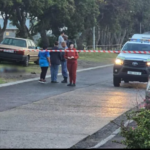
Mpumalanga police spokesperson Col Mavela Masondo confirmed that police were investigating a case of murder and had launched a manhunt for suspects.
“The motive for the attack cannot be confirmed at this stage and forms part of the ongoing investigation,” Masondo said.
At this stage, investigators are still working to determine what exactly happened, who was involved, and whether the allegations linking Radebe to the Kempton Park killings were true or based on rumours.
Council speaker condemns violence but understands anger
eMalahleni council speaker Nombuso Shabangu expressed condolences to Radebe’s family, while also warning that violence cannot be met with more violence.
She said that while the frustration, fear and anger surrounding gender-based violence and femicide are deeply understood, violence cannot be answered with more violence.
Radebe had recently moved to Mpumalanga
At the time of his death, Radebe had recently relocated to Mpumalanga after his parents, who are originally from the province, retired from their jobs in Gauteng.
They had lived in Kempton Park since the early 1990s.
His family is appealing to anyone who witnessed the attack or has information about what happened to come forward, so that the investigation can move forward and those responsible can face the law—rather than the crowd deciding someone’s fate.
For a family trying to cope with grief, the biggest demand is clear: stop the rumours, end the accusations without proof, and let police do their work before another innocent person becomes the target of mob violence.