Sunrise on the Pavement: The Early Morning Trade of Polokwane's Forgotten Women
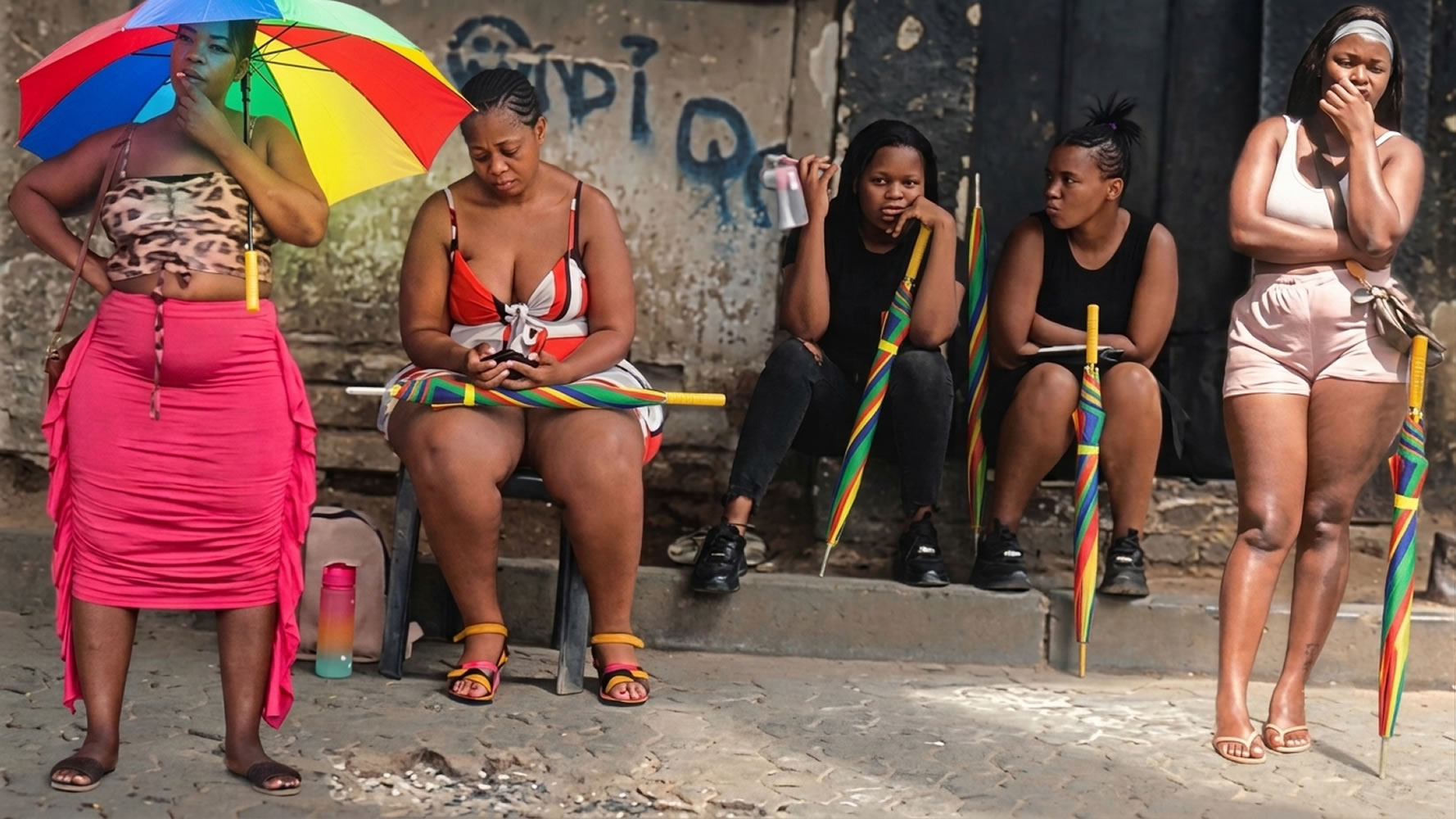
POLOKWANE – Long before the first rays of the Limpopo sun begin to bake the asphalt of the city centre, and well before the majority of Polokwane's residents have even considered their first cup of tea, a different kind of commerce is already in full swing. On the busy corners of Bok and Thabo Mbeki streets, the working day does not begin with a commute to an office or a shop. Instead, it starts on the pavement, where a group of women, huddled under colourful umbrellas, wait for the city to wake up.
As the morning traffic begins to build and the rhythmic hooting of taxis fills the air, these women take their positions. They are the visible face of a trade that many in the city choose to ignore, yet one that has become an indelible part of the urban rhythm. They come in all shapes, sizes, and skin tones, each one a story of survival in a province where the economic climate has become increasingly harsh. However, behind the umbrellas and the friendly greetings lies a deeper, more complex demographic reality: a significant number of these women are not South African, but migrants from neighbouring Zimbabwe, driven across the border by the collapse of their own economy.
The Borderland Hub
Polokwane, as the first major city south of the Beitbridge border post, has long served as a hub for Zimbabwean nationals seeking a better life. For many women who cross into South Africa, often through unofficial and dangerous routes, the streets of Polokwane represent the first opportunity to earn the Rands necessary to support families back home.
"They've been here for years. We're used to seeing them every day," remarked one local resident, who passes the intersection every morning on his way to work. The presence of the women is so established that it has begun to change the social habits of other women in the city. Locals claim that many female residents now avoid carrying umbrellas when walking through this specific district, fearing that they might be mistaken for sex workers by passing motorists.
The competition for the best spots is fierce, and the tension is often split along national lines. The women have their own territories, and skirmishes frequently flare up when newcomers—many of them undocumented Zimbabweans—try to move in on established patches. "They sometimes fight because they don't want too much competition," another local resident explained, describing the territorial nature of the street trade.
A Harvest of Hardship and Xenophobia
The motivations driving these women onto the streets are not found in a desire for glamour, but in the cold, hard statistics of the regional economy. While the unemployment rate in Limpopo remains high, hovering near the 48% mark in the expanded definition, the situation in Zimbabwe is catastrophic. For these women, the street is a last resort to pay school fees and buy maize meal for children who are often left in the care of grandmothers in villages across the border.
However, being a foreign national in this trade brings a double layer of vulnerability. In July 2026, a fresh wave of xenophobic tension swept through Limpopo, with groups of South African nationals blaming foreign migrants for the lack of jobs and rising crime. Reports emerged of the South African government marching thousands of Zimbabwean immigrants on foot back across the border, creating an atmosphere of panic.
Daily Sun spoke to two women working on the street, who, fearing both the police and xenophobic vigilantes, refused to be recorded or to reveal their identities. One of them, who spoke with a distinct Shona accent, described the constant fear of being "caught in the middle."
"Jobs are hard to find and life is expensive. We have families to support, so we come here to make money instead of sitting at home doing nothing," she stated. Her voice was steady, but her eyes darted towards every passing police van. For her, a police encounter doesn't just mean a night in the cells; it means the very real threat of deportation and the loss of her only source of income.
The Shadow of Violence
The "business" of the streets is fraught with peril, and for foreign sex workers, the risks are magnified. The corners of Bok and Thabo Mbeki streets are not just sites of commerce; they are also sites of significant danger. In August 2025, the Polokwane police were called to investigate a brutal murder at the corner of Rissik and Bok streets. More recently, in May 2026, another assault led to the death of a 31-year-old man in the same vicinity.
The memory of the "Polokwane Seven"—a case where a suspected serial killer targeted and murdered seven women in the city in 2022—still haunts the community. For Zimbabwean sex workers, who operate in a legal grey area and often lack valid permits, reporting crimes like assault or rape is nearly impossible. They fear that if they go to the police, they will be the ones arrested for being in the country illegally.
In March 2026, reports surfaced of a Zimbabwean woman being allegedly assaulted during a passport check by a South African Police Service (SAPS) officer, an incident that sparked outrage among advocacy groups. The Sex Workers Education and Advocacy Taskforce (SWEAT) has long argued that the current legal framework, which criminalises sex work, allows such abuses to go unpunished. They maintain that sex workers, particularly those from the migrant community, are the most vulnerable targets for predators and corrupt officials alike.
The Client Perspective
Despite the risks and the public outcry from some quarters about "downtown decay," the demand for the women's services remains high. The clients are a diverse group, and for some, the nationality of the women is a draw.
"They're there and they're open. For married men, some say it's better than having a secret affair. Single men also say the women are friendly and take care of themselves," one man, who admitted to visiting the area, told investigators. His comment highlights a complex social reality: for many men, the transparency of a transaction on Bok Street is preferable to the emotional and financial complications of a long-term extramarital relationship.
This demand ensures that from sunrise until late afternoon, the pavements remain alive with conversation. Cars slow down, windows are rolled down, and brief negotiations take place before a client and a worker disappear into the city's labyrinth.
A Turning Tide in the Law?
The situation in Polokwane is currently set against a backdrop of significant national legislative change. In April 2026, the South African government confirmed its readiness to move forward with the decriminalisation of sex work. The proposed Criminal Law (Sexual Offences and Related Matters) Amendment Bill seeks to repeal the Sexual Offences Act of 1957, a move that would uphold the dignity of sex workers rather than treating them as criminals.
Advocates for the bill argue that decriminalisation would allow the state to better regulate the industry and provide better healthcare access, particularly for migrant workers who often face "medical xenophobia" at public clinics. However, the bill has faced stiff opposition from religious groups and some community organisations who fear it will lead to a moral decline and encourage more migration.
In Polokwane, the municipality has struggled to balance these competing interests. While the Hawks raided municipal offices in October 2025 over unrelated corruption allegations, the local government has been slow to address the specific needs of the downtown area. The result is a stalemate: the women continue to work, the police continue to monitor, and the community continues to watch with a mixture of acceptance and concern.
The Rhythm of the City
As the sun climbs higher in the sky, the heat becomes oppressive. The umbrellas are adjusted, and the conversations between the women continue. They talk about their children back in Harare or Bulawayo, the rising cost of maize meal, and the latest news from the border. Their presence has become a part of the daily rhythm of Polokwane's city streets, as predictable as the morning rush hour or the afternoon thunderstorms.
While some residents worry about the visibility of the trade in such a busy public area, others have come to accept it as a symptom of a larger, systemic failure. In a region where economic borders are porous but social ones are rigid, the "tlof-tlof" trade, as it is colloquially known, is a stark reminder of the lengths to which people will go to survive.
The story of Bok and Thabo Mbeki streets is not just a story of sex work. It is a story of economic hardship, of the migrant experience, and of the incredible resilience of women who refuse to sit at home doing nothing while their families go hungry. As the city of Polokwane continues to grow and change, these women remain on their corners—waiting, watching, and working—long before the rest of the world has even started its day.