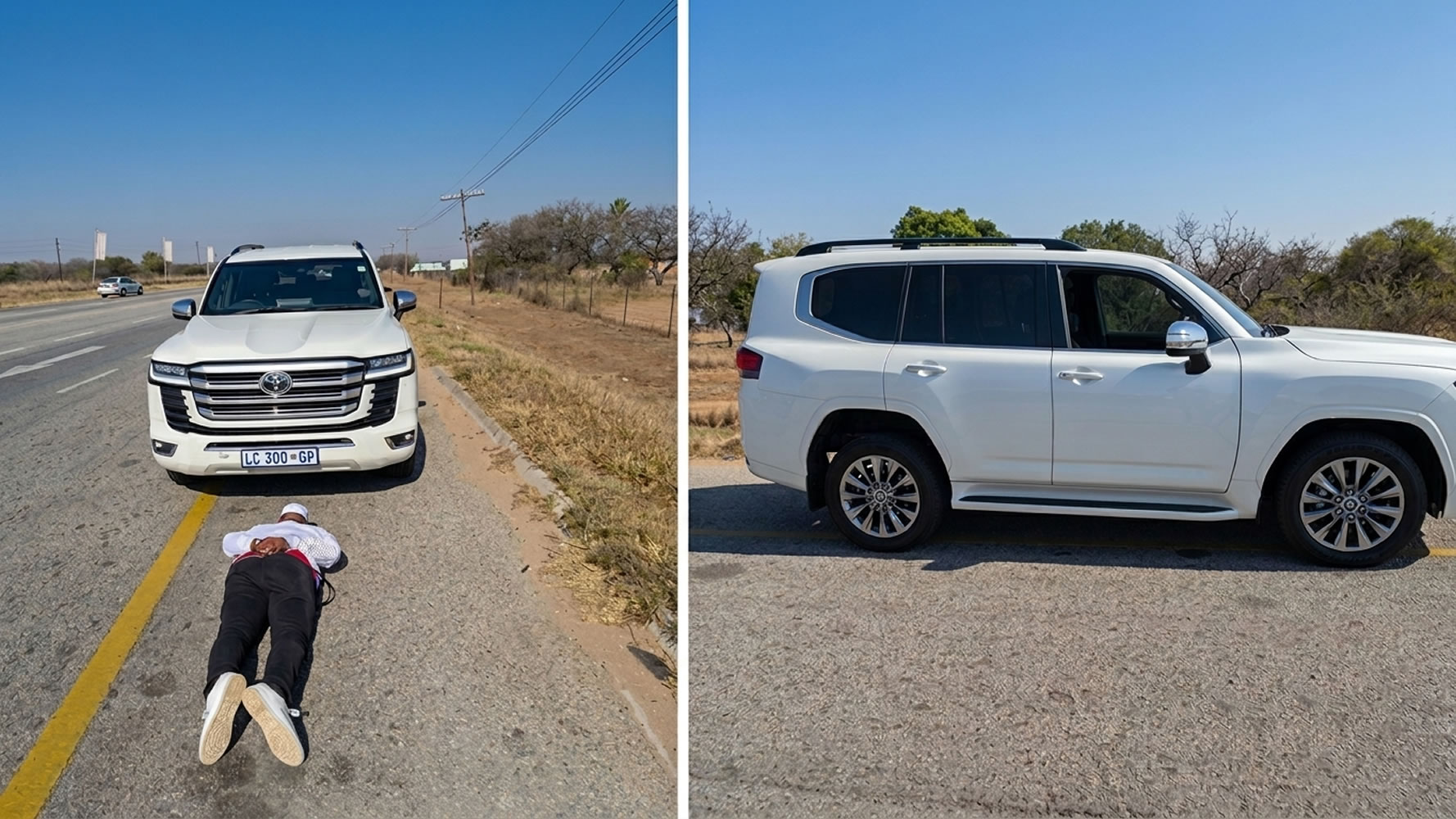
POLOKWANE – In a significant blow to cross-border vehicle smuggling syndicates, a 46-year-old man has been apprehended in Limpopo, South Africa, after police intercepted a stolen luxury Toyota Land Cruiser valued at approximately R2.2 million. The arrest, part of an ongoing anti-smuggling operation, highlights the persistent efforts by South African authorities to curb the illicit flow of high-value vehicles across the border into neighbouring Zimbabwe.
The white Toyota Land Cruiser ZX was intercepted on the N1 highway near Makhado following intelligence that indicated the vehicle was being transported from Gauteng with the intention of being smuggled out of South Africa through the Beitbridge Port of Entry. This incident underscores the sophisticated networks involved in these criminal activities, often targeting expensive models for their lucrative resale value in other countries.
Police confirmed that the investigation into the vehicle theft and the suspected smuggling network is continuing, with authorities keen to dismantle these organised crime groups. The operation that led to the recovery was a multi-disciplinary effort, involving the Provincial Investigation Unit and the Provincial Tracking Team, who were supported by several private security companies. This collaborative approach has proven effective in recent months in tackling the complex challenges posed by cross-border crime.
According to police reports, operational teams acted on precise intelligence indicating that a suspected stolen vehicle was travelling north from Gauteng towards the Beitbridge border. The Toyota Land Cruiser ZX was swiftly identified on the N1 near Makhado, and officers moved to stop the vehicle before it could proceed further towards the border. Preliminary investigations at the scene revealed that the luxury SUV had been reported stolen in Benoni, Gauteng, just days prior, on Saturday, 18 July 2026.
The 46-year-old driver, whose identity has not yet been fully disclosed, was arrested at the scene. He is expected to appear in the Polokwane Magistrate’s Court on Monday, 27 July 2026, facing charges that include possession of a suspected stolen motor vehicle and driving without a valid driver’s licence. These charges are common in such cases, reflecting the dual nature of the crime: the theft of the vehicle itself and the attempt to illegally transport it across national borders.
This operation forms a crucial part of ongoing efforts to combat vehicle theft and the activities of cross-border smuggling syndicates that operate between South Africa and its neighbouring countries, particularly Zimbabwe. The involvement of private security partners, including ShadowSecure Security, Tracker Connect, Tshimollo Security and Investigations, Limpopo Tactical Security, and Bas Secure, demonstrates the growing partnership between law enforcement and the private sector in combating organised crime. Authorities have stated that investigations are continuing to determine whether additional suspects were involved in this particular incident and whether the vehicle was destined for a larger, organised cross-border crime network.
A Persistent Problem: The South Africa-Zimbabwe Smuggling Route
The Beitbridge border post, a bustling gateway between South Africa and Zimbabwe, has long been a hotspot for illicit activities, including the smuggling of stolen vehicles. The sheer volume of traffic and the porous nature of certain sections of the border along the Limpopo River make it an attractive target for criminal syndicates. These groups often employ sophisticated methods to bypass official checkpoints, ranging from using false documentation to physically driving vehicles through unofficial crossings, sometimes even utilising donkeys to pull luxury cars across difficult terrain.
Recent incidents highlight the scale of the problem. Just last month, in June 2026, Limpopo police arrested a 24-year-old South African man attempting to smuggle a Toyota Prado, valued at nearly R1 million, into Zimbabwe via an illegal crossing point. This arrest, also the result of an intelligence-driven anti-smuggling operation, involved a high-speed pursuit after the suspect ignored police instructions to stop. The vehicle had been reported stolen in Gauteng, a common origin point for many of the vehicles intercepted en route to Zimbabwe.
Another notable case occurred in July 2026, when Limpopo police apprehended a 44-year-old Zimbabwean national following a high-speed chase in Makhado. This individual was attempting to smuggle a white Toyota Corolla Cross GR Sport, valued at R600,000, which had been stolen from the Krugersdorp policing area in Gauteng. The suspect is facing charges of possession of a suspected stolen motor vehicle and reckless and negligent driving, further illustrating the dangerous tactics employed by these smugglers.
These incidents are not isolated. The Herald Online reported in June 2026 that cross-border car smuggling syndicates, which had temporarily shifted their operations to the South Africa-Botswana border due to increased crackdowns, have resurfaced along the Zimbabwe-South Africa border. Stolen vehicles are often destined for markets in Malawi, Mozambique, or directly within Zimbabwe, with some even reportedly shipped into Lesotho.
The Modus Operandi of Smuggling Syndicates
In some instances, smugglers have resorted to highly unconventional methods. An investigation by Oxpeckers in 2017 revealed that car theft syndicates were using stolen or hired donkeys to pull top-range luxury cars across the Limpopo River into Zimbabwe. While this method might seem archaic, it highlights the desperation and ingenuity of criminals seeking to exploit any vulnerability in border security. The same report also detailed how a culture of bribery and corruption can permeate border areas, with some security agents allegedly collaborating with smugglers for a fee or a share of the loot.
The financial incentives for these crimes are substantial. Luxury vehicles, once successfully smuggled, can be sold for significant profits, funding other illicit activities. The risk of apprehension, while present, is often outweighed by the potential rewards, particularly for those operating within well-established criminal networks.
Legal Ramifications and Ongoing Efforts
The legal consequences for those involved in vehicle smuggling are severe. In a recent case in June 2026, the Mokopane Regional Court sentenced Mosa Allen Dlamini, a 34-year-old vehicle smuggler, to 20 years’ imprisonment. Dlamini was convicted on multiple charges, including possession of stolen motor vehicles, fraud, money laundering, and falsification of vehicle registration plates, involving a Toyota Land Cruiser and a Toyota Fortuner. Such harsh sentences serve as a deterrent and reflect the seriousness with which authorities view these crimes.
Law enforcement agencies in both South Africa and Zimbabwe continue to collaborate in efforts to combat these syndicates. Joint operations, intelligence sharing, and increased patrols along the border are crucial in disrupting smuggling routes and apprehending perpetrators. The involvement of private security firms, equipped with advanced tracking technology, further enhances the capabilities of police in recovering stolen vehicles.
The fight against cross-border vehicle smuggling is an ongoing battle, requiring sustained vigilance and adaptive strategies from law enforcement. While significant arrests and recoveries are made, the syndicates continue to evolve their methods, posing a constant challenge to regional security. The recent apprehension of the 46-year-old man with the R2.2 million Toyota Land Cruiser is a testament to the dedication of police and their partners in safeguarding national assets and upholding the rule of law.